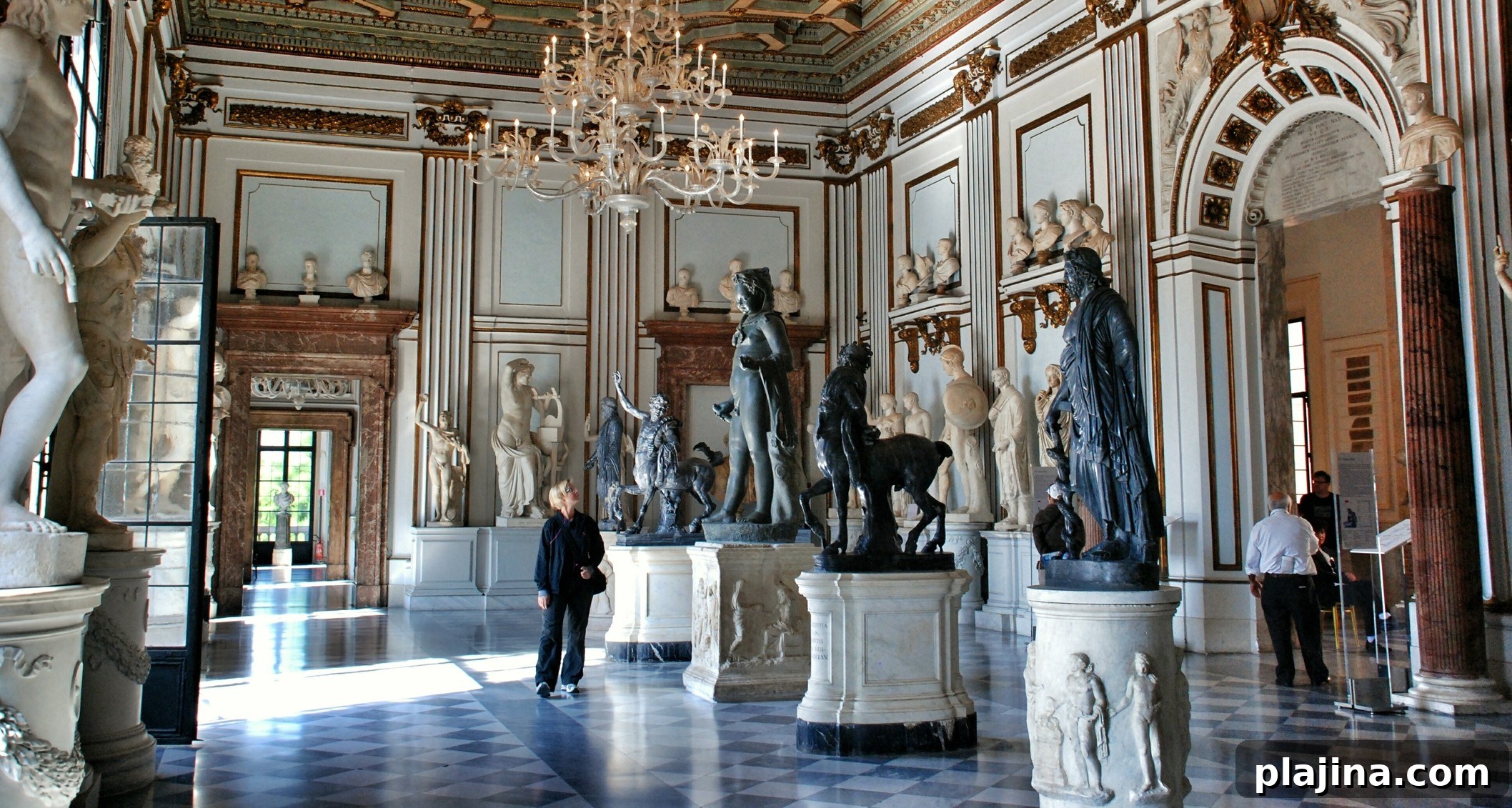
Fans of art will be delighted by the collections at Rome’s celebrated Musei Capitolini. Housed on the Capitoline Hill, the museums showcase masterpieces spanning ancient Roman sculpture, Renaissance painting, and Baroque sculpture. Among the highlights are notable works such as the evocative portrait known as La Lupe, Gian Lorenzo Bernini’s striking sculptural study Medusa, and the powerful Hellenistic statue The Dying Gaul.
The Musei Capitolini’s galleries are arranged to guide visitors through Rome’s artistic and civic history. In the ancient sculpture halls, you’ll find a rich array of Roman portraits, mythological figures, and public monuments that once lined imperial forums and villas. These works reveal the skill of ancient artists in rendering texture, anatomy, and emotional expression in marble and bronze.
Moving into later periods, the collections document Rome’s role as a center of artistic innovation. Renaissance and Baroque pieces demonstrate shifts in style, technique, and patronage, with sculptors like Bernini pushing the boundaries of movement and theatricality in stone. Bernini’s Medusa exemplifies the Baroque interest in dramatic detail and psychological intensity, while The Dying Gaul, an ancient Roman copy of a Hellenistic original, captures pathos and realism that continue to move contemporary viewers.
Beyond the headline works, the Musei Capitolini contain numerous lesser-known but equally compelling objects: portrait busts that record individual personalities, reliefs that once decorated public buildings, and decorative arts that illuminate daily life in antiquity. The arrangement of rooms and informative displays help place each piece in historical context, making the museum accessible to both first-time visitors and art historians.
Visiting the Musei Capitolini also offers architectural and urban rewards. The museums occupy a set of historic palaces overlooking Rome’s Piazza del Campidoglio, a piazza redesigned by Michelangelo. From terraces and windows you can enjoy sweeping views of the Roman Forum and cityscape, creating a vivid link between the artworks inside and the ancient sites they once served.
For anyone planning a visit, allow enough time to explore multiple floors and galleries at a relaxed pace. Audio guides and temporary exhibitions supplement the permanent collection, and the museum’s curatorial approach emphasizes storytelling—tracing cultural, political, and artistic threads across centuries.
Whether you come for the celebrated masterpieces or to discover quieter treasures, the Musei Capitolini offers a deep and rewarding encounter with Rome’s artistic heritage. The combination of extraordinary artworks, historical setting, and panoramic views makes it a must-see destination for art lovers and history enthusiasts alike.