
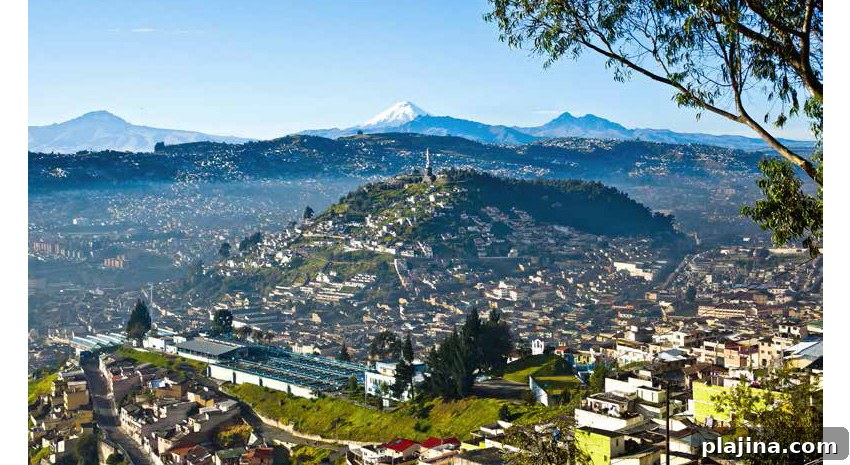
The amazing city of Quito sits high in the Andes as the second-highest capital in South America. At roughly 9,350 feet above sea level, the altitude can affect many visitors, though most recover quickly with coca leaf tea, hydration, or a short course of Diamox. Quito remains Ecuador’s political and cultural heart, even as business travelers sometimes head to the commercial hub of Guayaquil.
Mariscal Sucre International Airport opened in 2013 about 25 miles east of the city center and quickly became one of the region’s busiest gateways. The transfer to the historic center takes roughly one to two hours depending on traffic; taxis typically cost $25–40 depending on time and destination. A reliable alternative is the Aeroservicios coach, which runs 24 hours to the Quito bus terminal and offers complimentary onboard Wi‑Fi. Booking online in advance usually costs about $8 each way.
Approaching the city you’ll notice dramatic volcanic peaks surrounding Quito — part of the Pacific Ring of Fire — and a landscape that reflects Ecuador’s extraordinary environmental variety. One major conservation effort is the Condor Bioreserve, a mosaic of protected lands, farms and indigenous territories covering millions of acres and encompassing snow-capped volcanoes, cloud forests, páramo highlands and rainforest. The reserve’s rivers and streams are vital to Quito’s drinking water supply. In 2000, The Nature Conservancy, the U.S. Agency for International Development and local partners established a water-conservation fund to protect these sources and ensure long-term water quantity and quality for the city.
Beyond its natural riches, Quito offers a remarkably preserved cultural core. The city’s Old Town is one of the earliest UNESCO World Heritage sites and stands as the finest example of a colonial city in the Americas, rich with churches, plazas and well-preserved architecture.
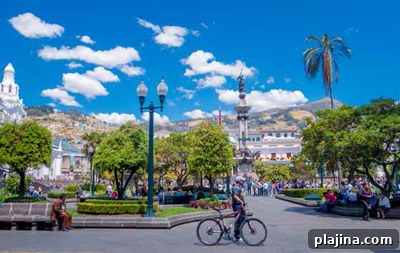
Independence Square in Quito © PABLO HIDALGO | DREAMSTIME.COM
At the heart of the historic center, Hotel Plaza Grande occupies a standout address on Independence Square. Built on one of the first Spanish colonial sites in the 16th century, it sits amid the cathedral, city hall and government palace and offers luxurious surroundings suitable for hosting clients or important meetings.
For an impressive dinner, the hotel’s La Belle Époque restaurant serves refined French and international cuisine in an elegant setting, often accompanied by live opera performances that create a truly memorable evening. For an early-morning start before meetings, Europa Café inside the Hotel Dann Carlton provides excellent coffee, fresh-baked pastries and pressed juices—a practical place to gather and prepare for a busy day.
For a private business lunch, reserve a table at Zazu, a long-established favorite that blends Ecuadorian flavors with contemporary techniques. Known for dishes such as stone crab ceviche and an extensive wine collection, Zazu has earned a reputation as one of Latin America’s top dining destinations and suits meetings where both cuisine and ambiance matter.
After a full day of appointments, unwind with cocktails at La Naranjilla Mecánica. Popular with locals, this bar features live music and inventive cocktails crafted by skilled bartenders, offering a glimpse of Quito’s modern, creative nightlife scene. For a relaxed late-night atmosphere with a musical focus, El Pobre Diablo is a respected jazz bar where strong drinks and live sets combine to create a convivial setting. The Mariscal district also hosts several lively venues, including trendy club lounges favored by locals for late-night socializing.
To clear your head and take in sweeping panoramas, ride the TelefériQo cable car to Cruz Loma. Rising to nearly 13,000 feet, the viewpoint provides dramatic perspectives over the city and the surrounding valley and is a powerful reminder of the natural context that defines Quito.
When choosing gifts for clients or guests, consider a toquilla hat—commonly called a Panama hat despite originating on Ecuador’s coast. Finely woven examples from the Manabí region can be folded and packed, and their craftsmanship makes them an elegant, authentic memento. For premium examples, retailers such as Homero Ortega are known for high-quality, traditionally made pieces.
Quito blends natural spectacle, historic charm and contemporary culture, making it an engaging destination for business travelers who want reliable services, memorable dining, and impressive scenery all within reach of the city’s compact center.