
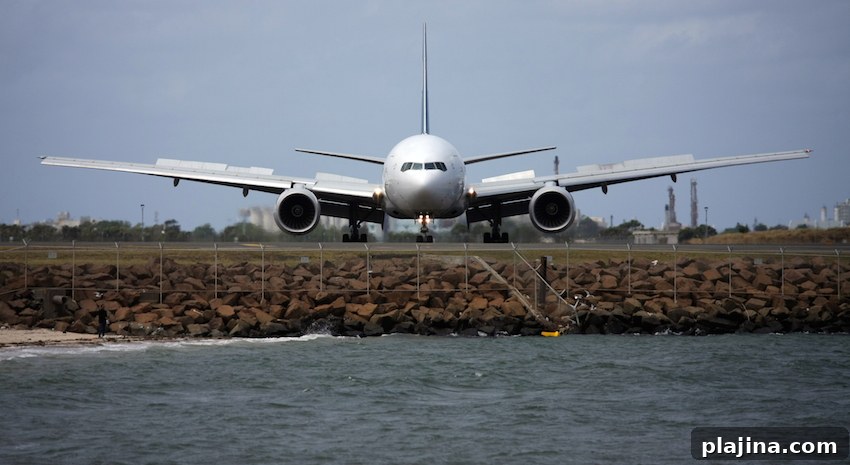
Boeing has announced a reduction in production of its long-range 777 jetliner that will take effect this year. The company currently produces an average of about 8.3 Boeing 777s per month, roughly 100 aircraft annually. Beginning in August, production will be scaled back to five aircraft per month, with a further reduction to 3.5 per month planned for 2018.
The move reflects weaker demand for large, long-range twin-aisle aircraft. Boeing recorded 17 orders for 777s in 2016, a sharp decline from 58 orders in 2015 and 283 orders in 2014. The published list price for a 777 is approximately $160 million, though actual sale prices typically vary depending on customer discounts and contract terms.
Industry analysts point to an oversupplied market for widebody jets. Richard Aboulafia of the Teal Group in Fairfax, Virginia, noted that the twin-aisle segment is currently saturated and that the adjustment will be difficult because the 777 has been one of Boeing’s most profitable models. He also warned that further production cuts could follow as airlines balance fleet plans against slower demand.
Lower production rates can have broader consequences across Boeing’s supply chain and workforce. Boeing has indicated that reduced output could lead to workforce reductions or other cost-saving measures as the company aligns production with market demand.
As airlines continue to refine their long-range fleet strategies—balancing fuel efficiency, range, and capacity—manufacturers must respond to shifting order patterns. The 777 faces competition from newer, more fuel-efficient models as carriers seek to optimize route economics and replace older aircraft.
Boeing’s decision to scale back 777 production underscores the challenges in the widebody market and signals a period of adjustment for manufacturers, suppliers, and airlines alike as demand evolves.