
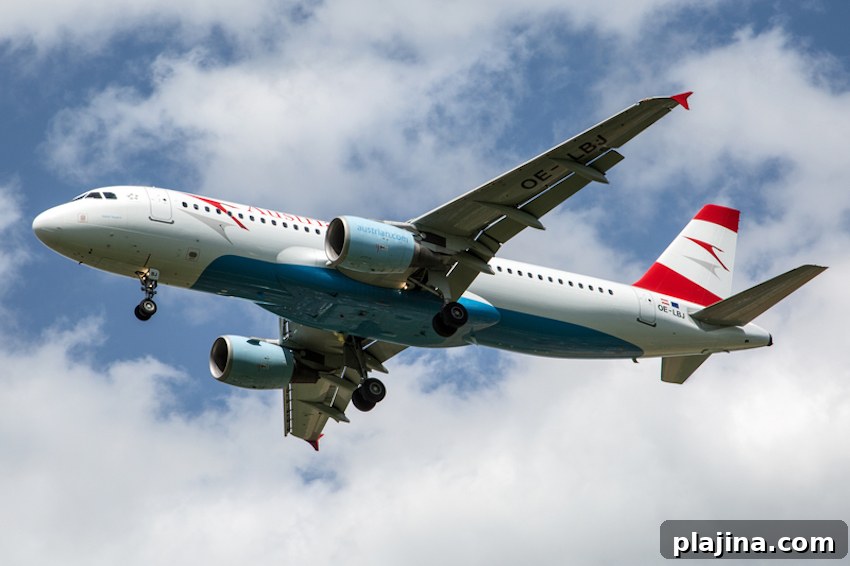
Austrian Airlines, together with Vienna Airport and energy company OMV, has begun a pilot program to convert used plastic cups collected on flights into fuels and new plastic materials.
Cabin crew will separate and collect the disposable cups during flights. After landing, Vienna Airport transfers the collected cups to a waste-handling facility where they are cleaned and shredded. The prepared plastic is then sent to OMV’s ReOil pilot plant at the Schwechat refinery, where the shredded plastic is processed into a synthetic crude oil. That synthetic crude can be refined into fuels or used as feedstock to produce new plastics.
OMV reports it has been researching plastic reuse and recycling methods since 2011 and began collaborating with Austrian Airlines on this specific initiative in January. The company states that roughly 100 kilograms of used plastic can yield about 100 liters of synthetic crude under the ReOil process.
Thomas Gangl, Senior Vice President of Refining and Petrochemicals at OMV, highlighted the value of plastics alongside the challenge of managing their end of life. “The exceptional properties of plastic as a material make it hard to imagine life without it,” he said. “In the ReOil plant, we are able to turn the AUA drinking cups into synthetic crude and then process them into fuel or back into plastics. Our OMV research project allows us to close the circle and reduce waste. These joint efforts send a clear signal of how important conserving resources is to both of our companies.”
The pilot aims to demonstrate a practical route to recover value from single-use plastics generated in aviation and at the airport. By integrating collection on board with airport logistics and advanced chemical recycling at a nearby refinery, the partners intend to reduce waste and recover material for reuse. If successful, the program could be scaled or adapted to other waste streams produced by airlines and airports, supporting circular economy goals while lowering the environmental footprint associated with disposable plastic items.
Beyond the immediate conversion of cups into synthetic crude, the project underscores wider industry interest in methods that turn difficult-to-recycle plastics into useful raw materials. Chemical recycling technologies like ReOil offer a complement to mechanical recycling by handling mixed or contaminated plastics that are not suitable for conventional recycling processes. The partners emphasize that careful collection, cleaning and pretreatment remain essential to ensure feedstock quality and the efficiency of downstream conversion.
As the pilot progresses, participating organizations will evaluate operational details such as collection procedures, contamination rates, transport logistics, and overall material balances. The results will inform whether similar schemes can be implemented more broadly across airline fleets and airport terminals, contributing to more circular waste management practices in aviation and related sectors.