
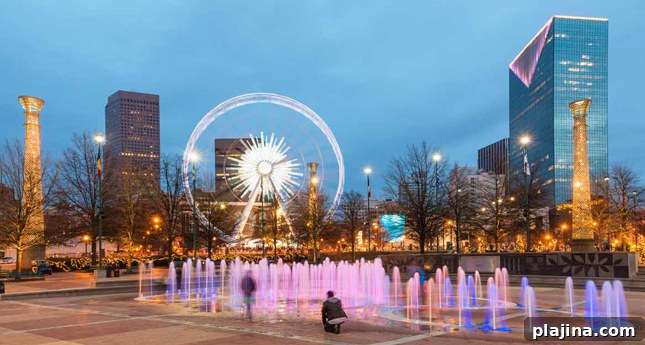
Affectionately known as the “City in a Forest,” Atlanta blends Southern charm with a modern, cosmopolitan energy. A thriving business climate, mild weather, world-class dining and compelling attractions draw visitors and new residents alike.
The city has seen rapid population growth—more than a million new residents since 2000—which has brought both opportunity and pressure. Atlanta faces an infrastructure backlog estimated at over $900 million and city leaders have proposed a bond referendum to fund improvements to roads, sidewalks, bridges and public buildings.
Traffic and road conditions are a persistent challenge. A Georgia Department of Transportation study found that average peak travel speeds during the morning rush have declined significantly since 2008, making commutes longer for residents and visitors. To address these issues, local planners and civic groups have developed strategies to expand transit options and improve walkability.
One such effort is Downtown Atlanta’s “Imagine Downtown 2.0” vision, which promotes improved transit, better sidewalks and more welcoming public spaces. The Atlanta Streetcar, an electric transit loop, connects key destinations including The King Center and Centennial Olympic Park, and long-term plans call for a north-south route linking Brookhaven to Fort McPherson. These initiatives aim to reduce emissions, decrease reliance on cars and ease traffic congestion.
Hartsfield-Jackson Atlanta International Airport — often cited as the world’s busiest airport — provides convenient access to the region. While its size and multiple concourses can be intimidating for first-time visitors, frequent travelers find it efficient, especially with an MARTA station connecting the airport to Downtown, Midtown and Buckhead. Taxis and ride-hailing services like Uber make it easy to reach one of the roughly 90,000 hotel rooms across the metropolitan area.
Each Atlanta neighborhood has its own identity, from Buckhead’s upscale districts to Midtown’s lively, professional scene. Downtown Atlanta has emerged as a fast-growing center for business, tourism and new residential development, attracting nearly $3 billion in investments since 2007 along with significant infrastructure funding and ongoing large-scale proposals.
Downtown offers extensive resources for meetings and conventions. Annual convention attendance approaches two million, and the Georgia World Congress Center ranks among the largest facilities in the country. Adjacent attractions include Centennial Olympic Park and major venues used for large events. The Atlanta Convention Center at AmericasMart provides contiguous meeting space ideal for both small and large gatherings and connects to nearby hotels favored by business travelers. Dining and skyline views are part of the experience too, with iconic venues offering panoramic city vistas.
Beyond business, Downtown Atlanta has undergone a cultural and entertainment renaissance. New and renovated attractions have drawn attention back to the area, complementing longstanding institutions. The World of Coca-Cola and the massive Georgia Aquarium are focal points, while newer additions continue to enliven the neighborhood.
The SkyView Atlanta Ferris wheel near Centennial Olympic Park gives visitors a high vantage point over the city from its climate-controlled gondolas. Nearby rooftop bars and lounges provide additional opportunities for skyline views without leaving the ground.
Sports and cultural institutions have also made notable moves to downtown. The College Football Hall of Fame and Fan Experience relocated to a large, interactive facility that showcases extensive memorabilia and hands-on exhibits. The National Center for Civil and Human Rights opened a substantial facility that includes personal papers and artifacts of Dr. Martin Luther King, Jr., plus immersive exhibits about the civil rights movement. These sites are within walking distance of the Georgia Aquarium and the World of Coca-Cola, making Downtown a concentrated cultural district.
Whale shark at the Georgia Aquarium © Ahmed Aboul-seoud | Dreamstime.com
Atlanta’s history of innovation dates to 1836, when the city was chosen as a railroad terminus and grew rapidly from that decision. Today the city balances that legacy with forward-looking development while preserving its Southern character. Architectural contrasts—from historic homes to modern high-rises—reflect that blend of past and future.
Food and nightlife are strong draws. Downtown’s dining scene features Southern fusion and inventive restaurants that reinterpret regional flavors—perfect for visitors seeking distinctive local cuisine. Cultural events like the First Thursday Downtown Atlanta Art Walk showcase galleries and creative spaces throughout the neighborhood.
SCENIC DRIVES
Scenic drives around Atlanta reveal different sides of Georgia’s landscape and history. The Monticello Crossroads Scenic Byway along State Route 11 runs 29 miles through the Oconee National Forest and passes sites connected to Native American history, Civil War battlefields and the route of Sherman’s March to the Sea. This route is part of the Georgia Scenic Byways Program, a community effort that balances heritage preservation with economic development.
The Appalachian Foothills Parkway begins near the end of Interstate 575 in Canton and follows scenic corridors through the North Georgia Mountains, including Amicalola Falls and the Chattahoochee National Forest, with access to Blue Ridge communities and a scenic railway surrounded by shops and dining.
South of the city, US 41 leads to Jonesboro and a series of small towns with walkable main streets and historic sites. The Road to Tara Museum explores regional Civil War history and the cultural legacy tied to Margaret Mitchell’s Atlanta, offering a window into the area’s past and how it shaped the region.