
In 1903, Wilbur and Orville Wright changed the course of history when they achieved the first powered flight—covering 120 feet at Kitty Hawk, North Carolina. Since that moment, aviation has advanced from fragile biplanes to spacecraft that reached the moon. Today, America’s leading aviation museums preserve and interpret that dramatic story, offering visitors an opportunity to explore the machines, personalities, and turning points that shaped flight.
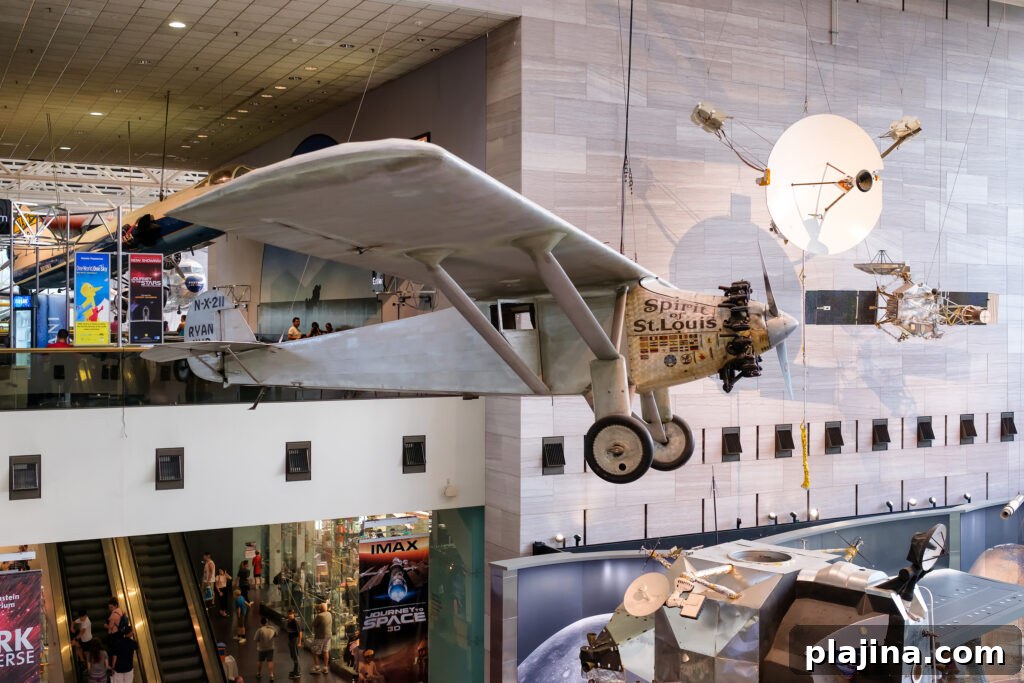
For the world’s largest collection of historic aircraft and spacecraft, the Smithsonian National Air and Space Museum in Washington, D.C., is unmatched. Currently undergoing a major renovation, the museum still houses iconic artifacts such as the original 1903 Wright Flyer, Charles Lindbergh’s Spirit of St. Louis, and John Glenn’s Friendship 7 spacecraft. Additional highlights include a studio model of Star Trek’s Enterprise and display models related to Mars rover testing, all presented with interpretation that links early flight to modern exploration.
Those fascinated by military aviation should plan a visit to the National Museum of the U.S. Air Force in Dayton, Ohio. The museum’s collection exceeds 350 aircraft, missiles, and related artifacts that document aviation’s role from World War I and II through the Cold War, the Space Race, and more recent conflicts. A centerpiece of the collection is the Boeing B-17F Memphis Belle, famed as the first heavy bomber to complete 25 combat missions during World War II.
© Mickem | Dreamstime.com
In Denver, the Wings Over the Rockies Air & Space Museum presents an impressive range of exhibits that span military and civilian flight. The collection includes rotary- and fixed-wing aircraft such as the Bell UH-1M Iroquois “Huey,” a Boeing B-52B Stratofortress, and a three-quarter-scale replica of the X-wing fighter from the Star Wars universe—blending historical artifacts with cultural references that appeal to diverse audiences.
In the desert city of Tucson, Arizona, the Pima Air & Space Museum stands out as the largest non-government-funded air and space museum in the world. Its roughly 400 aircraft represent decades of aviation innovation, from reconnaissance platforms like the Lockheed SR-71 Blackbird to iconic fighters such as the Grumman F-14 Tomcat and heavy bombers like the Boeing B-29A Superfortress. The breadth of the collection offers a deep dive into both technological development and operational history.
Seattle’s Museum of Flight emphasizes hands-on learning and family engagement. Interactive exhibits let children and adults climb into several historic aircraft and a full-fuselage NASA space shuttle trainer. The museum’s Red Barn—Boeing’s original airplane factory—tells the company’s early story, and multiple commercial Boeing airliners on display illustrate the evolution of passenger aviation and aircraft manufacturing.
The U.S. Space & Rocket Center in Huntsville, Alabama, shifts the focus from atmospheric flight to space exploration. The museum’s outdoor plaza features 27 rockets and missiles, while indoors more than 1,500 artifacts trace the history of rocketry and human spaceflight. Highlights include a preserved Saturn V Moon Rocket—a national historic landmark—as well as immersive attractions such as a planetarium, simulators, and the G-Force Accelerator, which is included with general admission.
Across the United States, these museums and many others preserve the machines and stories that mark aviation’s rapid progress. Whether you’re a history buff, a technology enthusiast, or visiting with family, the nation’s aviation museums offer rich, often hands-on experiences that celebrate human ingenuity in the skies and beyond.