
All airplane flights begin on the ground. Airports are the obvious starting points, but airspace concerns extend well beyond terminals. Altitude does not always provide a clear boundary: nations often assert sovereignty from the surface into the upper atmosphere, and airspace management increasingly spans terrestrial and aerial domains.
© COLICARANICA – DREAMSTIME.COM
Airport security relies on a mix of visible and invisible measures: fences, controlled doors with alarms, surveillance cameras, motion detectors and other technologies. These measures evolve over time, but experts emphasize that the most effective deterrence often happens before someone reaches the terminal. Screening passengers, crew and staff for weapons or contraband is routine, though imperfect—occasional lapses occur and, in many cases, no incident follows.
“Security is both a feeling and a reality, and the two are different things,” observes Bruce Schneier, a public-interest technologist who studies security, technology and people. He argues that airport screening is a last line of defense that has limits. More effective approaches, he says, emphasize investigation and intelligence—measures that can prevent incidents regardless of tactics or targets.
Kevin Garrison, a retired senior airline captain and frequent aviation commentator, predicts that security will become increasingly invisible and seamlessly integrated into everyday travel. The goal is to make protective measures so routine and unobtrusive that passengers scarcely notice them while remaining safer as a result.
It is worth remembering that airplane terrorism remains exceptionally rare. Schneier notes the overall risk today is comparable to past decades. Statistically, driving to the airport is far more dangerous than flying. In the United States in 2018, there were tens of thousands of fatal motor vehicle crashes resulting in over 36,000 deaths, while aviation fatalities that year numbered fewer than 400—most involving small private aircraft rather than commercial airliners.
Airports are also evolving to cater to customer comfort and to maximize revenue. Premium passengers often enjoy dedicated check-in counters, exclusive lounges and chauffeured transfers across tarmacs. Lounge construction continues at major hubs; for example, Delta Air Lines expanded lounge facilities in Tokyo’s Haneda Airport after shifting some international flights there earlier this year.
On a global scale, airport infrastructure investment is expected to be substantial over the coming decade, with industry bodies forecasting trillions in development. Airlines are simultaneously improving passenger communication about operations—tools that provide timely updates about delays and cancellations help travelers plan and reduce stress.
Just beyond the terminal, the airspace around airports faces a range of hazards. Birds pose a persistent threat—bird strikes can damage engines and compromise safety. Airports use many techniques to reduce bird presence, from acoustic deterrents and fireworks to more targeted approaches such as falconry and trained dogs, which have proven effective at keeping runway areas clear.
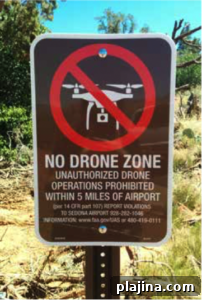
Drones have created fresh challenges. Regulations prohibit operating unmanned aircraft within five miles of most airports or above 400 feet without FAA authorization; flying in controlled airspace requires approval and, in many cases, a Remote Pilot Certificate under Part 107. Many reported drone sightings near airports are difficult to verify and may be misidentifications, according to drone specialists.
Laser strikes are another concern. Most consumer laser pointers cannot affect aircraft at cruising altitude, but during takeoff and landing—when aircraft are lower—laser beams can potentially distract or momentarily dazzle pilots. Although hitting a moving target with a handheld laser is difficult, such incidents have occurred and are treated seriously because of their potential to compromise safety.
Over longer routes, commercial aircraft traverse international airspace and sometimes fly near or over politically sensitive regions. Incidents such as accidental airspace incursions or hostile fire are rare but can have severe consequences. Airlines and aviation authorities continuously adjust flight paths and declare temporary no-fly zones to avoid newly identified risks.
Looking ahead, the industry is reconsidering route structures that have dominated recent decades. The hub-and-spoke system—efficient for airlines but sometimes time-consuming for passengers and fuel-inefficient—is under renewed scrutiny. Alternatives that reduce total travel time and emissions are gaining attention.
High-speed rail and emerging technologies like hyperloop systems offer practical options for medium-distance travel. For trips of roughly five hours or less by road, door-to-door travel can be faster and more convenient than flying when airport procedures and transfers are factored in. In many countries, high-speed rail already provides a competitive and often greener alternative to short-haul air travel. This intermodal thinking has prompted cooperation between aviation and rail organizations to improve connectivity—Frankfurt Airport, for example, integrates long-distance rail service directly into its terminal complex.
In the United States, aviation infrastructure struggles to keep pace with growth. While U.S. airspace and airports rank among the safest and most efficient globally, many facilities are aging. The last major U.S. airport built on a large scale opened decades ago, and upgrades or new capacity will be necessary to meet future demand.
Emerging concepts such as Urban Air Mobility (UAM) require rethinking airport design. NASA’s vision of UAM includes diverse operations—small delivery drones to passenger-carrying air taxis—over populated areas. Successful integration of such services will likely require redesigned terminals, dedicated drop-off and pick-up areas positioned to minimize conflicts with traditional runway operations, and infrastructure tailored to support frequent, short urban flights.
Farther in the future, space tourism and suborbital point-to-point travel may reshape how people move long distances. Advances in commercial spacecraft designs bring the prospect closer to reality, and aerospace education programs have begun offering courses focused on this emerging sector. While widespread commercial space travel remains limited today, ongoing technological progress and growing industry interest suggest it could become a meaningful part of the transportation mix in years to come.
© EMILY743 – DREAMSTIME.COM
Air travel continues to adapt: security concepts grow subtler, infrastructure investments expand, and alternative transport modes mature. Together, these trends will influence how airports function, how passengers move, and how aviation integrates with broader transportation systems in the years ahead.