
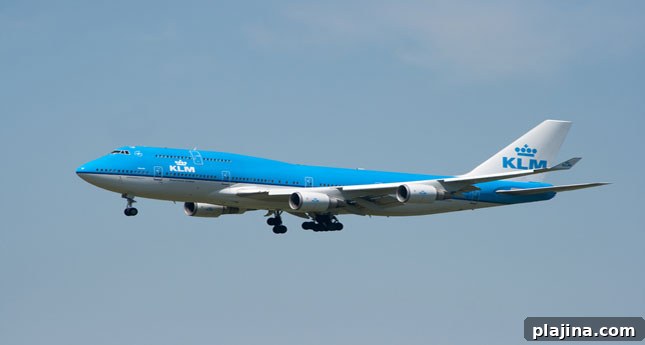
Air France and KLM Royal Dutch Airlines are testing in-flight WiFi on two Boeing 777-300ER aircraft operating between Europe and North America. During this trial, passengers in all travel classes can connect using WiFi-enabled smartphones, laptops, or tablets for a fixed fee. The trial is carried out in partnership with Panasonic Avionics and is scheduled to continue through the remainder of 2013.
The trial aims to assess connectivity performance, user experience, and operational integration on long-haul routes. By evaluating real-world use across different cabin classes and various flight phases, the carriers will gather data on bandwidth allocation, connection stability, login procedures, and how the service impacts in-flight operations and crew procedures. The results will inform potential wider rollouts and pricing strategies for future deployments.
Air France and KLM emphasize that this in-flight connectivity test aligns with their broader strategy to expand customer offerings and modernize onboard services. The ability to stay connected en route supports both business travelers who need steady access to email and online resources and leisure passengers who want entertainment or communication options during flight. Testing on Boeing 777-300ER aircraft provides a representative environment for long-haul performance, given those jets’ common use on transatlantic schedules.
Key aspects of the trial include a consistent pricing model across cabin classes and compatibility with common consumer devices. The carriers and their technology partner will monitor usage patterns, peak demand periods, and the types of online activities passengers pursue, such as messaging, web browsing, streaming, and cloud access. Understanding these patterns will help determine network capacity requirements and the balance between fair access and overall service quality.
Beyond technical performance, the trial also examines customer satisfaction, ease of purchase and authentication, and the clarity of instructions provided to passengers. Feedback collected from travelers during the test phase will guide refinements to the user interface, payment flows, and informational materials so that any full-scale implementation is intuitive and reliable.
Alexandre de Juniac, chairman and CEO of Air France, highlighted the importance of innovation in the airlines’ service strategy: integrating in-flight WiFi and data transmission supports ongoing efforts to provide passengers with new products and improved experiences. The partnership with Panasonic Avionics brings established inflight connectivity expertise to the trial, helping ensure the test is grounded in proven technical capabilities while allowing customization for the carriers’ specific operational needs.
Testing connectivity on long-haul flights also allows the airlines to assess regulatory and security considerations related to in-flight data services. Ensuring compliance with aviation communications standards and protecting passenger data are essential components of any deployment. The trial helps identify any necessary adjustments to onboard IT systems, crew procedures, or passenger guidance to meet those requirements.
Following the conclusion of the trial period, Air France and KLM plan to review the findings and decide on next steps based on technical results, passenger feedback, and commercial considerations. If successful, a broader rollout could offer travelers more consistent internet access on long-haul flights operated by the two carriers, enhancing the inflight experience while supporting evolving passenger expectations for connectivity.