
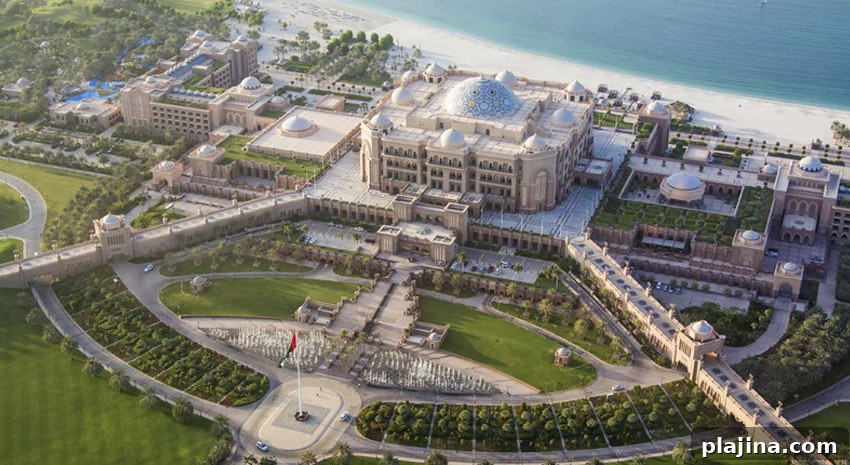
Where to begin? About 990 feet up is as good a place as any. An express elevator takes us from ground level to the 74th floor of the Etihad Towers in 60 seconds. With our ears popping, we step onto the polished marble and find Abu Dhabi laid out below like an architect’s scale model.
Directly beneath us sits the opulent Emirates Palace hotel, its gardens arranged with symmetrical precision and the United Arab Emirates flag fluttering proudly at the center.
Turning to the eastern panoramic windows, the Corniche curves along the glassy green-blue waters of the Arabian Gulf. The shoreline is fringed with modern skyscrapers that grow denser toward the hazy horizon.
This skyline is not static. It changes month by month as new floors go up and new construction pits appear. To understand Abu Dhabi’s rapid transformation, we compared the view with aerial photographs from the 1970s: back then, only a few roads and a couple of landmarks provided orientation; almost everything else has been reinvented.
Even the coastline has been remade. Land reclamation projects reshaped the Corniche and created new peninsulas and offshore islands. Today’s vista is a moment in an evolving story; in a decade or two it will look as dated as the 1970s pictures.
Parallel to the Corniche lies the flat, tawny expanse of Lulu Island, currently designated for development and proposed as the site of a centerpiece 1,300-foot Lulu Tower. The next time we get a bird’s-eye view of Abu Dhabi, we might be looking back from there.
Abu Dhabi’s skyline reflects both its oil wealth and a strategic push to diversify the economy. The emirate still holds a substantial share of the world’s proven oil reserves, but those reserves are expected to decline sharply this century. Planning for a post-oil future is already well underway.
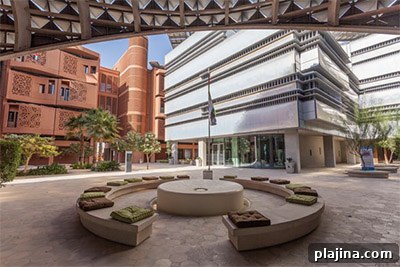
Masdar Institute of Science and Technology © TYPHOONSKI | DREAMSTIME.COM
Masdar City, under construction near Abu Dhabi International Airport about 11 miles southeast of downtown, embodies the emirate’s drive to reduce petroleum dependence. This ambitious $22 billion project set out to become the world’s first carbon-neutral city, powered predominantly by solar and renewable energy and designed to host up to 50,000 residents alongside research and development facilities focused on clean technology.
Harsh desert realities forced planners to temper some initial ambitions. Frequent sandstorms reduce solar-panel efficiency, making a strictly carbon-neutral outcome difficult to guarantee. A prolonged period of lower oil prices also tightened public budgets and slowed development. Completion, originally expected earlier, is now projected for 2030, though that timeline may still change.
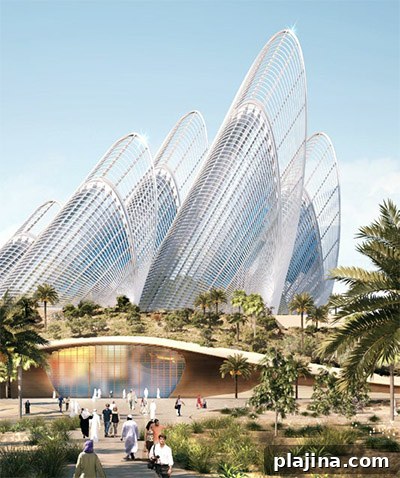
Zayed National Museum of the U.A.E. © ZAYED NATIONAL MUSEUM OF UAE
Saadiyat Island is another high-profile development reshaping Abu Dhabi’s cultural and tourist landscape. The $27 billion scheme aims to create a cultural district featuring international museums and landmark architecture, including the Louvre Abu Dhabi, a Guggenheim designed by Frank Gehry, the Zayed National Museum by Norman Foster + Partners, and a Performing Arts Centre by the late Zaha Hadid.
Like Masdar City, Saadiyat experienced delays as oil revenues fell and timetables were adjusted. The Louvre’s Jean Nouvel–designed building, for example, opened later than originally planned, and work on several other attractions continues in stages.
A forecast of 5 percent economic growth helped reassure observers that Abu Dhabi had weathered a difficult downturn. Government spending cuts of around 20 percent helped compensate for reduced oil income. When oil prices recover, Abu Dhabi’s streamlined public finances and diversified investments should position the emirate to grow more sustainably.
Part of Abu Dhabi’s resilience comes from the character of its people and its history. Long before oil transformed the region, inhabitants navigated a demanding desert environment—moving between oases or making a living from the gulf’s waters, with pearling a significant historical trade.
Predicting the future remains difficult. No one standing on the Corniche in the 1970s could have imagined today’s skyline, and even from the heights of the Etihad Towers our projections for the next four decades will probably fall short. Yet Abu Dhabi has shown an ability to adapt and seize new opportunities, and that adaptability will be crucial as the emirate reshapes its economy and cityscape.
Things to Do in Abu Dhabi
Abu Dhabi is the largest and wealthiest of the United Arab Emirates’ seven emirates. Inland, vast low-lying desert plains are punctuated by occasional rugged outcrops and lush oases.
Jebel Hafeet, the emirate’s highest mountain at 4,098 feet, is accessible by one of the world’s most dramatic roads with about 60 hairpin bends. The summit rewards visitors with sweeping views over Abu Dhabi and into neighboring Oman. At the mountain’s base lies Al Ain, known as the Garden City, an oasis settlement that offers a striking contrast to the surrounding desert.
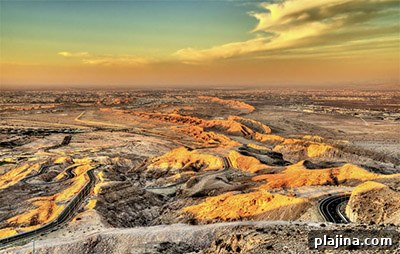
View from Jebel Hafeet mountain toward Al Ain © LEONID ANDRONOV | DREAMSTIME.COM
Within the city, attractions include the Sheikh Zayed Grand Mosque, a spectacular structure that cost $545 million and features materials sourced from around the world. The mosque draws on architectural traditions from across the Islamic world, with Moroccan, Persian and Arab influences. Non-Muslim visitors are welcome at no charge, but a respectful dress code must be observed: no shorts or sleeveless tops, and women should wear a headscarf and clothing that covers the ankles.
Abu Dhabi Heritage Village offers a glimpse of life before oil transformed the region, with reconstructions of a traditional Bedouin village and a souq. From its walls you can look across the water and see the modern skyline that replaced the older cityscape.
For relief from summer heat, Yas Waterworld provides 43 rides and attractions, and accepts Western swimwear including bikinis. Nearby, Yas Marina Circuit hosts the Abu Dhabi Formula 1 Grand Prix each November. When races are not in session, the circuit offers behind-the-scenes tours, driving experiences, and racing courses, including lessons for younger drivers.
CHECKING IN WITH ARJUN MUKERJI
Director, Haris Al Afaq
How long have you been doing business in Abu Dhabi?
My father founded the group of companies in 1968 when the U.A.E. was still the Trucial States. Our Abu Dhabi branch opened in the mid-1970s, so our business has grown alongside the country’s rapid development.
What opportunities does Abu Dhabi offer American investors?
Beyond oil and gas, Abu Dhabi has expanded tourism, hospitality, real estate and infrastructure projects, with developments such as golf courses, five-star hotels, Yas Island’s marina and racetrack, and cultural projects on Saadiyat Island. Major infrastructure work continues, including public-transport projects and power generation initiatives.
What cultural differences should American investors be aware of?
Business culture in the region can be flexible on deadlines and timelines; a rigid, black-and-white approach often frustrates newcomers. Rapid development has produced laws and regulations that can seem unclear or inconsistent, and reliable public data may be limited. Patience and local partnerships can ease the process.
What key future developments should investors watch?
Despite recent fiscal tightening, the U.A.E. benefits from one of the world’s largest sovereign wealth funds and a relatively small local population, which supports long-term stability. Policy changes such as the introduction of value-added tax and potential corporate or personal taxes are likely as the government adapts to new fiscal realities.
What attraction do you particularly recommend?
Yas Marina and the F1 circuit are major draws. For desert landscapes, the Empty Quarter’s vast dunes and the luxury Qasr Al Sarab Desert Resort provide dramatic experiences. Al Ain and the drive up Jebel Hafeet are also highly recommended.
Abu Dhabi Info to Go
Scheduled international flights arrive at Abu Dhabi International Airport (AUH), about 19 miles east of downtown. The airport is the main hub for Etihad Airways and offers border preclearance for flights to the United States.
Abu Dhabi: Just the Facts
Time zone: GMT +4
Phone code: Country code: 971, City code: 2
Entry/exit requirements: U.S. citizens need a passport valid for at least six months beyond arrival and a confirmed round-trip ticket. Visas on arrival typically allow stays up to one month; for extensions, contact Abu Dhabi immigration.
Currency: Dirham
Official language: Arabic; English is widely spoken, with Persian, Hindi and Urdu also common.
Key industries: Oil and gas, financial services, tourism, real estate
Where to Stay in Abu Dhabi
Emirates Palace Abu Dhabi A lavish property famed for its opulence and grand interiors. West Corniche Road — luxury-level pricing.
Le Royal Méridien Abu Dhabi Spacious rooms and a convenient location on Sheikh Khalifa Street; comfortable and well appointed.
Southern Sun Abu Dhabi A modern, value-oriented 4-star option close to the Corniche on Al Mina Street.
Restaurants in Abu Dhabi
Asia de Cuba Located at The St. Regis on the Corniche, the restaurant offers Asian cuisine with Latin influences and a lively atmosphere. The St. Regis Hotel, Corniche Road — mid-to-upscale pricing.
Hakkasan Abu Dhabi Housed in the Emirates Palace, Hakkasan serves contemporary Cantonese in an elegant setting — ideal for special occasions. West Corniche Road — upscale pricing.
Lebanese Mill A popular no-frills spot for authentic Lebanese fare; a busy local favorite on Fatima Bint Mubarak Street.