
“You’ve got to be kidding,” gasped one of my more cautious, less travel-obsessed friends. “You’re going to walk around at half the cruising altitude of a 747, without oxygen?”
I hadn’t framed it that way before. If I had, I might have answered differently when travel photographer Nevada Wier invited me to join a trek in the Peruvian Andes and share costs. “Hope you can make it. It’ll be great,” she wrote in her email.
I hesitated, offering weak excuses — I couldn’t afford it, or I might succumb to the altitude or overexertion — but the trip was too enticing to refuse. In the end I told her to count me in.
After I hit send, panic set in. I’m generally fit and an avid walker, but I’ve lived my whole life at sea level and had no experience trekking at extreme altitude.
To calm my nerves, I launched a serious training program. For seven weeks I walked four to 10 miles daily in the Santa Monica Mountains. Nothing replaces time spent at altitude, but I could at least make sure my legs were prepared.
Armed with a bottle of Diamox to help with acclimatization, I flew to Cuzco, Peru. I added a couple of nights there to begin adjusting to the nearly 11,000-foot elevation. That stay made it clear how potent altitude can be: I found myself with a racing heart and shortness of breath as I slowly navigated the city’s cobblestone streets.
Soon it was time to hit the trail. My five trekking companions and I met our Peruvian guide, Manuel Luna, an experienced climber and guide who told us our route would reach more than 16,000 feet. The itinerary combined a less-traveled section with the well-known Ausangate Circuit.
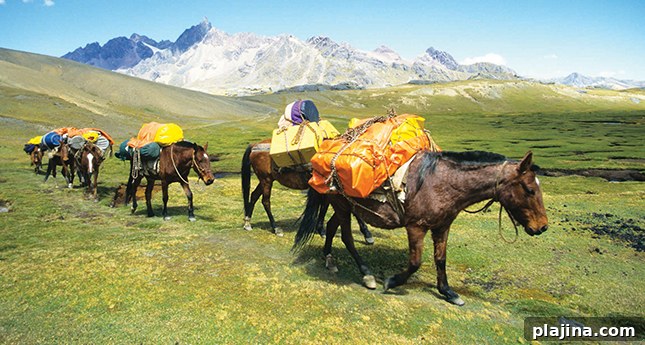
We packed into a van with our duffels, food supplies and two cooks, while the arrieros and pack horses had gone ahead and would meet us at camp. Eight hours on mostly unpaved, bumpy roads brought us to Phinaya, a tiny town at 14,600 feet. That first night I felt my worst altitude symptoms: an upset stomach and fatigue, and I passed on dinner to huddle in my sleeping bag.
By morning, a couple of fellow trekkers were still tent-bound from altitude effects. Nevada, a seasoned mountaineer, suggested we rest an extra day to give everyone a better chance to acclimatize. It proved to be a wise choice.
The following morning, still light-headed and with diminished appetites, we set out at 8:30. The first day was slow and deliberate: lungs burning, legs aching, we stopped at summits to catch our breath and take in the panorama. Surrounding us were snow-capped peaks, glaciers and green valleys dotted with alpacas. The scenery felt both grand and intimate; at times the silence seemed spiritual.
Mid-morning our cooks, Klever and Porfirio, breezed past us as if they were at sea level. At noon we found them beside a stream preparing lunch. Hungry but without much appetite, we sipped coca tea and nibbled on cheese and guacamole sandwiches.
Coca tea appeared at nearly every stop. Brewed from coca leaves — far removed from the processed drug — it has an herbal flavor and is traditionally believed to improve oxygen absorption and ease altitude symptoms. Locals also chew the leaves to curb hunger and relieve fatigue; our guide would occasionally offer a few to tuck into a cheek. Whether it truly eased malady or not, it became a comforting ritual.
The first day was short, and by mid-afternoon we relaxed at a campsite beside a small lake ringed by snowy peaks. The area, Ccasccara, was one of our loveliest overnight spots. After the arrieros set up camp and we sorted tents, we gathered in the tea tent for the daily ritual: cookies, crackers, coca tea and conversation about the day’s highs and aches.
Nights were cold. While daytime temperatures hovered around 60°F beneath bright sun, once the sun set the mercury plunged below freezing. At first I was startled by a booming sound slicing the night air; it turned out to be avalanches rolling off nearby snow-packed peaks.
Over the next days we crossed high passes, the highest — Comercocha — peaking at about 16,300 feet. We walked the shores of Sibinacocha, the area’s largest lake, and carefully made our way across spongy, marshy tundra. My legs ached, sinuses throbbed and food remained unappealing, but I found a steady rhythm — a “Zen of walking” — that helped me transcend the discomfort.
The landscape presented new vistas at every turn: jagged mountains, plunging valleys, the occasional vicuna outlined against stormy skies, and the ever-present alpacas. Above tree line, growth hugged the ground — tough little blue, pink and white daisy-like flowers and hardy weeds that survive the harsh conditions.
Here and there we passed tiny hamlets of mud huts, low stone-walled corrals and fields of white and brown alpacas tended by Quechua-speaking campesinos in traditional dress. Those encounters felt intimate and timeless.
Our route led to Palomani, the area’s highest pass, rumored to be close to 17,000 feet. The night before we camped beneath the shadow of Nevada Ausangate, the region’s dominant summit topping 19,000 feet. The morning of the climb was cloudy and drizzly; for two hours the path seemed to go straight up. Fortunately, our breathing steadied — a clear sign that we had finally acclimatized.
The final three days followed the more frequented Ausangate Circuit. Local women visited our camps with alpaca-wool purses, scarves and hats. At Phacchanta, our last campsite, we played with local children and soaked in a concrete pool fed by a hot spring. That evening we were treated to a pachamanca — a traditional feast in which a sheep is purchased, roasted in an earth oven and shared among the group.
The dinner felt celebratory. Local vendors sold Peruvian beer, and Luna brought out a bottle of pisco. We raised glasses to our guides and helpers, congratulating one another for having adapted to the altitude and completed the trek. It was a fitting finale to our time in the Andes.
Info To Go
Mountain Travel Sobek, based in California, offers a 12-day guided trip including four days on the Ausangate Circuit, priced at $3,995–$4,295 depending on group size (international air not included). Andes Adventures runs an 18-day itinerary with five days on the Ausangate Circuit for $3,095–$3,295 depending on group size (international air not included). Peruvian Andes Adventures, a local operator, offers a six-day Ausangate Circuit trek for groups of two or more; contact the company directly for pricing.