
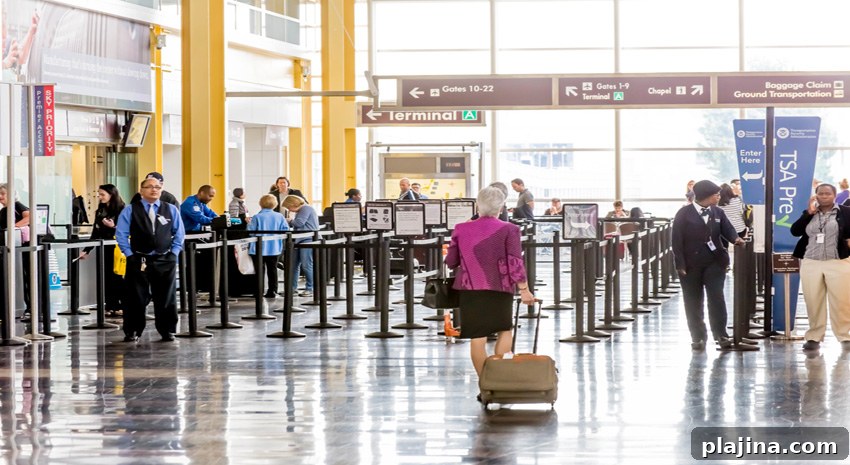
The Transportation Security Administration is testing updated screening procedures at 10 U.S. airports. These trials do not change what passengers are permitted to carry on board; they only change how TSA screens those items.
In addition to removing a laptop, travelers at participating airports may be asked to take out other items from their carry-on bags.
“Over the past year, TSA has been adjusting screening procedures at select U.S. airports on a trial basis. There are no changes to what is allowed in carry-on bags,” the agency says. “Travelers at select test locations may be asked to place certain electronics and other items in a separate bin for screening, and may experience additional bag checks.”
Electronics larger than a smartphone, such as e-readers and tablets, might need to be removed from carry-ons and placed in a separate bin. Certain food items could also require additional inspection and may need to be screened separately. These procedures do not apply to passengers using TSA PreCheck.
These adjustments are part of TSA’s ongoing efforts to improve screening efficiency and are not being implemented in response to a specific threat. The stated aim is to streamline checkpoint flow and reduce the number of manual bag searches performed by officers. Testing began a year ago at four airports and has since expanded to six additional locations, including Los Angeles International, Boston Logan International and Detroit Metropolitan Wayne County airports.
TSA officials say the changes are not expected to lengthen lines. Data from the trials indicate that the time passengers spend removing additional items is offset by quicker and clearer X-ray images, which reduce operator confusion and lower the frequency of manual bag checks.
In addition to item-screening changes, TSA is piloting ID-verification machines that could replace manual checks of passports and driver’s licenses. Under this approach, travelers would present their ID to an officer who scans a barcode, and the machine would verify the person against the passenger list, potentially removing the need to show a boarding pass. These machines are currently being trialed in PreCheck lanes at four airports.