Athens feels like history made visible. According to myth, Athena and Poseidon competed to become the city’s patron deity: Poseidon struck the Acropolis rock with his trident and produced salt water, while Athena planted an olive tree that blossomed and bore fruit. The olive tree won, and the city bears her name.
We were craving rich Greek olives as we waited in a long taxi line after landing at Athens’ busy airport. Across the street, the extended subway line invited us in. Rolling our suitcases to the ticket window, Alan pointed to the map and smiled. The ticket seller—who didn’t speak English—pointed back, smiled, and said, “Okay.”
Only later did we learn that “ohi” means “no” and “nai” means “yes,” a small but useful lesson for navigating Athens. In spite of that early misunderstanding, we found the Athens metro clean, fast, and convenient, and it became our preferred way to reach the city’s many historic sites.
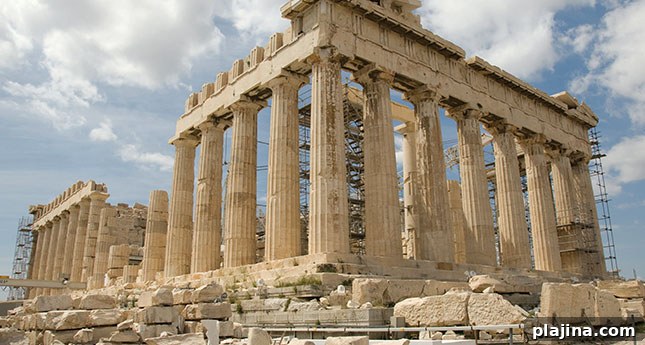
The Acropolis is the preeminent monument on the European Cultural Heritage list: a flat-topped rock rising about 490 feet above sea level and dominating Athens. Its crowning temple, the Parthenon, was built in the fifth century B.C. as a shrine to Athena and remains a powerful symbol of ancient Greece and the origins of democracy. Walking up the hill, sitting in stone seats once filled by Attic citizens who listened to orators like Demosthenes, brought the past vividly to life.
At the summit, the Parthenon’s majesty is overwhelming, and the view across ancient and modern Athens is striking. Many of the marble sculptures that once adorned the temple are missing—taken in the early 19th century and now displayed in the British Museum as the Elgin Marbles. Greece continues to press for their return, and the New Acropolis Museum is prepared to house them. The museum, praised for Bernard Tschumi’s design, revealed archaeological remains during construction that have been integrated into its glass-floored displays. The Parthenon Gallery is a glass-enclosed space rotated 23 degrees to align with the ancient temple, offering uninterrupted views of the monument. Inside, the museum displays the surviving Greek pieces of the Parthenon frieze alongside plaster casts of those held abroad, arranged as they once appeared.
For additional discoveries, head underground. The Syntagma metro station showcases archaeological finds uncovered during construction, including Roman baths, ancient roads, and cemeteries preserved beneath glass. Informative labels in both Greek and English explain the layered history. Above ground in Syntagma Square, the changing of the guard before the imposing Neo-Classical Parliament building is a must-see. The Evzones, with their tsarouhi shoes and distinctive fustanella skirts—each pleated skirt said to carry 400 folds—stand immobile as tourists gather to photograph them.
Behind the Parliament, a stroll through the National Garden leads to the Benaki Museum, housed in the Benaki family mansion and the largest independent museum in Greece. The museum’s recreated Ottoman-style rooms and Byzantine shrines are captivating. Exhibits of life-sized mannequins dressed in historic costumes from Greece’s many islands offer an atmospheric glimpse into local traditions. After wandering the galleries and the sword displays, the Benaki’s rooftop café is a pleasant spot to sit with a glass of chilled Greek wine and enjoy the view.
From the Benaki, an uphill walk through the fashionable Kolonaki neighborhood and a short funicular ride bring you to the top of Lycabettus Hill. Shared by a tiny St. George’s church and a discreet glass-walled café-restaurant, Athens’ highest point offers full-circle views of the city and the Acropolis below. It’s an exceptionally romantic place to watch the sunset with a cold ouzo in hand.
No visit to Athens is complete without the National Archaeological Museum. The imposing Neo-Classical building houses treasures spanning prehistory to late antiquity, including the Bronze Age golden funerary mask often linked to “Agamemnon” and the striking bronze statue known as the “Lady of Kalymnos.” Recovered from the sea in 1994, the statue—likely from the fourth century B.C.—is being carefully conserved on-site, allowing visitors to observe the restoration process. The fisherman who found it received a government stipend, and Greece now offers rewards for reported discoveries to encourage finds to be turned in to authorities.
If you have time for one more museum, visit the Museum of Cycladic Art. The museum’s austere, geometric marble figures—many female forms possibly associated with early cult practices in the Cyclades—feel remarkably modern despite dating from 3200–2000 B.C., centuries before the Parthenon was built.
Info to go
Metro Line 3 links Eleftherios Venizelos Airport (ATH) with central Athens, including Syntagma, though parts of the line may be temporarily suspended for station construction. A taxi from the airport to downtown takes roughly 35 minutes and costs about $35; confirm that the meter is on and set to Tariff 1 (Tariff 2 applies after midnight and is more expensive).
Lodging
Acropolis Museum Boutique Hotel — A quiet gem with 22 elegant rooms in a renovated classical building, serving fresh-squeezed orange juice and creamy Greek yogurt at breakfast. 48 Syngrou Ave., tel 30 210 924 9050. $
Hotel Grande Bretagne — Classic luxury with attentive service and panoramic city views from an elegant rooftop restaurant. Constitution Square, tel 30 210 333 0000. $$$
St. George Lycabettus Boutique Hotel — At the foot of Lycabettus Hill, this chic hotel features a lively rooftop lounge and a small seasonal pool. 2 Kleomenous St., tel 30 210 729 0711. $$$
Dining
Edodi — No fixed menu: seasonal ingredients are presented and described by the maître d’, with theatrical presentation and refined flavors. 80 Veikou, Koukaki, tel 30 210 921 3013. $$$
O Thanassis — A bustling spot in Monastiraki known for people-watching and excellent souvlaki. 69 Mitropoleos St., tel 30 210 324 4705. $
Orizontes — Named for its sweeping views, this romantic restaurant atop Lycabettus Hill is reached by the Kolonaki funicular. Lycabettus Hill, tel 30 210 722 7065. $$$$