
IN THE DAYTIME, ALENTEJO’S visitors explore a lush countryside dotted with vineyards, cork oaks and fairytale-like churches. At night many travelers stay in a castle or one of the Pousadas de Portugal, where the experience feels royal without a royal price.
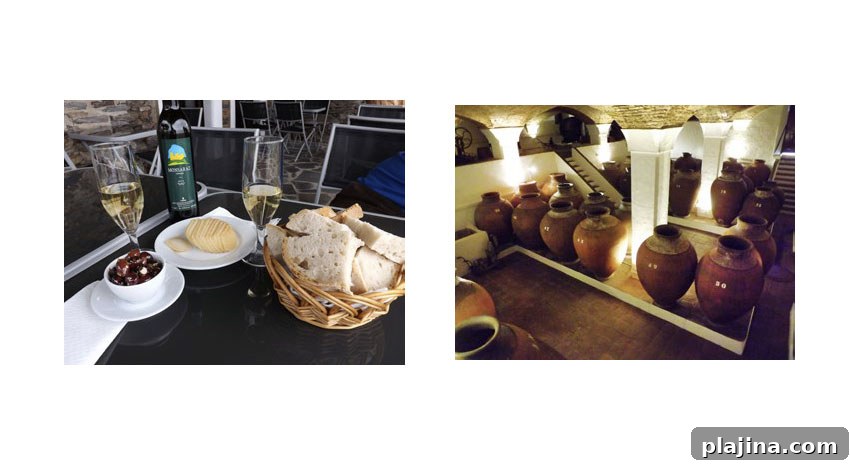
Most tourists in Portugal concentrate on Lisbon, the Algarve or the Douro wine region, so Alentejo’s towns remain peaceful and uncrowded. During a visit to Casa Agricola José de Sousa Rosado Fernandes Winery in Reguengos de Monsaraz, my guide—still with grape-stained hands from moving hoses—showed me huge clay vats in a deep cellar that reproduce ancient fermentation methods. Later that evening we enjoyed a bottle from the same winery at a nearby restaurant.
Alentejo covers roughly 30 percent of Portugal’s land area but is home to only about 7 percent of the population. Meals here are frequently farm-to-table by default: a glass of wine inside the fortresses of Estremoz or Monsaraz pairs naturally with aged cheese, cured olives, fresh bread and olive oil produced just beyond the centuries-old walls.
The region’s main city, Évora, has fewer than 60,000 residents and remains partly enclosed by medieval walls. This compact UNESCO World Heritage city contains Roman temple ruins more than 2,000 years old, a former palace and Gothic churches, alongside several tastings rooms and wine shops—making it an ideal spot to get an overview of local wines.
Portugal has nine principal grape varieties, many of them unfamiliar to foreign visitors. For those who can’t distinguish an Alfrocheiro from a Roupeiro, the good news is that many Alentejo wines are blends, and prices are generally aimed at local markets, so experimenting doesn’t carry a big cost.
Villagers don’t dine out frequently, so the best restaurants are often discovered by following the sound of laughter to a lively café. For an authentic local experience, visit Borba, where a few cafés serve wine made by traditional methods alongside simple regional dishes. Dozens of wineries are scattered across Alentejo, with notable clusters around Borba, Vila Viçosa and Estremoz—towns known for historic architecture built with nearby marble and castles that feel like they belong in an adventure film.