
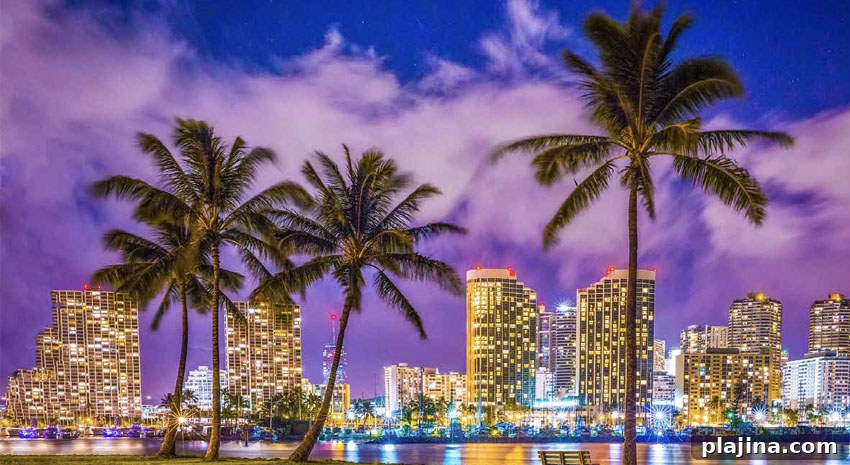
For a city that welcomes more than 5 million visitors each year — a figure that continues to climb — managing growth is a constant challenge. Known as the crossroads to tropical paradise in the Pacific, Honolulu is prized for its warm hospitality and striking natural scenery. U.S. residents can travel there without a passport, and many visitors and business travelers are drawn to the climate and lifestyle, deciding to relocate and make the islands their home.
Residents often feel the pressure of rising demand and look to local government to preserve the small-scale character of neighborhoods, parks, shops and local restaurants. Recently, Honolulu’s mayor proposed a moratorium on permits for oversized residences that many call “monster homes.” These large developments can disrupt long-established neighborhoods, strain city services and alter the fabric of communities. Exceptions will still be made in particular cases, and property values are likely to keep increasing. Tourism is expected to expand, and hotel rooms, meeting facilities and related services will grow to meet that demand. Natural assets — the sunshine, mountains, beaches and deep-blue waters — remain powerful magnets for both visitors and new residents.
Military installations surround much of Honolulu, keeping significant tracts of land off-limits to development. Those bases contribute strongly to the local economy, provide jobs for residents and help preserve green space that cannot be built on.
Two districts attracting renewed development plans are Kaka‘ako, situated between downtown Honolulu and Waikiki and celebrated for its lively food scene, and Kapolei, a fast-growing community on Oahu’s leeward side near Ko Olina Beach and Paradise Cove.
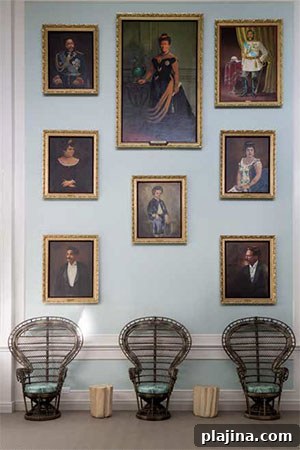
Queen Kapiolani Hotel artwork © QUEEN KAPIOLANI HOTEL
Hotel supply and pricing also shape visitor patterns. Affordability is a top priority for families and groups, and a new wave of “limited service” hotels has emerged to fill that niche. By omitting on-site spas, full-service restaurants, pools or large fitness centers, these properties can offer lower nightly rates for travelers who don’t need or use those amenities.
Still, many of Honolulu’s hotels and meeting venues are investing and expanding. After a $35 million renovation, the independent boutique Queen Kapiolani Hotel reopened with a 1960s motif, original art borrowed from the Bishop Museum, an updated pool deck and some of the best Diamond Head views in Waikiki. The Shoreline Hotel in Waikiki also refreshed its design with bold artwork and graphics, positioning itself as one of the most Instagram-friendly properties to attract younger guests.
For visitors who fall in love with Honolulu, new condominium developments are under way in Kaka‘ako, Ala Moana and Waikiki, offering more long-term housing options and bringing residents closer to the city’s amenities.
One innovative tool for connecting visitors with local culture is the Art World Escape (AWE) mobile app. AWE helps users discover Honolulu beyond the usual tourist paths by linking them with local creatives — painters, graffiti artists, musicians and food enthusiasts — for curated experiences. Whether you want to explore Hawai‘ian-style hip-hop or be among the first to try a new chef’s restaurant at the International Market Place, the app can turn a conventional vacation into a more authentic and memorable trip while introducing you to interesting local personalities.
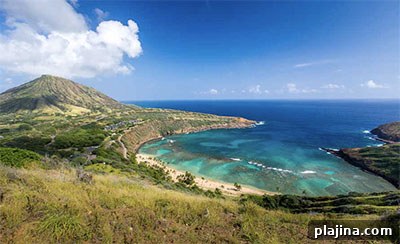
Hanauma Bay © KRIDSADA KAMSOMBAT – DREAMSTIME.COM
Scenic drives
Heading east from Honolulu on H-1 toward the island’s drier southern shore, the landscape shifts quickly as rainfall decreases. Beyond Diamond Head and Kahala the vegetation thins and cactus blooms appear where palms are sparse, creating what some locals describe as a moonscape. Stop near Koko Crater beside Hanauma Bay for a refreshing swim, and visit the Halona Blowhole, where ocean spray shoots through a rock formation to heights of roughly 30 feet, offering dramatic views of Sandy Beach — famed for powerful surf and considered one of Hawai‘i’s most dangerous beaches. Lifeguards and ambulance teams are often on standby, while bodyboarders flock to the shore. A short distance further you’ll find Makapu‘u Lighthouse and its lookout; the trail and tower provide sweeping coastal views and wintertime whale-watching opportunities. From there, take Route 72 north to return to lusher scenery and calmer shores like Kailua Beach Park. For lunch, many locals recommend the vegetarian eatery ’Ai Love Nalo, a popular stop along the route. You can return to the city via the H-3 or continue north to explore Mokapu Point.
Another rewarding route is H-1 north to H-2 through central Oahu, passing the Dole plantation en route to Haleiwa on Route 99 and the famed North Shore. Continue along Route 83 and pause at Waimea Falls Park to tour the gardens and take in the falls before watching the waves at Sunset Beach, the setting for many classic surf films. Cap the day with a traditional outdoor dinner and cultural performances at the Polynesian Cultural Center. To finish, return to Honolulu on H-3 and enjoy striking views of the mountains and city as you drive home.