“Colombia is the untold story of the region,” says Luis Germán Restrepo, U.S. executive director of Proexport Colombia, the organization that promotes international tourism, foreign investment and non-traditional exports. For decades, Colombia’s image suffered because of internal conflict and drug-related violence, discouraging many travelers. Proexport’s public relations campaign, “Colombia, the only risk is wanting to stay,” began to shift perceptions among tourists and meeting planners.
The rise in MICE (meetings, incentives, conferences and exhibitions) bookings suggests the campaign is working. In 2012, 126,982 travelers arrived in Colombia to participate in events, a 1.4 percent increase over the previous year, according to Colombia’s National Directorate of Taxes and Customs. Growth of 2 to 3 percent was expected the following year, Restrepo adds, noting increased interest from North American groups.
Colombia’s improvements are visible in the International Congress and Convention Association’s world rankings, where the country rose three places to 29th out of 109 countries in 2012. “This positive trend reflects the development of Colombia’s hotel and event infrastructure, which positions us as a safe, modern destination for conferences and conventions,” Restrepo says.
Proexport’s tourism campaign “Colombia Is Magical Realism” highlights the country’s cultural and natural attractions for visitors and meeting planners. “We changed the meaning of the word ‘risk’ and now want to share Colombia’s unique, magical experiences,” Restrepo explains. “We emphasize the beauty that inspired literary works of magical realism.”
Colombia offers practical advantages for planners organizing international meetings. U.S. citizens typically do not require visas, direct flights connect major cities like Bogotá and Cartagena to North America, and the time zone aligns closely with U.S. Central Time. Because Colombia is near the equator, it does not follow the four traditional temperate seasons; instead, planners consider wet and dry periods, allowing meetings to be scheduled year-round.
Three cities—Bogotá, Cartagena and Medellín—account for about 85 percent of Colombia’s international events, according to Proexport. Each city provides distinct meeting facilities and appealing after-event activities.
Bogotá leads the nation in conferences and conventions. The capital’s meeting infrastructure ranges from a large exhibition complex to hotel-based meeting rooms. Almost 200 meeting and conference rooms are available across hotels and specialized centers, alongside several convention centers and auditoriums. In 2014, a W Hotel was scheduled to open in the city.
Bogotá’s main venue is the Corferias International Exhibition Center, which includes the Corferias Convention Center and extensive fairgrounds. The complex features a 1,000-seat auditorium, multiple smaller rooms for 50 to 500 attendees, 22 pavilions of varying sizes and over 161,000 square feet of outdoor exhibition space.
The Gonzalo Jiménez de Quesada Convention Center in the Tequendama International Center financial district offers five event spaces and capacities up to 2,500 people (or 5,000 for concerts). The Compensar Convention Center provides two large auditoriums, 15 meeting rooms and outdoor exhibit areas suitable for concerts and trade shows.
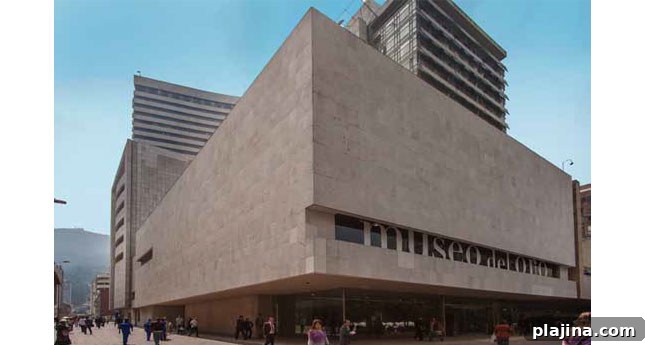
For planners seeking distinctive venues, the Gold Museum (Museo del Oro) presents an unusual option. Attendees can also enjoy the bohemian La Macarena neighborhood, known for restaurants, cafés and independent shops.
Cartagena de Indias is smaller than Bogotá but highly sought after for meetings because of its historic walled city and coastal setting. Cartagena has hosted major gatherings such as the World Economic Forum in 2007 and the Summit of the Americas in 2012. Events can be held at sunset on the city walls or combined with day trips to nearby islands for leisure programs.
The Cartagena de Indias Convention Center accommodates up to 2,000 attendees with a grand salon that subdivides into four spaces, each equipped with simultaneous translation booths. The center also features a 1,200-seat auditorium, meeting rooms and outdoor exhibition zones.
Hilton Cartagena Convention Center © Hilton
Several large hotels support meetings of varying sizes. The Hilton Cartagena, with 340 rooms, offers 20 meeting rooms and space for up to 2,300 people. The Las Américas Convention Center, located within the 500-room Hotel Las Américas, can host events for up to 650 attendees.
Cartagena’s Old Town contains upscale boutique hotels ideal for executive retreats. Casa San Agustín is a small 31-room property, while historic conversions such as the Sofitel Santa Clara and the Charleston Santa Teresa—housed in a former convent—offer larger luxury options. Additional high-end properties were planned to open in Cartagena during 2014.
Medellín, Colombia’s second-largest city, sits in a mountain valley and has a growing MICE sector. The Plaza Mayor Convention Center provides 21 meeting rooms, a grand salon for 3,000 guests, and nine committee rooms accommodating 20 to 300 participants. Plaza Mayor also features La Caja de Madera, a multifunctional space for 700 to 1,200 people used for product launches, concerts, fashion shows, banquets and cultural events. The Palacio de Exposiciones at Plaza Mayor includes four indoor pavilions that can host up to 500 exhibition stands and offers outdoor exhibit areas.
The Medellín InterContinental Hotel includes a convention center with 16 function rooms and capacity for up to 1,200 people, giving planners a major hotel-based option in the city.
With so many venue and destination options, planning a MICE program in Colombia can feel overwhelming. Proexport serves as a helpful gateway, providing centralized support and practical information for meeting and incentive planners. As Restrepo puts it, “We try to make everything easier for the meeting or incentive planner. We aim to be the first and only contact so arrangements proceed smoothly.”