
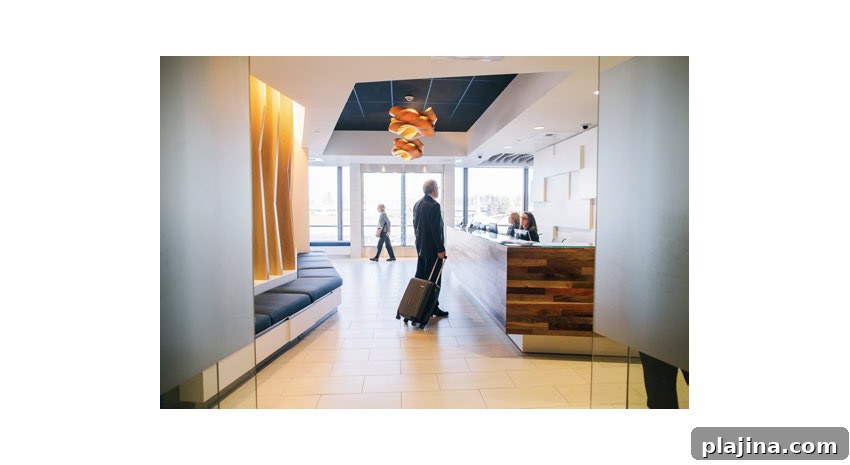
Seattle-Tacoma International Airport, a major West Coast hub, remains the fastest-growing large hub airport in the United States for the second consecutive year. Passenger traffic is rising sharply: in 2016 the airport saw a 12 percent increase over the previous year and served 12 million passengers in the second quarter alone. On an average day, Sea-Tac handles more than 1,000 takeoffs and landings.
The airport is preparing for continued growth through a series of expansion, renovation, and modernization projects designed to improve capacity, passenger experience, and operational efficiency.
An expanded International Arrivals Facility in the South Satellite is central to Sea-Tac’s long-term strategy to double international flights and destinations over the next 25 years. The current customs facility is operating beyond capacity—designed to process 1,200 passengers per hour but regularly handling up to 1,900—forcing passengers to wait on aircraft or in corridors. To address this, the new facility will increase capacity by about 60 percent, double the number of gates that can accommodate wide-body aircraft, and reduce connection times by roughly 15 minutes once construction is complete in 2019. Over the past decade Sea-Tac has added 14 new intercontinental routes; each new route typically contributes around $75 million to the local economy and creates approximately 1,400 jobs.
The North Satellite is also slated for significant upgrades through a partnership between the Port of Seattle and Alaska Airlines, the only carrier serving that satellite. Renovations will add eight gates, create an upper-level mezzanine, double dining and retail space, refresh the exterior, expand Wi-Fi coverage, and introduce a premium Alaska Airlines Board Room lounge. The first phase of construction is due to open in 2019, with final completion expected in 2021.
To improve reliability and throughput, Sea-Tac is installing a new outbound baggage handling system that maximizes the use of existing space. The current system is at full capacity, with annual baggage volumes projected to exceed 38 million this year and peak days reaching about 123,000 bags. The new design reroutes bags through enhanced screening and sorting without requiring additional conveyor length or footprint, improving speed, capacity, and energy efficiency. The upgraded system is designed to handle up to 60 million bags per year, a level not expected until around 2034. The first phase of the new baggage system will enter service in 2018.
Environmental sustainability is a core component of the airport’s five-year plan. Sea-Tac aims to cut carbon emissions to half of 2005 levels and reduce aircraft-related emissions by 25 percent. Immediate measures include installing electric charging stations for ground-support equipment and encouraging airlines to electrify their ground fleets, as well as researching aviation biofuels in partnership with Alaska Airlines. The airport also requires app-based ridesharing providers that serve the facility to meet environmental standards.
These coordinated investments in terminals, baggage systems, international processing, and environmental programs position Seattle-Tacoma International Airport to accommodate continued passenger growth, improve connections and amenities, and reduce its environmental footprint while supporting the regional economy.