
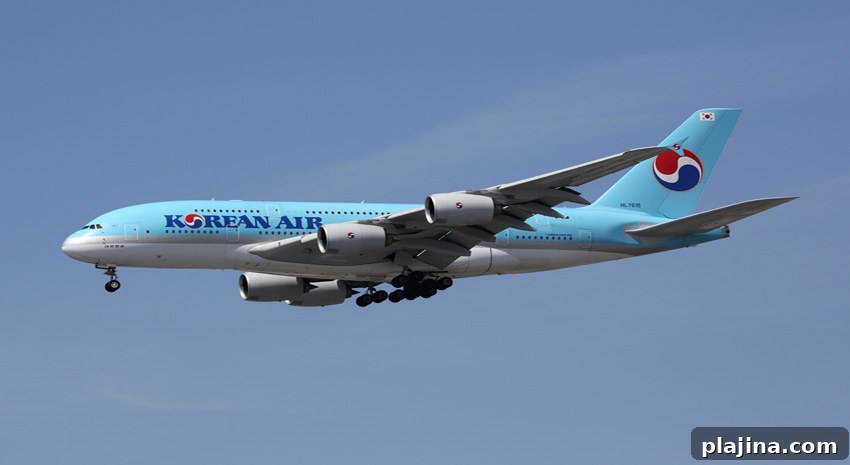
Korean Air has announced revisions to its policies on using stun guns and other measures to control unruly passengers, following an incident in which a drunk passenger attacked flight attendants and other travelers. The airline said the changes are intended to help crew members respond more quickly and effectively to violent or disruptive behavior on board.
Among the passengers on the flight was American musician Richard Marx, who said the crew appeared insufficiently trained to manage the situation. In response, Korean Air stated it will strengthen procedures and clarify when a Taser may be deployed.
“We have decided to improve our conditions and procedure on using Taser guns to cope with violent acts and disturbances on board in a fast and efficient manner,” the airline said.
Although flight attendants involved in the incident had a stun gun available, they hesitated to use it out of concern for potential consequences. Under the new rules, crew members will be permitted to use a Taser once an unruly passenger refuses to comply with verbal warnings, enabling a faster intervention when safety is threatened.
In addition to updating stun-gun policy, Korean Air said it will begin banning passengers who repeatedly violate rules and will hire more male flight attendants as part of broader measures to prevent and manage in-flight violence. The airline also emphasized plans to enhance crew training so staff are better prepared to handle similar incidents.
The move comes amid a broader rise in onboard disturbances. South Korea’s Ministry of Land, Infrastructure and Transport reported that unlawful acts committed in flight increased to 460 last year, up from 191 in 2012. Airlines and regulators are facing growing pressure to adopt clearer protocols and stronger safeguards to protect passengers and crew.
Korean Air’s policy changes aim to balance passenger safety with appropriate use of force, improve crew confidence in emergency responses, and reduce the frequency and severity of disruptive incidents during flights.