
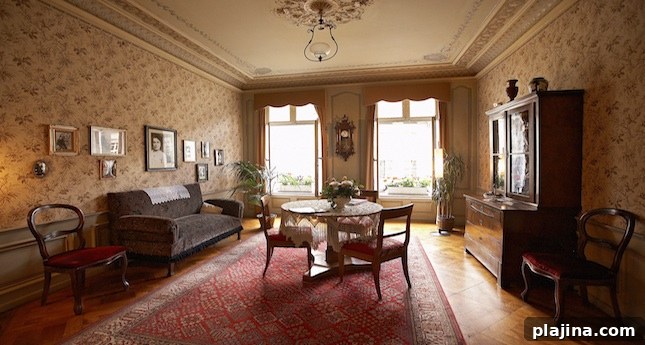
Whether you want to revisit the fundamentals of physics or simply enjoy being in Bern, Switzerland, a visit to the Einstein Museum — part of the Bernisches Historisches Museum — is an illuminating experience. The exhibition uses around 70 films and animated displays, hundreds of photographs and some 550 original objects to explain Einstein’s breakthrough theories and discoveries. Einstein lived in Bern when he published his Theory of Relativity, and the museum not only traces his scientific achievements but also offers a thoughtful look at his personal life and the turbulent historical context in which he worked, including the rise of Nazism and the aftermath of World War II.
For a very different cultural experience, explore the Zentrum Paul Klee, dedicated to the work of one of modern art’s most influential figures. The building, designed by architect Renzo Piano, responds to the gently rolling hills of its setting and is an architectural attraction in its own right. Because many of Paul Klee’s works are fragile, the museum rotates exhibitions roughly every six months, presenting new thematic arrangements drawn from a core collection of about 4,000 paintings, drawings and watercolors. Current and recent presentations — including the Klee in Bern show — examine the artist’s ties to the city through landscapes, sketches and other works created during his time in Bern.
The Zentrum Paul Klee also preserves an extensive archive of biographical material that sheds light on the different phases of Klee’s career: his engagement with Expressionism, Cubism and Surrealism, his years as a teacher at the Bauhaus, and his collaborations and friendships with contemporaries such as Wassily Kandinsky. Together, these museums offer complementary insights into Bern’s cultural history, highlighting how the city shaped and was shaped by two creative figures whose work had lasting influence on science and art.