
Famous for rolling green hills, quaint villages and distinctive honey-colored limestone buildings, the Cotswolds—an 800-square-mile region in central southwest England—holds the official designation of an Area of Outstanding Natural Beauty. More than 80 percent of the area remains farmland, meadows and woodland, preserving a timeless rural landscape.
From the Middle Ages onward, the Cotswolds grew prosperous through the wool trade. By the early Industrial Revolution, nearly 200 mills in the region produced high-quality woolen cloth. Wealthy merchants invested their wealth in manor houses, churches and public buildings, leaving a rich architectural legacy that is still visible today.
Today the Cotswolds is one of the United Kingdom’s most visited destinations, drawing around 38 million visitors a year. Summer is especially busy, so book accommodations early. Options range from grand country-house hotels to intimate inns and pub rooms—many of which have fewer than a dozen rooms—so popular spots like Bourton-on-the-Water and Moreton-in-Marsh can fill up fast. The region, however, rewards visitors year-round with spring wildflowers, warm summer days, autumn foliage and cozy winters with log fires and festive lights.
For those combining a Cotswolds trip with business in London, Bath is an easy gateway: high-speed trains run from Paddington Station to Bath roughly every 30 minutes and take about 80–90 minutes. Bristol and other nearby cities offer additional transport and business connections.
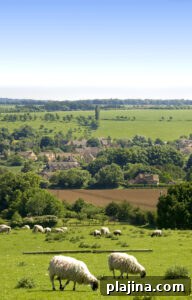
Chipping Campden © DavidMartyn | Dreamstime.com
Spend a few days in Bath, a UNESCO World Heritage city celebrated for its Georgian architecture. Fans of Jane Austen and the Netflix series Bridgerton will enjoy wandering the pretty streets—some still cobbled—visiting independent shops, tearooms and historic sites. Stop at Sally Lunn’s Historic Eating House for a Bath bun, climb the 212 steps to the top of Bath Abbey for panoramic countryside views, and experience the modern Thermae Bath Spa, fed by the same natural thermal waters the Romans used when they built baths here in A.D. 70.
The Cotswolds is also rich in stately homes and gardens. Blenheim Palace, the birthplace of Winston Churchill, features magnificent state rooms and landscaped grounds, plus a miniature train that links the palace and gardens. Sudeley Castle has extensive rose gardens and the tomb of Katherine Parr, Henry VIII’s sixth wife. Highgrove House, the private home of Their Majesties King Charles III and Queen Camilla, opens its gardens to visitors and offers guided Champagne Tea tours—walks through the gardens followed by afternoon tea showcasing estate produce.
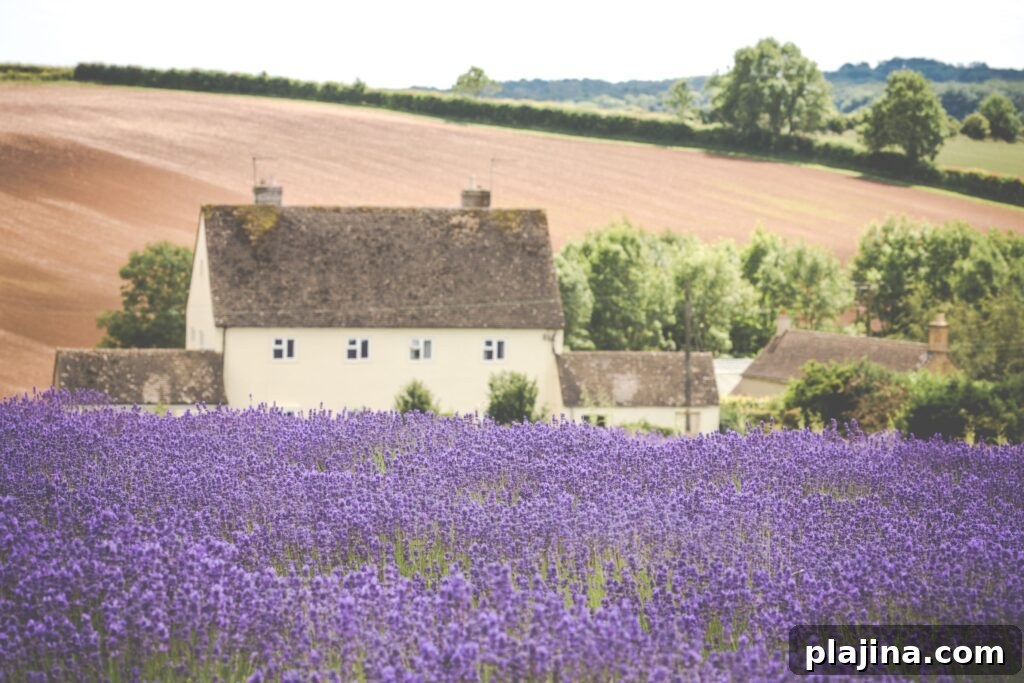
Cotswold lavender field © Wirestock | Dreamstime.com
Each town and village in the Cotswolds has its own distinct character. Bourton-on-the-Water, often called the Venice of the Cotswolds, features low stone bridges over a shallow river and attractions like the one-ninth scale Model Village. Bibury is famed for its row of 14th-century weavers’ cottages, a photographic highlight; two of those cottages, managed by the National Trust, are available for short stays.
For a firsthand look at traditional textile crafts, visit The Cotswolds Woollen Weavers in Filkins. Antiques collectors will appreciate the Cirencester antiques market and Corinium Museum’s Roman collections. Broadway offers art galleries, antiques shops, a lively deli and in summer even ice-cream vendors in period costume. From Broadway Station you can board the Gloucestershire Warwickshire Steam Railway for a cream tea as the train winds through the countryside, or book the Silver Footplate Steam Driving Experience to take the controls of a steam locomotive under expert supervision. At Snowhill, the Cotswold Lavender farm makes a lovely picnic spot and includes a family-friendly woodland trail.
Fans of Downton Abbey should visit nearby Bampton, which served as the village set during filming. Wander the square, visit St. Mary’s Church—used in several key scenes—and relax afterward at a local pub such as The Anglers Rest or travel a short distance to The Swan Inn in Swinbrook for a traditional Sunday roast.
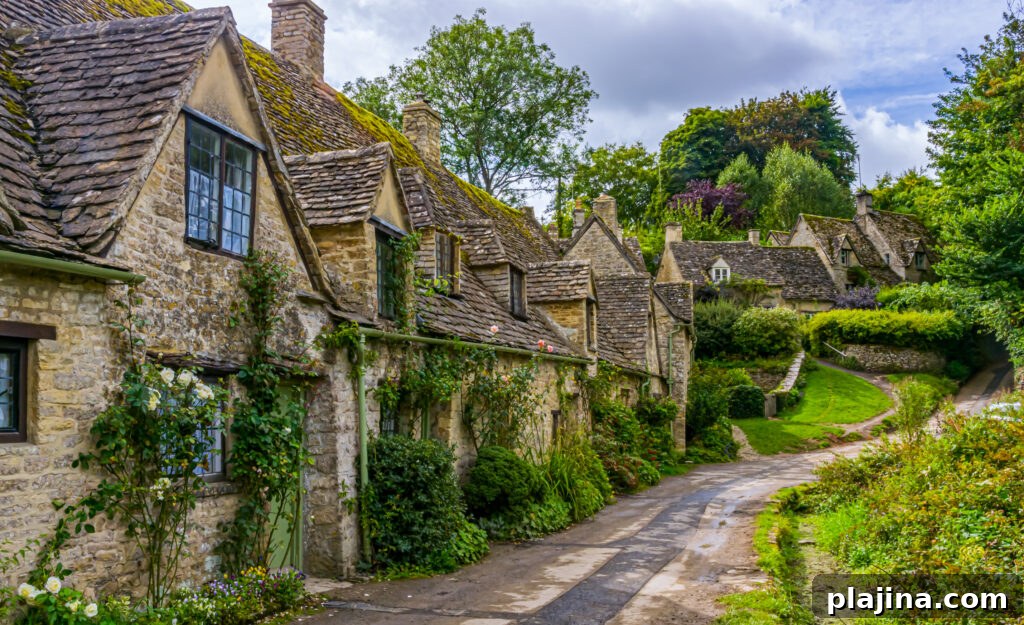
The Weavers Cottages in Bibury © Gordon Magee | Dreamstime.com
For Harry Potter enthusiasts, the area around Lacock and Gloucester Cathedral contains several filming locations, including settings used as Hogwarts interiors. The Cotswold Falconry Centre near Moreton-in-Marsh showcases more than 60 species of birds of prey with daily flying displays, while the Cotswold Wildlife Park and Gardens invites close encounters with giraffes, rhinos and meerkats—don’t miss the penguin feeding at 11 a.m. Families with very young children will find Westonbirt Arboretum’s Tots & Twigs Forest School a great introduction to outdoor play and nature discovery.
Local community events are a highlight of any visit: keep an eye out for handmade posters advertising teas at church halls or village centers, where homemade cakes and conversation create an authentic local experience. Many historic churches also host tea-and-cake receptions after Sunday services.
The landscape is ideal for outdoor pursuits. Bird-watching, falconry and hiking are popular, with the Cotswold Way National Trail offering a scenic 102-mile route and spectacular viewpoints. If you prefer shorter walks, try linking a few villages and finishing at a friendly pub—The Porch House in Stow-on-the-Wold claims to be Britain’s oldest pub, with parts of the building dating back to 947. Across the Cotswolds you’ll find nearly 100 pubs, many welcoming to families for lunch or an early dinner.
Equestrian traditions run deep here, with marquee events such as the Badminton Horse Trials in May and the Gloucestershire Festival of Polo in June. Cotswold Horse Tours can arrange riding experiences and visits to training yards, while cyclists can explore trails like the 25.8-mile Bibury to Saint Aldwyns loop or the 27.5-mile Burford to Northleach route—both offer scenic country roads and village stops.
LODGING
Hotel Indigo Bath, an IHG Hotel
A row of elegant honey-colored townhouses dating to 1740 house 166 guestrooms that blend modern comforts with period details, placing you in the heart of Bath’s historic center.
2-8 S. Parade, Bath, Somerset
$$$$
The Lygon Arms
A 16th-century coaching inn with antique furniture, exposed beams and original paintings, offering 86 rooms in the inn and adjoining cottages, a refined spa and classic afternoon tea beside a log fire.
High Street, Broadway, Worcestershire
$$$$
THE PIG-in the Cotswolds
Set in a 1697 manor with four acres of ornamental gardens, this property features cozy rooms and cottages and a restaurant focused on produce from the estate and local suppliers.
Barnsley, near Cirencester, Gloucestershire
$$$$
DINING
The Chequers
A welcoming gastropub with flagstone floors and candlelit tables, serving seasonal dishes and an impressive selection of local ales.
Goddards Lane, Chipping Norton, Oxfordshire
$$
The Double Red Duke
Housed in a 16th-century building, this restaurant highlights open-flame cooking—everything from classic fish and chips to wood-roasted seafood and steaks—in a cozy, characterful setting.
Bourton Road, Clanfield, Bampton, Oxfordshire
$$$$
Olive Tree Restaurant
Bath’s Michelin-recognized restaurant offers a fixed-price seasonal menu with thoughtful beverage pairings and options for pescatarian, vegetarian, vegan and dairy-free diets.
The Queensberry Hotel, 4-7 Russell St., Bath, Somerset
$$$$$
INFO TO GO
Many Cotswold towns are accessible by direct trains from London, with frequent high-speed services to Bath. While public transport connects key destinations, a car is highly useful for exploring the region’s villages and countryside at your own pace. Bath has multiple car rental agencies; if you prefer not to drive on the left, consider hiring a car with a driver or arranging a bespoke itinerary through specialist travel companies. With its timeless villages, impressive estates and rolling landscapes, the Cotswolds offers a restorative escape for any season.