
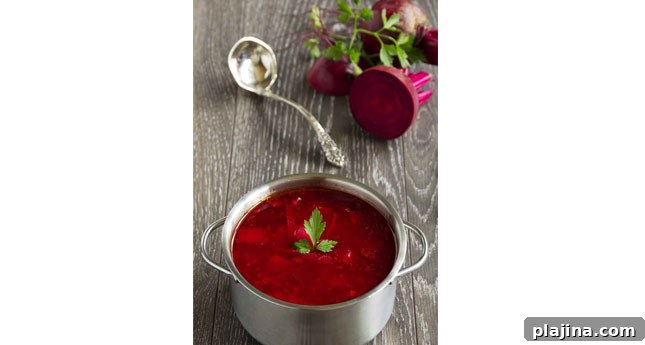
The first time I encountered borscht was on an Easter Sunday with my father’s family. My paternal grandparents were immigrants from Poland and my father was one of eight children; that gathering introduced me to many Eastern European traditions. I remember peering into a soup tureen and thinking, “I’ve never seen a pink soup before!” When I learned it was made from beets, my immediate reaction was, “Yuck!”
Borscht is widespread across Eastern Europe and traces its origins to Ukraine. It is also one of the most recognizable dishes in Russia, enjoyed by people from all walks of life. The word borscht is linked to the Slavic term borschevik, the name of the hogweed plant; the Russian borshch originally referred to cow parsnip, which was the soup’s earliest base.
Over time beetroot replaced cow parsnip and became the defining ingredient, giving the soup its deep red color. While beets are central, borscht exists in many regional and family variations. In Russia, a typical preparation includes beets alongside meats, cabbage and potatoes. Cookbook author Lynn Visson lists a dozen variations in The Russian Heritage Cookbook, reflecting the dish’s versatility. Vinegar is a key component in most recipes: it adds a bright, tangy counterpoint to the sweetness of the beets, helps stabilize the color, and keeps the soup visually vibrant. There are also versions made with tomatoes that yield an orange hue and “green borscht” made from sorrel.
Beyond its flavor and color, beets bring nutritional benefits: they provide iron, magnesium, and a range of vitamins and minerals. Borscht can be simple and quick to prepare. If the beets are grated, the soup may be ready in about 20–25 minutes, making it a convenient option for a weeknight meal.
There are hot and cold styles of borscht. Hot borscht is the heartier and more common form. Simmered in a beef or pork broth, it usually contains starchy vegetables such as potatoes, along with chunks of meat and often cabbage, carrots or peppers. This version is frequently served as a starter with dark rye or pumpernickel bread and a dollop of sour cream—two accompaniments that are nearly as essential to the experience as the beets and vinegar themselves.
Cold borscht is lighter and refreshing. To make it, cook young beets until tender and let them cool, then combine them with sour cream, soured milk, kefir or yogurt. Add chopped raw vegetables like radishes or cucumbers for crunch, and finish with chopped hard‑boiled eggs and a generous spoonful of sour cream. Fresh herbs such as dill or parsley make a bright garnish.
Whether served hot and hearty or chilled and refreshing, borscht remains a versatile, nutritious and culturally rich soup. Its many regional interpretations allow cooks to adapt ingredients and techniques to taste, preserving tradition while inviting individual expression at the table.