
Nice, France showcases over five centuries of architectural styles and design, preserving the distinct marks of each era across the city.
OTMNCA © Kelagopian
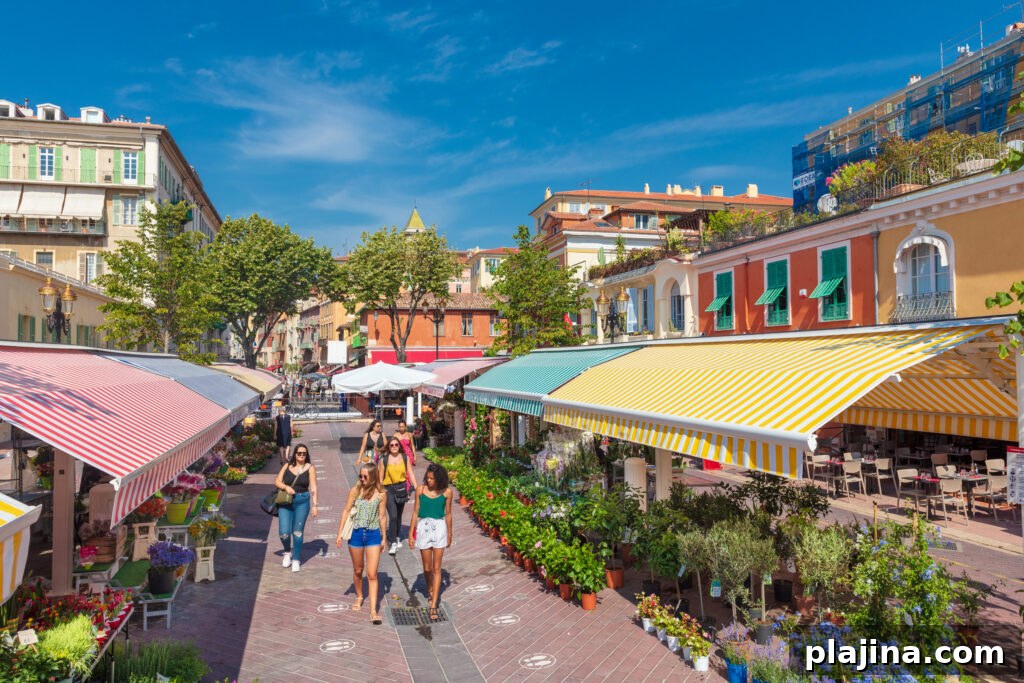
The Baroque period, which ended in the late 18th century, left a lasting impression on Nice. The city’s secular and religious heritage from that era is visible throughout its neighborhoods. One notable example is the Palais Lascaris, now home to the Musée de France, a museum that highlights fine art and historic musical instruments.
In the narrow lanes of Vieux-Nice (Old Nice), a number of religious sites reflect the Baroque influence: the Jesuit Church, the Chapel of Mercy, the Church of Saint Francis of Paola, the Chapel of the Holy Cross and the Cathedral of Sainte-Réparate. On the northeastern edge of Old Nice, Place Garibaldi stands as the city’s oldest major square and remains one of its most recognizable landmarks.
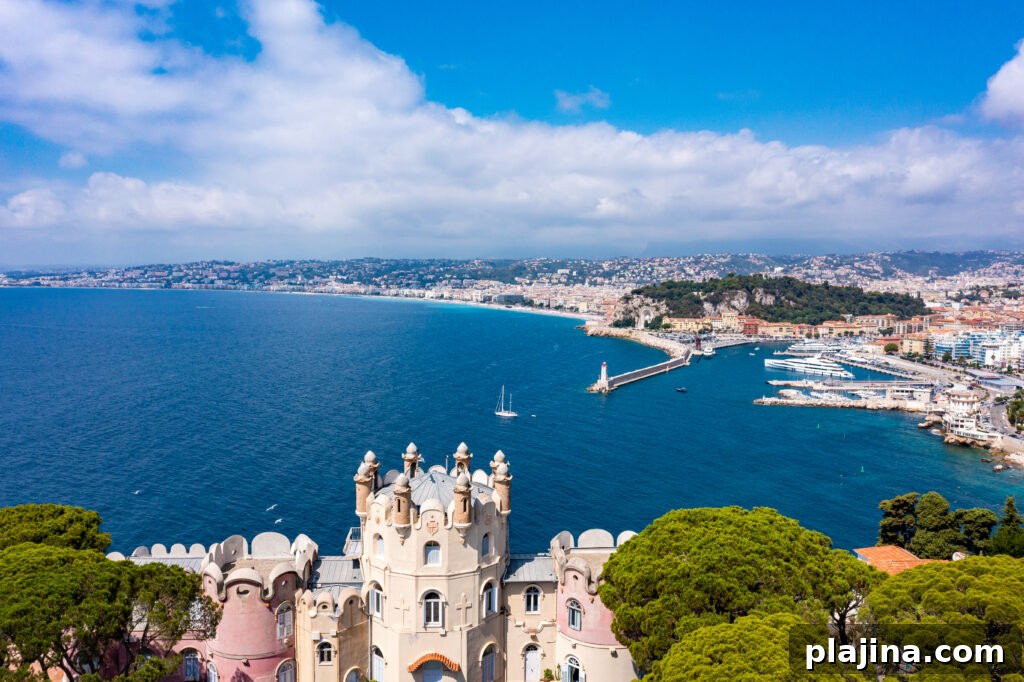
© OTMNCA / Ville de Nice Le Chateau de Anglais
The Belle Époque, roughly between 1871 and 1914, produced some of the city’s most eclectic architecture. Wealthy winter visitors from across Europe commissioned imaginative estates and ornate villas set in lush surroundings. From this period come structures such as Château de l’Anglais, with Baroque-inspired details, and Château de Valrose, which now hosts the Faculty of Science for the University of Nice Sophia-Antipolis and remains one of Europe’s most picturesque campuses.
After World War I, Nice underwent significant urban transformation to meet the demands of a growing modern city. Art Deco became the dominant style for new developments, and modern materials and techniques transformed the urban landscape. The Promenade des Anglais was redesigned and many streets adopted Art Deco facades—visible today along rue Verdi, the Promenade des Anglais and boulevard Victor Hugo.
From the late 20th century onward, contemporary art and architecture have played an increasingly visible role in Nice’s evolution. New districts such as the Arénas and the Eco-Vallée to the west of the city reflect contemporary planning and design principles, integrating modern architecture, public art and cultural facilities into the urban fabric.
Visitors interested in exploring Nice’s historic buildings and cultural attractions can consult the Office de Tourisme Métropolitain Nice Côte d’Azur for up-to-date information on sites, tours and opening hours.