
Montenegro gained independence only about two decades ago, yet its lands have been a crossroads of civilizations for millennia. Coastal towns rank among Europe’s oldest continuously inhabited settlements, and the country’s culture, cuisine and genetics reflect influences from Illyrian tribes, Greeks, Romans, Ottomans and others. While the Bond film Casino Royale prompted a rise in visitors, Montenegro remains a quietly enchanting destination: a relaxed mosaic of seaside villages, pristine mountains and Adriatic dolce vita. From sipping wine at a cliffside vineyard to horseback riding through highland meadows, Montenegro offers sophisticated indulgence alongside family-friendly outdoor adventures.
Travelers from the United States usually connect through European hubs such as Frankfurt, Vienna or Zürich to reach Podgorica. Podgorica serves as a minor hub for Turkish Airlines, and flights onward to İstanbul or Athens are frequent and affordable. Roughly the size of Connecticut, Montenegro concentrates an impressive range of landscapes and cultural influences into a compact area. With four to five days and a rental car — easily arranged in Podgorica — you can experience both the Adriatic coast and the interior highlands. The coast attracts many visitors with dramatic sea cliffs, fjord-like bays and ancient stone towns, while the interior rewards those who venture inland with horse ranches, family-owned vineyards and scenic mountain drives.
The Adriatic enclave of Kotor has a long, storied past under Roman, Byzantine and Venetian rule among others. Like Dalmatian ports such as Dubrovnik and Zadar, Kotor is framed by a towering stone wall with fortified gates that once opened for traders from far-flung places. Its Old Town is a UNESCO World Heritage site, a maze of polished limestone alleys, Gothic churches and sunlit piazzas that invites slow exploration.
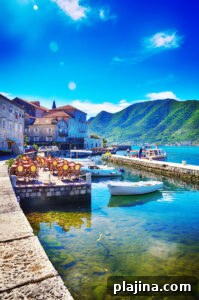
Perast © Milacroft | Dreamstime.com
After wandering the medieval lanes, dine at Konoba Ćatovića Mlini to watch the sunset with a glass of Krstač and a plate of seafood crudo. For a deeper look at the Bay of Kotor, book a boat tour with Captain Ivan, a lifelong fishing guide who ferries guests to secluded villages, tiny islands and waterfront restaurants. Cast a line into the bay or relax on deck while enjoying the views and cold beers from Ivan’s cooler.
An old proverb says, “When you touch the waters of Perast Harbor, you touch the entire world.” Perast, like Kotor, once prospered as a maritime trading post on routes that linked Europe and the East. Today the town perches on a narrow finger of the Bay of Kotor, its stone houses and churches reflected in placid waters. Spend a morning exploring cobbled alleys, stop at a bakery for coffee and a slice of Perast cake — an almond-flour pastry brightened with citrus zest — and absorb the harbor’s calm atmosphere.
For lunch, take a waterfront table at Dardin, celebrated for seafood crudo and specialties such as black risotto and grilled octopus. After the meal, treat yourself to gelato from one of the promenade shops. Across the bay in Kumbor, One&Only Portonovi caters to luxury travelers with lavish rooms and three high-end restaurants serving Italian, Montenegrin and Japanese cuisine. The resort also features an extensive gym and attractive swimming pools.
From the coast, a two-hour drive brings you to Kolašin, an alpine town in the Bjelasica Mountains of northern Montenegro. Kolašin is a popular ski destination in winter and a base for hiking, camping and climbing in warmer months. Nearby Biogradska Gora National Park protects old-growth forest threaded with trails and crystal-clear lakes; rent a kayak for a peaceful afternoon on the water after a morning hike.
For dinner, sample mountain fare such as roasted lamb with wild berries or kačamak — a hearty mash of cornmeal, potatoes and cheese — at Konoba Amanet. After a full day outdoors, stay at Swissôtel Resort Kolašin, a property designed in the style of a Swiss Alpine chalet. The breakfast spread is notable for artisanal jams, fresh cheeses and peganice — fluffy fried dough best enjoyed with butter and jam. For evening drinks, the hotel’s lobby bar is lively, or you can explore the colorful local pubs in town.
Venture further into the interior to Vranjak for guided horseback rides and home-cooked mountain dishes. Local ranchers lead a two-hour circuit through open highland terrain, with panoramic views from exposed ridgelines that occasionally extend as far as the Italian coast on clear days. After riding, relax in the ranch house with strong Montenegrin coffee, freshly baked bread and fruit preserves.
Finish a meal with rakija, Montenegro’s traditional fruit brandy, often homemade and infused with wild fruits. Montenegro is a long-established viticultural region: grape growing here stretches back over two thousand years. Vranac and Krstač are among the best-known varieties — a robust red and a crisp aromatic white — but local vintners produce many varieties with ancient roots. The Radević Estate Winery, tended by a single family for generations, offers vineyard tours across trellised slopes and olive groves, concluding with tastings in an atmospheric barrel cellar.
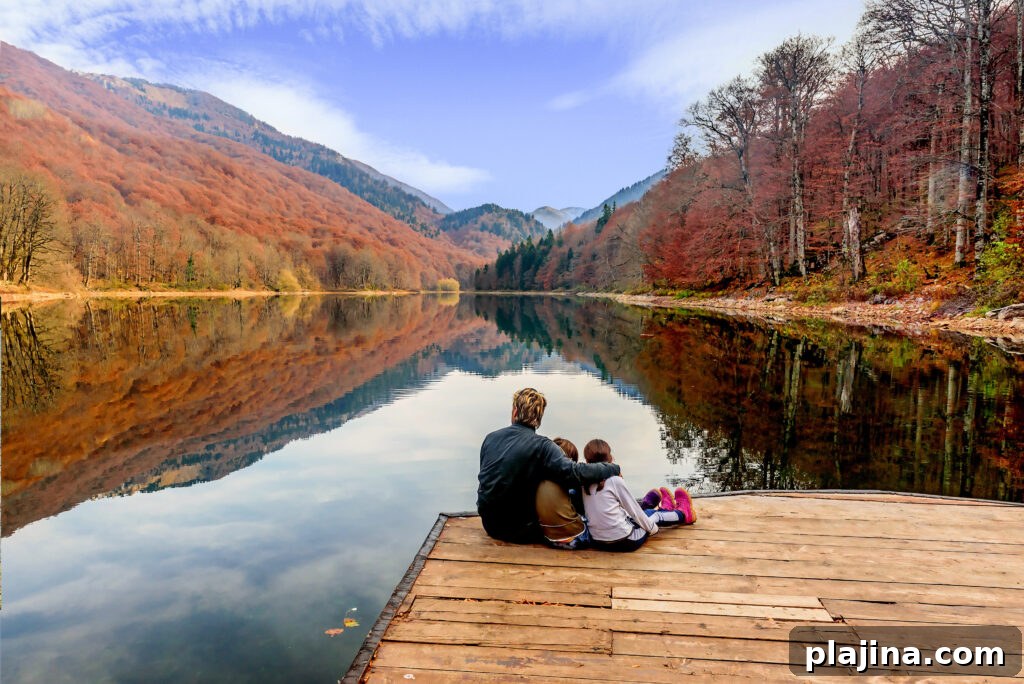
Lake Biograd, Biogradska Gora National Park © Dvrcan | Dreamstime.com
Beyond wines such as Vranac and Malvasia, some producers also age brandy in Slavonian oak barrels, producing richly flavored spirits. Vineyards are also havens for wildlife — spot small owls and other birds among the vines and olive trees.
Podgorica, the capital, often gets overlooked in favor of the coast and mountains, but it has its own eccentric charm. Founded by Illyrian peoples and shaped by Roman and Ottoman periods, Podgorica displays Roman ruins alongside Ottoman-era bazaars and mosques. The city sits close to many of Montenegro’s notable vineyards and has a growing scene of wine bars and restaurants. For a refined take on traditional cuisine, book a dinner at Tavern Lanterna, where stone-walled rooms complement a curated wine list and menus showcasing Montenegrin charcuterie, cheeses and pastas.
LODGING
OBLUN ECO RESORT
Wake up in luxury tents with panoramic lake views and farm-fresh breakfasts. About an hour from Podgorica Airport, Oblun is a convenient base for coastal and inland excursions.
Oblun, Podgorica,
Montenegro
$$$
ONE&ONLY PORTONOVI
A standout of Mediterranean luxury, One&Only Portonovi features opulent accommodations and several acclaimed restaurants, making it one of the region’s most prestigious resorts.
Vojna Kasarna, Portonovi,
Herceg Novi, Montenegro
$$$$$
SWISSÔTEL RESORT KOLAŠIN
Set in the Bjelasica Mountains, Swissôtel evokes a classic Alpine chalet atmosphere and serves as an ideal base for exploring nearby national parks and ski areas.
Ski Centar 1600, Kolašin,
Montenegro
$$$
DINING
KONOBA AMANET
A rustic mountain restaurant outside Kolašin, Konoba Amanet serves hearty regional dishes and local spirits — try kačamak paired with craft beer or rakija.
Bijeli Potok, Kolašin,
Montenegro
$$
RESTAURANT DARDIN
On Perast’s waterfront, Dardin is celebrated for seafood, including crudo platters featuring raw tuna, oysters and other specialties.
Obala Marka Martinovića,
Perast, Montenegro
$$$$
TAVERN LANTERNA
In Podgorica’s Old Town, Tavern Lanterna showcases traditional Montenegrin dishes executed with culinary finesse, paired with an extensive wine selection.
Kralja Nikole 36, Podgorica,
Montenegro
$$$$
INFO TO GO
Getting around Montenegro is straightforward with a bit of planning. Most international flights arrive at Podgorica Airport, while Tivat Airport handles additional regional traffic. Taxis are available at both airports; agree on the fare ahead of time or insist on the meter. Renting a car is recommended if you plan to visit mountain towns or secluded beaches — rental agencies operate at both airports and the roads are well maintained. A two-lane coastal highway links seaside towns like Kotor, Budva and Herceg Novi, and an inexpensive, reliable bus network connects many coastal towns for travelers without a car.