THE CULTURAL AND NATURAL DIVERSITY around the world is remarkable, and protecting that heritage has long been a shared international concern. For decades, UNESCO — the United Nations Educational, Scientific and Cultural Organization — has identified and designated World Heritage Sites, recognizing properties with “outstanding universal value.” According to UNESCO, to qualify a property must demonstrate integrity and/or authenticity and have an adequate protection and management system to ensure its safeguarding. This framework helped raise global awareness of the importance of preserving both cultural and natural heritage for future generations.
UNESCO inscribed the first World Heritage Sites in 1978, adding 12 places to the list. The United States contributed two of those original sites: Yellowstone National Park, known for its geothermal features such as geysers, hot springs, mud pots and fumaroles; and Mesa Verde, an exceptional archaeological site that preserves the cliff dwellings of the Ancestral Puebloan people. Other early inscriptions included the Galápagos Islands, celebrated for their large number of unique endemic species, and two Canadian sites: Nahanni National Park Reserve, recognized for its dramatic river, cave and canyon landscapes, and L’Anse aux Meadows in Newfoundland and Labrador, the earliest known Norse settlement in North America.
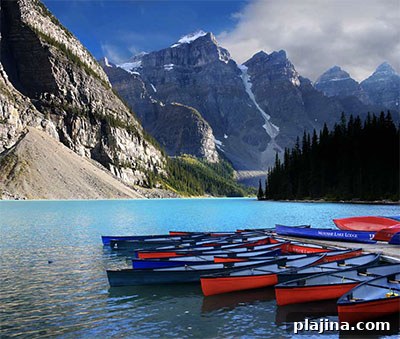
Banff National Park in the Canadian Rockies © HELLEN8 – DREAMSTIME.COM
TODAY THE UNESCO WORLD Heritage List includes 1,092 properties worldwide. Of those, 845 are listed for their cultural significance, 209 for natural criteria, and 38 contain a mixed combination of cultural and natural values. While the list highlights extraordinary places, it is not static: two properties have been removed (the Arabian Oryx Sanctuary in Oman and the Dresden Elbe Valley in Germany), and dozens face threats. Currently, 54 properties are listed as in danger, reflecting challenges such as environmental degradation, conflict, or mismanagement. The list also surfaces complex cultural and social issues; for example, two religious sites with male-only access — Okinoshima Island in Japan and Mount Athos in Greece — remain on the list despite restrictions that raise questions about inclusivity.
Originally, a World Heritage designation was expected to bring prestige and economic benefits, stimulating tourism and strengthening incentives to protect heritage. In many cases this has been true, but the reality can be more complicated. Increased visitation can strain fragile sites, leading to environmental degradation and infrastructure pressures. Political and cultural tensions can also emerge; UNESCO has faced criticism over perceived biases in how it frames some sites, including controversies around sites in Jerusalem. Additionally, threats such as terrorism, development pressures and climate change can undermine the intended conservation outcomes.
SOME SITES, ONCE LISTED, may be placed on the List of World Heritage in Danger to draw attention and encourage corrective action. Being listed as endangered has led to positive outcomes for several sites: the Galápagos Islands and Yellowstone National Park were at one time on the danger list but were later removed after improvements. Other sites continue to struggle—Everglades National Park, for example, has been in and out of the danger list due to ongoing ecological decline and loss of marine habitat.
Removal from the danger list, or from the World Heritage List altogether, typically follows demonstrated improvements in management and conservation that address the original threats. However, political influence can complicate these decisions. For instance, international debate intensified when efforts were made to delay or reverse listings related to the Great Barrier Reef despite scientific evidence pointing to widespread coral decline.
Each year, UNESCO’s World Heritage Committee meets to consider new nominations. Candidates are evaluated against ten criteria, and a property must meet at least one criterion in addition to being of outstanding universal value. The criteria encompass exceptional natural beauty, ecological significance, cultural or historical importance, outstanding examples of architecture or landscape design, geological significance, and living communities of plants and animals, among other attributes.
Before a site can be nominated for inscription, it must appear on a country’s Tentative List. The Tentative List is an inventory of properties that a state party intends to consider for future nomination. Some entries can remain on these tentative lists for many years as countries prepare nominations and conservation plans. For example, the United States has placed several properties on its Tentative List over the years, including Petrified Forest National Park, White Sands, Dayton Aviation Sites, civil rights movement sites, Ellis Island and the Brooklyn Bridge.
FOR TRAVELERS, UNESCO World Heritage Sites make a compelling bucket list, offering places of outstanding significance that invite deeper understanding. With more than a thousand sites worldwide, a practical approach is to start locally—visit the World Heritage Sites in your own country and state. This helps build context and appreciation before traveling farther. For example, in the U.S. states, treasured sites include Carlsbad Caverns National Park, Chaco Culture National Historical Park and Taos Pueblo in New Mexico, as well as many nationally significant parks like the Everglades, Grand Canyon, Great Smoky Mountains, Mammoth Cave, Mesa Verde, Olympic, Redwood, Yellowstone and Yosemite.
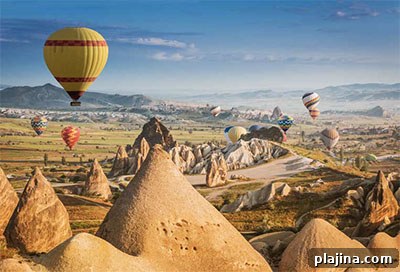
Rock Sites of Cappadocia, Turkey © TETYANA KOCHNEVA – DREAMSTIME.COM
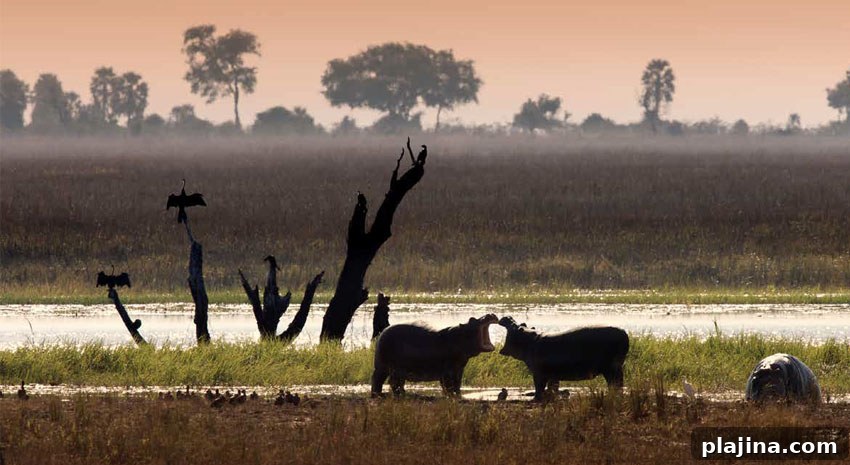
Expanding travel beyond national borders reveals some of the world’s most inspiring sites: Uluru-Kata Tjuta National Park in Australia; the Wachau Cultural Landscape in Austria; the Okavango Delta in Botswana; Angkor in Cambodia; the Canadian Rocky Mountain Parks; the Mausoleum of the First Qin Emperor in China; Lednice–Valtice Cultural Landscape in Czechia; the Galápagos Islands in Ecuador; the Cathedral of Notre-Dame, Former Abbey of Saint-Remi and Palace of Tau in Reims, France; Upper Svaneti in Georgia; the Upper Middle Rhine Valley in Germany; the Acropolis in Greece; the Banks of the Danube, Buda Castle Quarter and Andrassy Avenue in Budapest, Hungary; Masada in Israel; the Archaeological Areas of Pompeii and Herculaneum in Italy; Mount Kenya National Park; Kathmandu Valley in Nepal; the Kremlin and Red Square in Moscow; Singapore Botanic Gardens; Göreme National Park and the Rock Sites of Cappadocia in Turkey; Ngorongoro Conservation Area in Tanzania; and Mosi-oa-Tunya/Victoria Falls in Zambia, among many others.
Wherever you travel, World Heritage Sites offer an enriching experience that fosters intercultural understanding and appreciation for the natural world. They remind us that protecting outstanding places requires sustained commitment, thoughtful management and respect for diverse cultural perspectives. Visiting these sites can deepen our connection to history, culture and nature while supporting the ongoing conservation that keeps them for future generations.