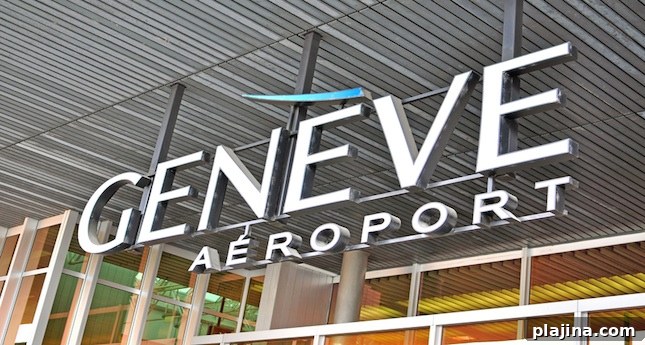
The unpleasant hassle of hauling luggage across a large airport—from security to the gate—often makes travelers consider checking a rollaboard. New technology at Geneva Airport aims to change that. In recent trials, passengers tested a new autonomous robot named Leo, short for Leonardo da Vinci. Leo is designed to simplify baggage handling by checking in bags, printing luggage tags and transporting up to two suitcases with a combined maximum weight of 35 kilograms.
Leo operates fully autonomously and uses an obstacle-avoidance system so it can navigate crowded terminals without colliding with people or other objects. The robot was developed by airline technology company SITA as part of a broader effort to automate and streamline the airport experience for travelers.
Using Leo is straightforward. Passengers interact with a touchscreen to start the process, scan their boarding passes, and place their bags inside the robot’s secure compartment. Leo then prints and applies luggage tags, displays the passenger’s gate and departure time, and takes the tagged bags directly to the airport’s baggage handling area. Once delivered, the bags are sorted and routed to the correct flight. For security and control, the robot’s compartment can only be reopened by an authorized airport operator when unloading the luggage.
The introduction of robots like Leo highlights a growing trend toward automation in airport operations, with potential benefits including reduced waiting times, fewer bottlenecks at check-in, and less physical strain for travelers. By handling tasks that are repetitive or physically demanding, these systems allow airport staff to focus on more complex customer-service duties and operational oversight.
Trials such as the one at Geneva Airport help identify real-world challenges—busy crowds, varied bag sizes and shapes, and the need for seamless integration with existing baggage handling systems. In successful deployments, the technology must reliably manage different types of luggage, maintain security and privacy standards, and comply with airline and airport protocols for tag printing and baggage routing.
While autonomous baggage robots won’t replace all traditional check-in counters immediately, they offer a promising supplement to existing services. For many passengers, the convenience of having a robot accept, tag and transport luggage directly to the sorting area could remove one of the more inconvenient parts of traveling. As airports continue to test and refine these systems, travelers can expect gradual improvements in how baggage is processed and moved through terminals.