
Though their historic first flight took place at Kitty Hawk, North Carolina, in 1903, Orville and Wilbur Wright’s journey to the history books began in their hometown of Dayton, Ohio. In Dayton they ran a printing business and operated several bicycle shops, including Wright Cycle Co., where they built bicycles and acquired the mechanical skills and financial means that fueled their experiments in human flight. Those experiments—and their successes—changed the way the world travels.
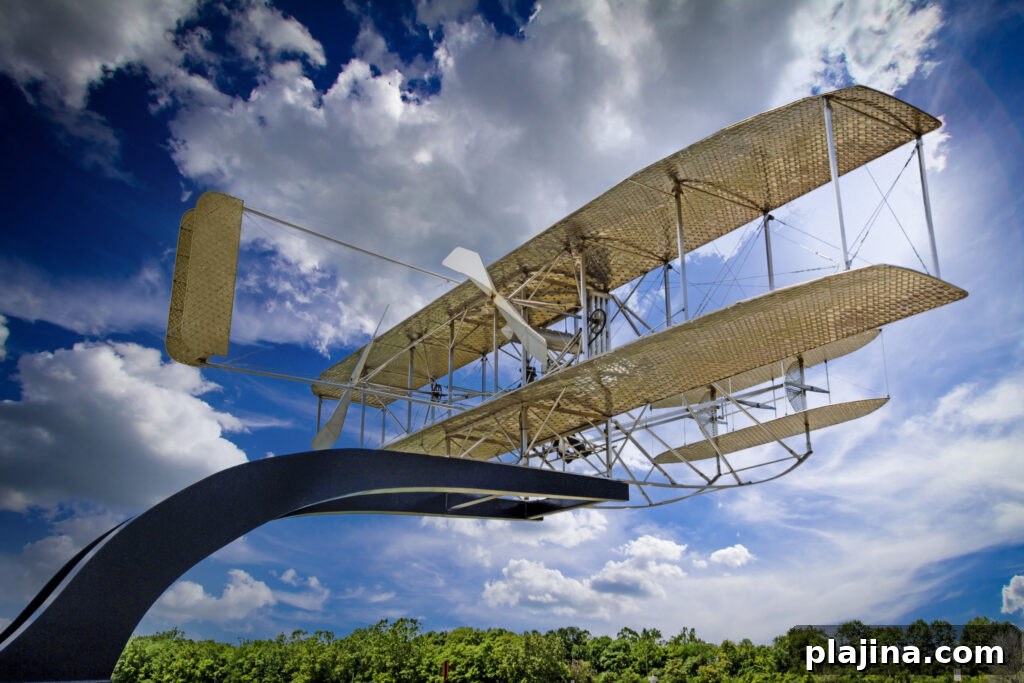
© Christopher Smith | Dreamstime.com
“I’m not sure they would have been able to invent the airplane if they had not grown up in Dayton, Ohio,” said Amanda Wright Lane, a great-grandniece of the Wright brothers. She explained that Dayton offered resources and a community of engineers and access to advanced materials for the era. The city’s sizeable library allowed the brothers to do extensive research at home.
Wright Lane added that the brothers’ family environment also mattered: their father, a bishop, encouraged them to read widely and supported their pursuits. “They really heeded his words around their dining room table,” she said. That familial acceptance helped the brothers focus on building and testing their ideas.

© Zrfphoto | Dreamstime.com
The Wright brothers put Dayton on the map, and the city’s aviation heritage remains strong. Known as “the birthplace of aviation,” Dayton is also home to the National Museum of the United States Air Force, the world’s largest military aviation museum. The museum offers 19 acres of indoor exhibit space with more than 360 artifacts, and the National Aviation Hall of Fame, which has inducted five members each year since 1962.
Wright Cycle Co., the National Museum of the United States Air Force, and the National Aviation Hall of Fame are three of the 17 sites that make up the Dayton Aviation Trail, established in 1981 in partnership with the National Park Service. Other highlights on the Aviation Trail include the Wright-Dunbar Interpretive Center and Aviation Trail Parachute Museum; the Wright Brothers Memorial overlooking Huffman Prairie Flying Field, where the brothers refined their designs and later ran a flying school; Carillon Historical Park, which houses the 1905 Wright Flyer III—the first practical airplane; and facilities such as the Sinclair National UAS Training and Certification Center and Aviation Technology programs, which lead the nation in unmanned aerial systems and aviation education.
“What’s most amazing about Dayton is that you can see the 1905 Wright Flyer III at Carillon Historical Park,” Wright Lane said. She noted that Wilbur once flew that Flyer for nearly 40 minutes, covering about 20 miles before landing when fuel ran low—a tank no larger than a modern insulated bottle.
© Stephen Kinosh | Dreamstime.com
“When you consider how fragile it looks, it’s astonishing it could carry a person at all,” she added, “and even more remarkable that by 1908 it had been modified to carry two people during demonstrations around the world.”
Dayton’s aviation sector remains vibrant. The aviation and defense industry supports more than 37,000 jobs across five major employers in the region; by comparison, Montgomery County, where Dayton is located, has a population of just over 531,000.
The Wright brothers’ legacy continues to inspire generations of aeronautics and aerospace innovators—not only in Dayton but beyond Earth. In 2021 NASA’s Ingenuity Mars Helicopter touched down on a site named Wright Brothers Field, honoring the ingenuity and innovation that drive exploration.
SCENIC DRIVES
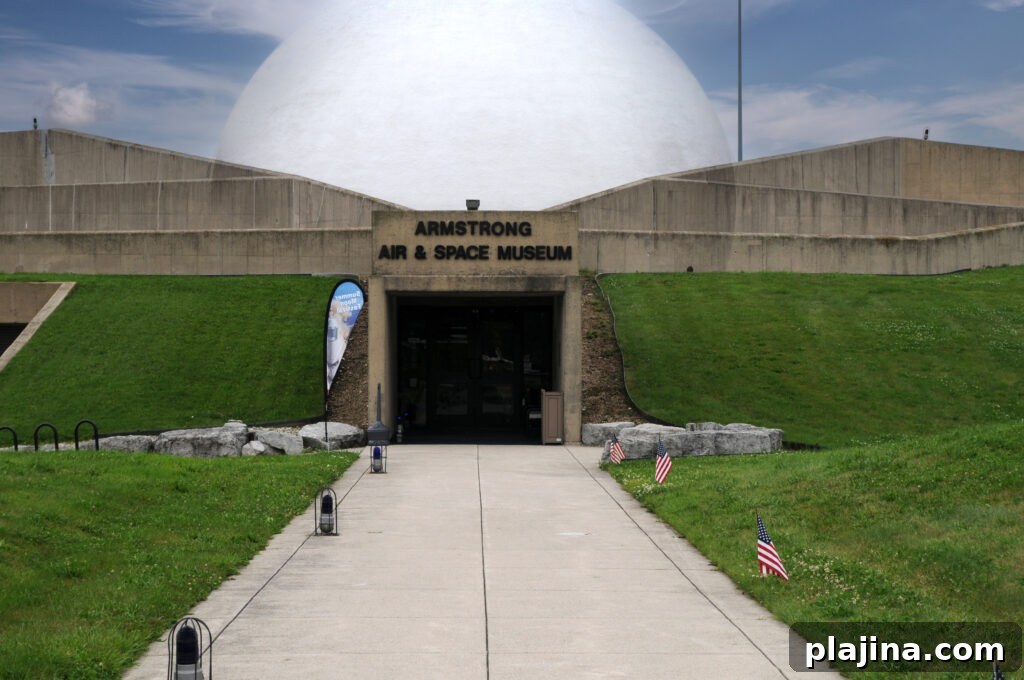
About an hour north of Dayton is Wapakoneta, the hometown of Neil Armstrong. There you’ll find the Armstrong Air & Space Museum, another stop on the Dayton Aviation Trail. After touring the museum, explore Wapakoneta’s charming historic downtown, which features 65 properties listed on the National Register of Historic Places. Stroll the storefronts, enjoy a meal, or relax at the riverside park before returning to Dayton.