
In February, the world will watch Beijing as the 2022 Winter Olympics begin on Feb. 4. Like the 2020 Summer Games, these Olympics arrive amid the COVID-19 pandemic and ongoing human rights debates. That uncertainty has led many to recall earlier Olympic editions, when the Games symbolized unity, pride and a shared global spirit that bridged cultures and borders.
At many past Olympic sites, that spirit endures. Local communities and fans have preserved Olympic memories long after the competitions ended, making those destinations attractive to travelers who want a blend of historical significance and contemporary activities.
One place that still embodies Olympic heritage is Lausanne, Switzerland — the official Olympic Capital and home of the International Olympic Committee. As Switzerland’s fourth-largest city, Lausanne was formally designated Olympic Capital in 1994, though the IOC has been based there since 1915. The Olympic Museum in Lausanne draws roughly 300,000 visitors annually and showcases more than 1,500 artifacts and exhibits that chronicle the history of the Games.
Although Lausanne is central to the Olympic movement, it never hosted the Games itself. For actual Winter Olympic host cities in Switzerland, travelers should head east. Roughly a five-hour drive away sits St. Moritz in the canton of Graubünden — a two-time Winter Olympics host.
“Winter sports have long been part of Switzerland’s identity, especially in Graubünden and St. Moritz, which hosted the Winter Olympics in 1928 and again 20 years later,” said Tamara Loeffel, head of business development for Graubünden.
For an immersive Olympic experience, visitors can stay at Kulm Hotel St. Moritz, which features the rink used during the Games and now hosts public skating, lessons and curling events year-round. The hotel property also includes the Olympic Bobrun — the oldest bobsleigh track in the world and the only naturally refrigerated track still in operation.
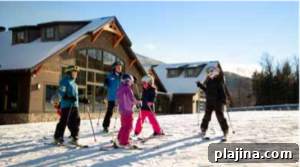
PHOTO: © REGIONAL OFFICE OF SUSTAINABLE TOURISM
In the United States, Lake Placid, New York, is another destination steeped in Olympic tradition. The Adirondacks hosted the Winter Games in 1932 and 1980 and have recently invested in upgrades across many legacy venues. Improvements have been made at Mount Van Hoevenberg — home to the skeleton and bobsled track and North America’s longest mountain coaster — as well as at Whiteface Mountain Ski Area, the Olympic Jumping Complex and the Lake Placid Olympic Center. The Olympic Center in downtown Lake Placid houses the local Olympic Museum and is famed as the site of the U.S. hockey team’s 1980 Miracle on Ice.
Many upgrades also support upcoming events, such as the FISU World University Games slated for January 2023, but visitors of every kind benefit from the enhancements. Lake Placid Village has undertaken reconstruction efforts to improve walkability and aesthetics, creating a more welcoming experience for tourists and locals alike.
Lake Placid’s reputation extends beyond sites and infrastructure. It continues to produce notable athletes: the village has sent at least one athlete to every Winter Olympics and, collectively, more than 100 athletes since the first modern Winter Games in 1924. Notable Olympians with ties to the region include Andrew Weibrecht (Super-G), Billy Demong (Nordic Combined) and Chris Mazdzer (men’s singles luge). These achievements reflect the community’s strong support for Olympic sports development programs, said Michelle Clement, director of marketing at the Regional Office of Sustainable Tourism.
To the west, Salt Lake City marks an important Olympic milestone in 2022 as the city celebrates the 20th anniversary of hosting the 2002 Winter Games. Melanie Welch, director of marketing and sponsorships at the Utah Olympic Legacy Foundation, notes that the legacy venues are busier now than they were immediately after the Games. The facilities host international, national and regional competitions and provide year-round training, drawing athletes and visitors worldwide. The Utah Olympic Park, Utah Olympic Oval and Soldier Hollow Nordic Center offer experiences such as bobsledding, ice skating, cross-country skiing, tubing, ziplining, alpine slides and freestyle shows.
The Winter Olympics also brought global attention to British Columbia following the 2010 Games. Tourism officials say the Games introduced many viewers to the region and translated into a significant increase in visitors and tourism spending. Host communities like Whistler, Richmond and Vancouver continue to attract guests who want to explore Olympic sites and local attractions.
In Richmond, the Richmond Olympic Experience — North America’s first Olympic museum — and the Richmond Olympic Oval (former long-track speed skating venue) illustrate how host cities have reimagined Olympic assets. Officials used pandemic closures as an opportunity to update facilities, and the museum and oval plan to reopen with new interactive offerings, including a Train Like an Olympian experience aimed at engaging visitors.
Before British Columbia hosted the Winter Olympics, Calgary held the Games in 1988. Canada Olympic Park (now WinSport) remains a focal point for winter sports development. WinSport has invested in world-class facilities, including a top-tier halfpipe and an FIS-sanctioned slope-style course, making Calgary a key training center for Canada’s freestyle skiing and snowboarding athletes. Planned renovations for the sliding track (used for bobsleigh, skeleton and luge) will further enhance the venue. Visitors to WinSport can ski or snowboard, ride the summer bobsleigh or zipline, or visit the Markin MacPhail Centre, which features multiple NHL-sized rinks and a high-performance training center used by hundreds of Canadian athletes.
Across these and more than a dozen other Winter Olympic host destinations worldwide, the Olympic spirit endures. Much like the adventurous traveler, that spirit combines determination, unity and a respect for legacy with a forward-looking mindset. When your travels bring you to an Olympic host city or venue, take time to explore — you may discover inspiration, history and new experiences that go beyond the competitions themselves.