
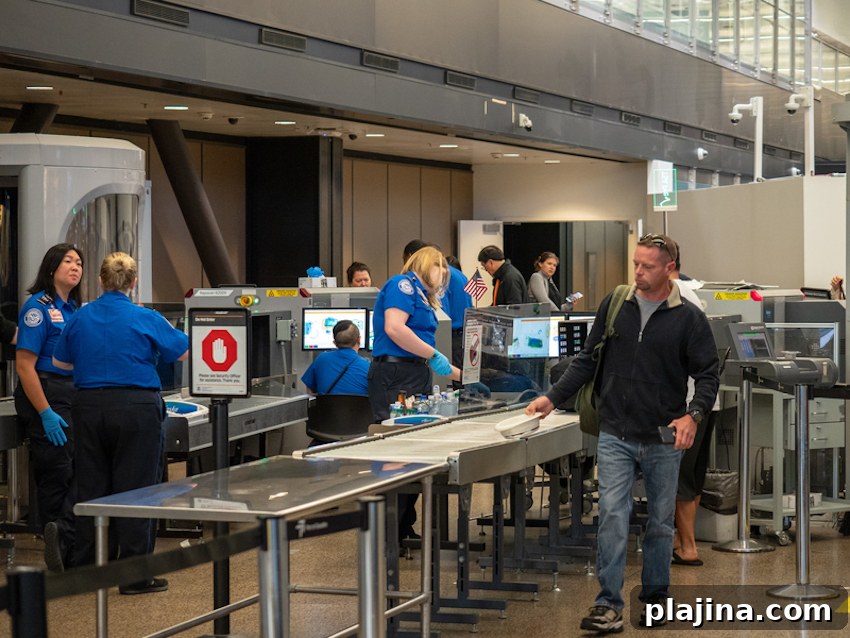
In 2018, the public learned about a controversial Transportation Security Administration program called Quiet Skies.
Quiet Skies involved surveillance of ordinary travelers by air marshals, even when those passengers were not on any terrorism or watch list. Under the program, citizens could be selected for monitoring based on automated screening of travel patterns or perceived affiliations, meaning everyday travelers might be followed simply because their itineraries or connections fit certain criteria.
Since then, the TSA says it has scaled back aspects of the program. Officials report that air marshals no longer track minor passenger movements or routine behaviors—such as fidgeting or using the restroom—nor do they routinely follow travelers through baggage claim. The agency has also scaled back extensive reporting on passengers who display no significant suspicious behavior.
“Any routine passenger behaviors on a plane that would be seen as a normal behavior we are no longer capturing that,” said David Kohl, the director of the Federal Air Marshal Service, in an interview. Kohl added, “If there’s nothing, there’s nothing. We’re not going to follow passengers from curbside to checked baggage areas when there’s no observation that would lead us to say there’s more to this than a normal traveling passenger.”
Despite these changes, concerns persist among privacy advocates and civil liberties organizations. Critics argue that the program inherently risks singling out innocent people for invasive scrutiny based on opaque algorithms and limited oversight.
“The Quiet Skies program singles out people who have done nothing wrong and subjects them to intense scrutiny based on an untested, unreliable computer algorithm,” said Hugh Handeyside, a staff attorney with the American Civil Liberties Union’s National Security Project. He called the program “troubling” and emphasized the potential for harm when surveillance targets are selected by automated systems without clear accountability.
Debate continues over how to balance security measures with personal privacy and civil liberties. Supporters of targeted surveillance argue that monitoring based on travel patterns can help identify genuine threats, while detractors warn that broad, algorithm-driven selection risks unfairly stigmatizing innocent travelers and eroding public trust. The TSA’s stated policy changes aim to limit that risk by narrowing what behaviors are recorded and reducing continuous trailing of passengers in public airport spaces.
Whatever the merits of the program’s intent, the controversy around Quiet Skies underscores larger questions about automated decision-making in security practices: how algorithms are designed and tested, how oversight is maintained, and how agencies communicate changes and limitations to the public. Until those issues are fully addressed, the program will likely remain a focal point for debate about surveillance, transparency, and the protection of civil liberties in travel security operations.