
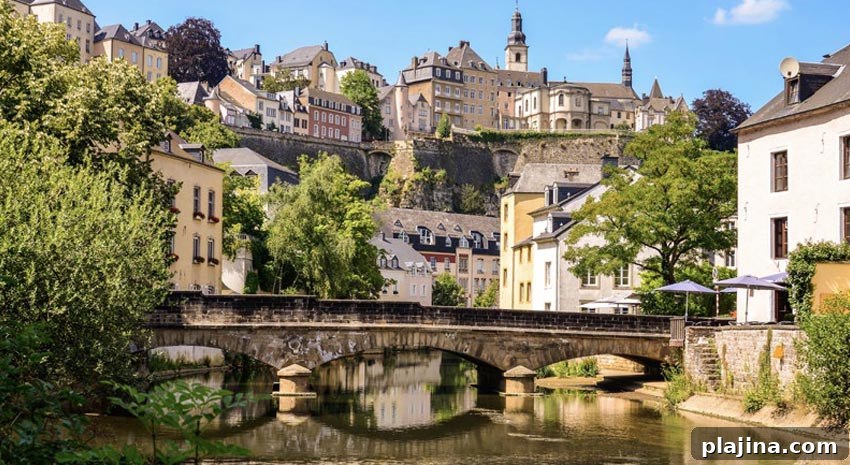
The first thing that strikes many visitors to the City of Luxembourg is its history: locals joke that a 15th-century building is practically modern. This highly international city — where foreign nationals make up nearly two-thirds of the population — offers as much appeal to Europhile travelers as better-known capitals across the continent.
Strolling the cobblestone streets of Grund after an evening rain can feel almost Parisian, yet tourists remain surprisingly scarce. French is one of Luxembourg’s three national languages and often serves as the social lingua franca in the city. Children begin learning written German early and watch German television, while Luxembourgish — a blend of French and German — is commonly spoken at home. English is introduced in schools around age 14, and Spanish and Dutch are also heard thanks to visitors and residents from those countries, so many Luxembourgers pick up several languages.
This international character sits alongside a strong national identity. Historically resistant to assimilation by neighboring powers, Luxembourg has maintained distinct cultural and political institutions; for example, it recently resisted loosening Luxembourgish language requirements for citizenship. Though small in size, Luxembourg asserts itself as very much its own nation.
Business travelers using the convention center will find more than a generic event space. The European Convention Center Luxembourg in the Kirchberg neighborhood overlooks the historic city and hosts a variety of conferences and cultural events. The Meliá Luxembourg hotel sits adjacent to the center, making it a convenient option for delegates. Hotel Sofitel Luxembourg Europe is located directly across the street. Many visitors prefer lodging in the city center, but note that commuting between town and Kirchberg relies on public transport unless you’re prepared for an uphill walk in a suit.
Public transportation is reliable and easy to use. From Gare de Luxembourg (the main train station), buses 195, 125/1 and 16 will take you within a few stops of Symphony Hall. From the airport, the 16 bus serves Kirchberg before continuing to the city center — a practical route for convention attendees.
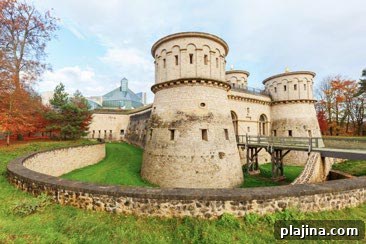
Fort Thüngen and Museum of Modern Art © MADRABOTHAIR | DREAMSTIME.COM
You may notice construction along Avenue John F. Kennedy on the northern edge of the convention center: Luxembourg is reinstating tram lines that were removed decades ago. The tram network is being rolled out in stages, with the first section in Kirchberg originally scheduled to open earlier; subsequent extensions will follow in phases over the coming years.
Now for food and entertainment. Luxembourg City is compact — roughly 100,000 residents — yet densely packed with excellent dining and nightlife options within walking distance. Whether unwinding after a conference or sharing a meal with colleagues, you’ll find strong choices. For a classic local lunch, Oberweis in the old town is a popular pick; try the chicken vol-au-vent, a traditional and satisfying Luxembourg dish.
Italian dining is well represented in the center by L’Osteria and Ristorante Essenza, both suitable for business dinners in a smart-casual setting. Pair your meal with a bottle of Luxembourg white wine for a regional touch. Clausen, a neighborhood known for its lively nightlife, also offers spots like Restaurant Ukulele (a local Thai favorite) and the Big Beer Company for a more relaxed evening. If you prefer to stay near Kirchberg, Restaurant Clé de Sol and La Table du Belvédère are conveniently located close to the convention center and nearby hotels.
For late-night music and convivial atmosphere, make time for Café des Artistes in Grund. Styled with a nod to early 20th-century Parisian cafés yet unmistakably Luxembourgish in spirit, it features a rotating cast of amateur pianists and sing-along favorites that bring the room together. The repertoire often includes national classics and occasional international hits, creating a welcoming setting whether you listen or join in at the piano.
When possible, set aside time to explore the city on foot. Walk down from Kirchberg at least once to admire Fort Thüngen, then follow a mix of paved promenades and trails as you descend toward quieter residential areas just outside the core. Cross the city’s bridges for sweeping, cinematic views perfect for a leisurely stroll. For a lively contrast, look down from the Passerelle Bridge at Skatepark Péitruss, where skateboarders and BMX riders practice daytime tricks.
A hint of rain at night only enhances Luxembourg’s romantic atmosphere: the way raindrops glisten on cobbles from Grund to the Palais Grand-Ducal evokes a uniquely intimate charm. Whether you come for business or leisure, Luxembourg City rewards slow exploration and a readiness to savor small, memorable moments.