
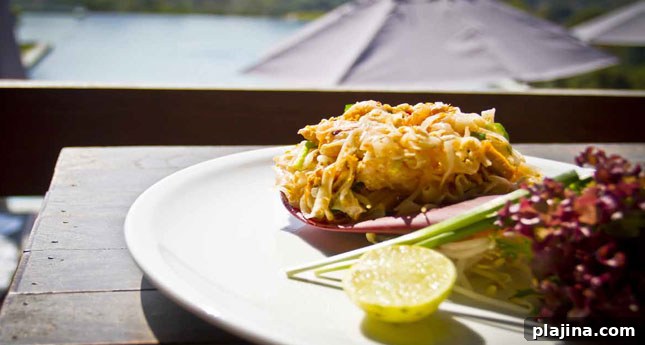
Thai restaurants have become a global constant. By the mid-2000s there were estimated to be around 12,000 Thai eateries worldwide, and projections into the following decade suggested the number could exceed 20,000. Two clear facts emerge from that spread: Pad Thai, one of Thailand’s most recognized national dishes, is served nearly everywhere, and attempts to name a single “best” version are futile given the vast number of regional and personal variations prepared in countless establishments.
Traditionally, pad Thai is a balanced combination of soaked, dried and stir-fried rice noodles with egg, chopped firm tofu, tamarind pulp, fish sauce, dried shrimp, garlic, shallots, red chili pepper and palm sugar. The dish is typically finished with a squeeze of lime and a scattering of chopped peanuts. Contemporary variations often include additions such as bean sprouts, garlic chives, coriander, pickled radish, shrimp, crab, or chicken, reflecting both local tastes and ingredient availability.
Despite its strong association with Thailand, pad Thai is not solely a native invention. Its extended name, kway teow pad, points to Chinese influence: “kway teow” refers to rice noodles in several Chinese dialects. Some culinary historians also suggest Vietnamese traders introduced rice noodle dishes to the ancient Thai capital of Ayutthaya. Whatever the exact route, rice noodles arrived in Thailand and were gradually adapted to local flavor profiles and Thai culinary preferences.
The dish’s rise to national prominence occurred in the 1930s and 1940s and accelerated after World War II. During that era, Prime Minister Plaek Phibunsongkhram promoted pad Thai as part of a broader nationalist and modernization campaign. The push to popularize this noodle dish served multiple purposes: it encouraged reduced domestic rice consumption at a time when rice exports were economically important, and it helped define a modern, unified national identity through food. The government actively promoted pad Thai, distributing recipes and encouraging vendors to sell it from mobile carts.
Pad Thai’s promotion also had practical benefits for everyday people. Historically inexpensive to make, it was once sold for only a few cents per plate; even today the dish remains affordable in Thailand, commonly available as a street food option for around $2. The emphasis on low-cost, high-flavor preparation made the dish an ideal choice for small vendors and for families seeking filling, nutritious meals on a budget.
That street-level tradition persists strongly in Thailand today. Although pad Thai is widely known as a hallmark of Thai cuisine abroad, within Thailand it is often treated as a specialty best left to the skilled street hawkers who have perfected the dish over decades. Many sit-down restaurants avoid competing directly with these vendors, knowing that the flavor, speed and price of a tried-and-true street cook are hard to match. Day after day, these specialists prepare pad Thai in market stalls and sidewalk carts, delivering a focused, consistent product that has become an essential part of daily life and culinary culture.
Whether enjoyed from a bustling market stall in Bangkok or a neighborhood Thai restaurant overseas, pad Thai represents a fusion of influences—a dish shaped by history, policy and local taste. Its enduring popularity speaks to the adaptability of simple ingredients transformed through technique, balance and seasoning into a meal that continues to delight people around the world.