
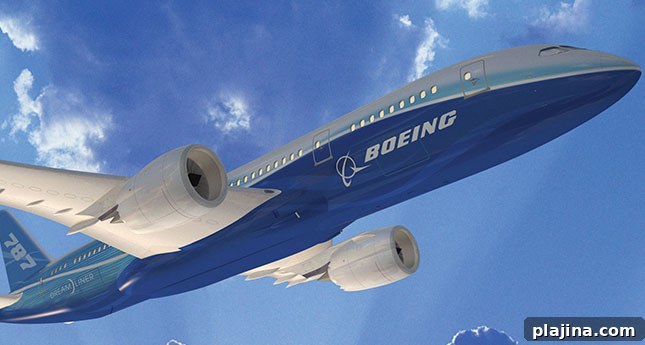
The Boeing 787 Dreamliner is a striking mid-sized airliner, with slender swept-back wings that tilt upward at the tips. Parked on the tarmac at Boeing Field in Seattle, it is one of four Dreamliners Boeing began test-flying in December. The company plans to deliver the first finished 787s to launch customer All Nippon Airways later this year, promoting the aircraft as a game-changing addition to commercial aviation.
Developed over nearly a decade, the 787’s components were produced by Boeing and a global network of suppliers. All Nippon Airways had hoped to begin flying the new plane in 2008 for the Beijing Olympics, but the project’s complex supply chain and technological challenges delayed deliveries five times. Boeing executives now say the program is approaching readiness.
Boeing declined to disclose its total spending on the Dreamliner or the exact number of employees working on it, citing competitive concerns. Instead, the company emphasizes the strong market response. “This airplane is really resonating with airlines,” said James A. Haas, Boeing’s director of 787 marketing, noting carriers appreciate the 787’s lower fuel burn and reduced operating costs.
At list price roughly $150 million each, the 787 has drawn orders from 57 airlines for a total of 866 jets, according to Boeing. Large customers such as ANA and leasing companies typically receive substantial discounts, but the program still represents major revenue for Boeing, which last launched a new airliner in 1994 with the 777. Major carriers including Continental, United, Air Canada, Lufthansa and Singapore Airlines are among the customers.
Boeing markets the 787 as a fuel-efficient, lower-cost aircraft largely because of its extensive use of composite materials — carbon-fiber reinforced plastics that are light, strong and flexible — combined with aluminum, titanium and steel. The Dreamliner is roughly 50 percent composite by weight, compared with about 12 percent for the 777, according to Boeing factory manager Kathy Moodie.
Unlike earlier Boeing models built predominantly in the Seattle area, about 30 percent of the 787 is manufactured outside the United States, with additional work performed at various U.S. facilities. Major sections are transported on four specially modified Boeing 747 Dreamlifters to the Everett, Washington final-assembly plant, where teams of workers join the parts into completed aircraft.
“By flying in parts, we can move much faster than moving them by rail and sea,” said Moodie. The process operates on a just-in-time basis, with parts arriving as needed rather than being warehoused. When at full production, Boeing expects final assembly to take about three days per plane.
Senior executives in Boeing Commercial Airplanes lead the Dreamliner team. While optimistic, they acknowledge the program’s difficulties, which are not uncommon with next-generation airliners. Airbus experienced similar setbacks with the A380 related to complex wiring and production coordination. Boeing adjusted its management structure in response to schedule pressures, appointing Scott Fancher in December 2008 as vice president and general manager of the Dreamliner program.
Boeing claims the relatively lightweight 787 will use about 20 percent less fuel than a comparable conventional aircraft, making it more efficient and environmentally favorable. The twin-engine widebody, offered in three models, has a range up to 8,500 nautical miles, making it suitable for long-haul, point-to-point routes. The cabin design prioritizes passenger comfort with LED lighting, softer interior curves, higher cabin pressure and increased humidity to reduce dryness. The aircraft is also engineered to smooth turbulence.
The 787’s large, oval windows are set higher on the fuselage to enhance views and create a stronger connection to the sky. “We found people dream of flying; they want the experience to feel special,” said Colleen E. Rainbolt, regional director of passenger satisfaction and revenue marketing. Composites also reduce maintenance needs by resisting fatigue and corrosion, and the design minimizes parts count, enabling faster turnarounds and more flying time for airlines. Critics have questioned long-term durability and crash performance of extensive composite use, but Boeing notes composites have a track record in smaller quantities.
The Dreamliner name, chosen in a public contest, evolved from an earlier project called the Sonic Cruiser conceived in 2002. Market research showed airlines wanted a more efficient, point-to-point aircraft rather than a large, hub-focused, high-speed jet. The revised program, initially the 7E7 and later renamed 787, increased composite usage and outsourced much of the manufacturing to global partners — a significant shift from Boeing’s historic approach of in-house production.
“This is a large program,” Fancher said, noting the decision to diversify the supply base was intentional. The approach posed risks: subcontracting sometimes introduced delays or quality shortfalls, prompting Boeing to strengthen oversight and, in one case, acquire a South Carolina contractor and rename it Boeing Charleston.
Above the Everett production line, the Dreamliner Production Integration Center (PIC) monitors projects and parts movement worldwide in real time. The center features a large “situational awareness” video display and multiple workstations that link Boeing with distant suppliers through videoconferencing, reflecting tighter program control and coordinated global production.
On the factory floor, 787 assembly follows a repeatable process with specialized teams working at defined stations. The Dreamliner requires 80 percent fewer rivets than primarily aluminum designs such as the 777, resulting in a quieter assembly environment and fewer hardware variations. White-collar staff work closer to production than in past programs, underscoring the new methods used to build the aircraft.
Boeing executives characterize earlier manufacturing and logistical setbacks as growing pains of a global program. They maintain that partnering with firms like Japan’s Mitsubishi Heavy Industries for wings and France’s Latécoère for doors reflects the realities of a globalized aerospace industry. Engines are supplied by Rolls-Royce and General Electric, and Boeing expects future aircraft programs to continue relying on partnerships.
“The business models in aviation are evolving,” Fancher said. “We are optimizing who does what on the airplane.” Production and development continue around the clock across multiple countries, with engineers and specialists traveling to collaborate directly when necessary.
In the final months before deliveries begin, Boeing engineers are refining aerodynamics while sales teams work with customers to design cabin layouts that support each airline’s brand. Depending on configuration and model, the 787 can seat between 210 and 330 passengers.
Flight testing has advanced steadily: the 787 passed a flutter-resistance test and evaluations of ground effects during takeoff and landing. Additional testing will expose the aircraft to extreme climates, from polar cold to tropical heat. Mike Sinnett, who became chief engineer for the Dreamliner in February and has worked on the program since its inception, described similar rigorous testing used on previous models, such as cold-weather trials in northern regions.
Despite its global supply chain, Sinnett emphasized that final assembly and design integration remain rooted in Boeing’s U.S. factories, particularly in Washington state. Boeing also showcases interior possibilities at a dedicated Customer Experience Center where airline customers can customize cabin features and layout options before delivery.
Boeing is mindful of Airbus’s competing mid-sized long-range efforts, but executives argue the 787’s head start and unique design give it an advantage. “Every 20 or 25 years, a new generation of aircraft is called for,” Scott Fancher observed. “This program marks a major transition, comparable to shifts from propellers to jets or narrow-bodies to wide-bodies.”