
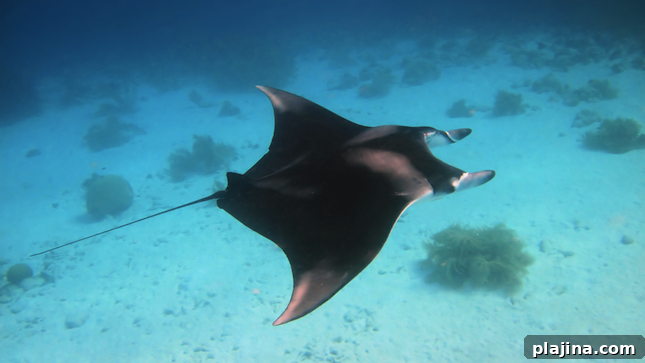
A recent study by Palau’s eco-tourism partner, the Etpison Museum, confirms that the Micronesian archipelago is home to at least 235 individual manta rays. Dramatic photographs from the research are available from local manta identification projects.
The museum’s tracking initiative will continue as researchers collaborate with state authorities across Palau to identify additional manta feeding and cleaning sites and to provide recommendations for site management. The project relies solely on non-invasive survey techniques — time-lapse cameras, snorkeling, diving and aerial surveys by helicopter — to monitor manta movements and better understand how these animals use Palau’s reefs.
In related conservation news, the Palau Project has partnered with the Manta Trust. This collaboration connects Palau with international manta experts and research networks, bringing access to the latest scientific methods, identification tools and global datasets. Located in the westernmost reaches of Micronesia, Palau comprises more than 586 islands and around 20,000 residents. Renowned as one of the world’s premier dive destinations, Palau also established the world’s first official Shark Sanctuary, highlighting its broader commitment to marine protection.
The ongoing research and new partnerships strengthen Palau’s role in manta conservation by improving site management, expanding monitoring efforts and fostering scientific exchange. Continued non-invasive monitoring will help managers detect changes in manta distribution, identify critical habitat areas, and guide policies that support both local livelihoods and marine biodiversity.
Researchers and conservationists emphasize the value of community involvement in these efforts: local knowledge, dive-operator observations and collaborative patrols all contribute to building a more comprehensive picture of manta populations. As more feeding and cleaning sites are documented, managers can prioritize protection measures, set visitor guidelines and design outreach programs that minimize disturbances to mantas while maintaining opportunities for sustainable tourism.
Palau’s combination of rich marine habitats, active research programs and international partnerships positions it as a key site for manta ray conservation in the Pacific. Continued documentation, non-invasive monitoring and adaptive management are essential to ensure healthy manta populations and resilient reef ecosystems for future generations.
You may also like:
Palau: Island Time