Most cities were not planned from the start; they grew organically, expanding in fits and starts without a comprehensive long-term strategy. That creates a central challenge: how do you transform such places into sustainable, resilient urban centers? As an Irish farmer once told a lost motorist asking for directions, “I wouldn’t start from here.” Still, we must work with what we have.
Urban areas now face problems that can no longer be deferred. They consume more energy than they produce, generate vast amounts of waste, and rely on transport systems designed for much smaller populations. Many cities suffer from air and water pollution and aging infrastructure. Despite the scale of these challenges, examples from around the world show that change is possible when cities commit to bold, integrated strategies.
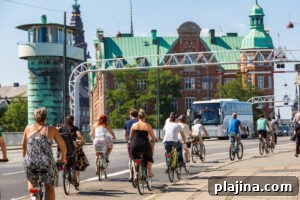
PHOTO: © SERGII FIGURNYI | DREAMSTIME.COM
Copenhagen is a prominent example. Once burdened by typical urban pressures, the Danish capital has remade itself into one of the world’s greenest cities. Waste-to-energy systems now deliver both heat and power, and a striking incineration plant with a sloped roof doubles as a public ski slope, blending utility with recreation. Extensive bicycle networks make cycling a practical choice for many residents, while the public bus fleet is electrified. Copenhagen’s long-term plan aims to phase out fossil fuels entirely by 2050, demonstrating how layered policies and infrastructure investments can shift a city’s trajectory.
In North America, Vancouver has embraced its natural advantages to drive sustainability. By prioritizing clean air and water, setting ambitious waste-reduction targets, and embedding sustainability into planning decisions, Vancouver seeks to reach zero waste by 2040. Those policies have contributed to high livability ratings and show how environmental goals can align with quality of life improvements.
Brazil presents contrasting urban realities, where sprawling megacities often struggle with congestion and pollution. Yet Curitiba stands out as a different model. Through forward-thinking stormwater management, abundant public green spaces, comprehensive recycling programs, and a pioneering bus rapid transit system that runs on biofuels, Curitiba has become a practical blueprint for sustainable urban development in the region.
In Australia, Melbourne is pursuing an ambitious renewable-energy agenda. The city has set a target to be powered entirely by renewable sources by 2030 and has expanded urban green spaces while prioritizing pedestrians and cyclists in its central areas. These measures help reduce emissions, improve public health, and make streets more inviting.
Singapore offers a dense, high-performing example from Asia. Constrained by limited land, the city-state has invested heavily in smart technologies, efficient mass transit, energy-efficient buildings, integrated waste management, and urban agriculture. Green infrastructure—such as vertical gardens, parks, and water-sensitive urban design—has become part of daily life, illustrating how intensive urban settings can still pursue sustainability at scale.

© NANCY ANDERSON | DREAMSTIME.COM
These five cities—Copenhagen, Vancouver, Curitiba, Melbourne, and Singapore—demonstrate that regardless of where an urban area begins, practical pathways to sustainability exist. Their successes share common elements: integrated planning, investment in low-carbon infrastructure, prioritization of public and active transport, expanded green space, and policies that make waste and energy systems more circular. While no city is perfect, these examples offer realistic models for others seeking to reconcile growth with environmental stewardship and improved livability.