
Turkish Airlines has begun using sustainable aviation fuel (SAF) on its commercial flights. The airline introduced SAF on flight TK1823 between Istanbul (IST) and Paris (CDG) in early February. Initially, SAF will be used one day per week on this selected route, with plans to expand its use across more flights and routes over time. According to the airline, the SAF in use reduces lifecycle greenhouse gas emissions by up to 87% compared with conventional fossil jet fuel.
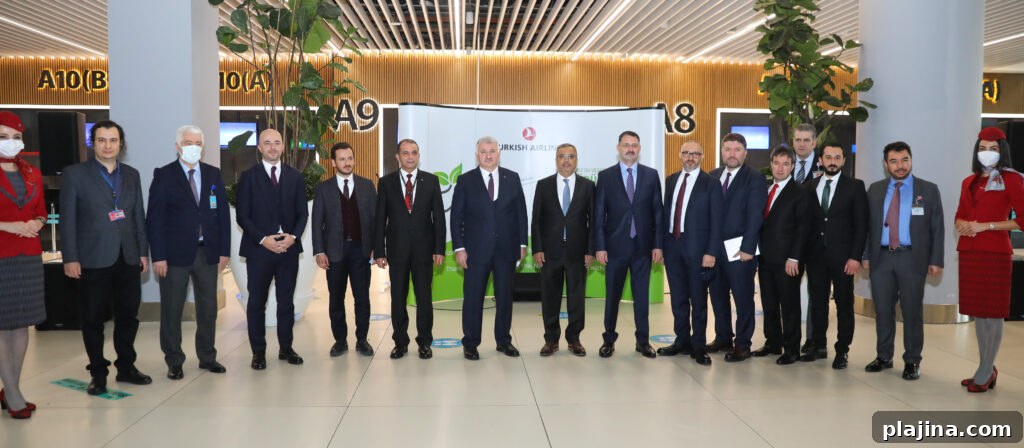
© Turkish Airlines
The SAF supply and handling are managed locally by Turkish Airlines’ fuel subsidiary, Turkish Fuel Services (TFS). The SAF is sourced from Neste, a producer of renewable aviation fuels, and delivered to the TFS fuel farm. There it is blended with conventional jet fuel and then loaded onto aircraft following standard fueling procedures and safety checks.
Implementing SAF is part of Turkish Airlines’ broader sustainability strategy. The airline highlights that operating an extensive global network—serving more countries than any other carrier—carries a responsibility to protect biodiversity and reduce environmental impact. Using SAF for regular flights is one step in a range of initiatives intended to lower emissions and support long-term environmental stewardship.
“We are the airline that flies to more countries than any other in the world. This also means we are the airline that introduces its guests to the richest biodiversity as well. We conduct our work towards achieving sustainability with that mentality and responsibility,” said Prof. Dr. Ahmet Bolat, chairman of the board and executive committee of Turkish Airlines. “Our first flight that uses sustainable resources is a part of that vision. We believe that future generations will continue to be able to discover the world and its preserved beauty with Turkish Airlines. Our efforts focused on protecting our world will continue.”
As SAF production and supply chains scale up globally, airlines like Turkish Airlines are positioning themselves to increase SAF adoption across their networks. Wider use of SAF, together with improvements in aircraft efficiency, operational measures and carbon reduction programs, can contribute significantly to aviation’s efforts to lower its climate footprint while maintaining connectivity for travelers worldwide.