
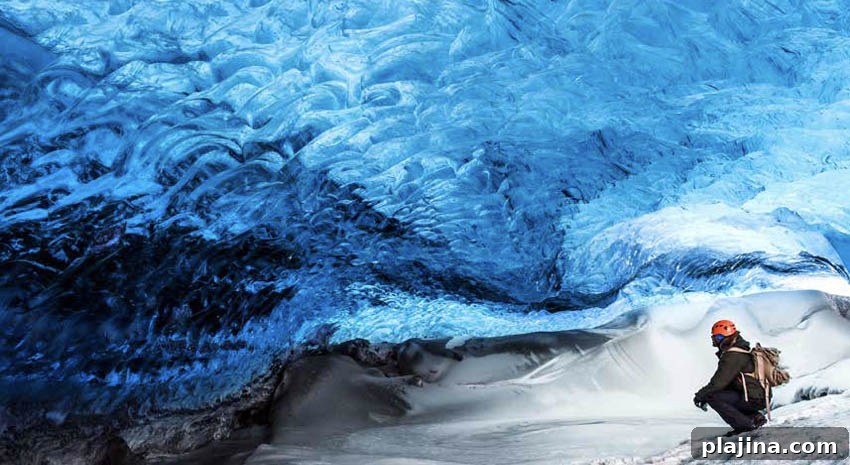
Ever since I first read Jon Krakauer’s vivid accounts of scaling towering frozen waterfalls and weathering blizzards in ice caves, I longed to try ice climbing for myself. Standing at the edge of a glacial wall in southeast Iceland, however, I felt the same mix of awe and apprehension that many first-timers do. After one last check of my harness and carabiner, I stepped backward and began to descend.
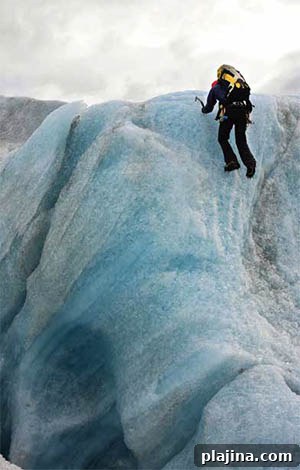
Ice climbing at the Sólheimajökull Glacier © LUCIANY | DREAMSTIME
Iceland’s dramatic geology delivers a wide variety of landforms sculpted by ice, fire and water. While glaciers are scattered across the island’s roughly 40,000 square miles, the best place for guided ice hiking is Skaftafell, a conservation area in the country’s far southeast reached via the Ring Road. Once its own national park, Skaftafell is now a prominent section of Vatnajökull National Park, a vast protected area established in 2008.
Vatnajökull’s ice reaches astonishing depths, at times nearly a mile thick, alternately concealing and exposing mountains, valleys and upland plateaus. Powerful glacial rivers such as the Skeiðará, Morsá and Skaftafellsá continue to carve lowlands and wetlands at the feet of massifs like Hvannadalshnjúkur. Nearby volcanoes, including Öræfajökull, periodically shower black ash over verdant vegetation and the startlingly blue ice fields. This is a landscape shaped by dramatic and recurring geological events.
That dynamism is ongoing. Subglacial meltwater can build up and release in sudden, forceful floods known as jökulhlaups. These events can reshape riverbeds and plains overnight; one notable jökulhlaup in 1996 lasted days and reached flows of nearly two million cubic feet per second. Local weather is equally variable: föhn winds and rain shadows create sharp contrasts between the wetter eastern slopes and the warmer, drier western side. Skaftafell itself enjoys comparatively mild conditions and can even offer sunny pockets in summer. In a short span you may feel like you’ve walked from Alpine scenery into Arctic terrain.
From Reykjavík, where most visitors arrive, the drive to Skaftafell along Ring Road 1 takes about four hours. Road conditions can deteriorate quickly in winter, so always check weather and road reports before traveling. The park remains open year-round, with an information center and free parking, but exploring the glaciers requires leaving the road behind and heading out on foot under expert supervision. For safety and to protect fragile terrain, do not attempt to walk on a glacier alone.
Experienced local operators run a range of guided options suitable for different abilities. Icelandic Mountain Guides, which has operated since 1994, offers short beginner walks on the Svínafellsjökull glacier tongue that last a couple of hours, as well as longer full-day hikes across ice fields. More ambitious itineraries can combine ice climbing with visits to other highlights such as the Golden Circle, while serious mountaineers can arrange guided ascents of peaks like Hvannadalshnjúkur—though such expeditions require additional time, gear and expense.
Sólheimajökull is another accessible glacial tongue popular with guided tours. It is notable for its rapid retreat—roughly a mile of shrinkage in the past decade—so visitors can already see exposed ground and emerging vegetation. Glacier Guides and similar companies offer full-day adventures that include features like climbing frozen waterfalls and pick-up from Reykjavik hotels. Many operators set minimum age requirements (often around 10 years old) and provide safety equipment and instruction appropriate for family trips and novice climbers.
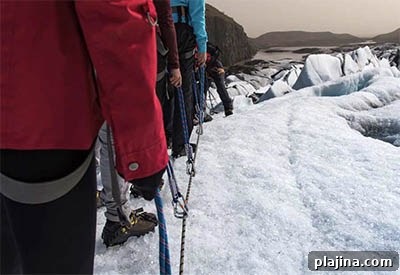
A group of people lined up for climbing © PHAH SAJJAPHOT | DREAMSTIME
Hiking on glacial ice is inherently hazardous and requires proper equipment and training. Sturdy, supportive footwear with ankle protection is essential for negotiating unstable, uneven surfaces; many guiding companies provide crampons and hire-quality boots when needed. Waterproof outer layers can often be rented in advance, but it’s wise to bring your own insulating layers such as a wool sweater or synthetic mid-layer, along with thermal pants, hat and gloves. Guides supply technical gear—ice axes, helmets, harnesses and safety lines—and will demonstrate their correct use before you set out.
Follow your guide’s instructions closely. Crevasses and sudden sinkholes called moulins may be hidden by recent snow or thin bridges of ice and can appear with little warning. Never walk beneath ice arches or travel off the marked route, and never attempt solo glacial travel. With experienced guidance and the right preparation, a glacier hike or an introductory ice-climbing session delivers unforgettable scenery and the exhilaration of an authentic adventure.
INFO TO GO
Keflavík International Airport is located roughly 31 miles southwest of Reykjavík. Ground transport options between the airport and the capital include several shuttle services that operate to major hotels and guesthouses, as well as taxis and rental vehicles. Plan your arrival and onward travel in advance, especially during winter when services and roads can be affected by weather.