
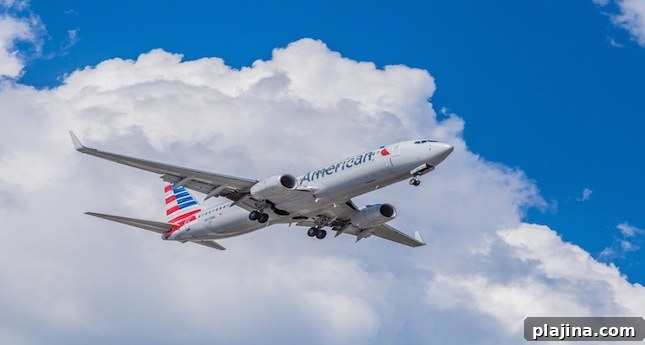
American Airlines and the Transportation Security Administration have announced a partnership designed to reduce passenger screening time by roughly 30 percent. The move responds to recent historic security wait times that led some travelers to miss flights. TSA and American Airlines will introduce faster automated security lanes and computed tomography (CT) scanners at four major hubs: Chicago (ORD), Dallas/Fort Worth (DFW), Los Angeles (LAX) and Miami (MIA).
CT scanners, commonly used in medical settings, capture X-rays from multiple angles to produce highly detailed images. In airports, that capability gives screeners improved visibility into items a traveler might conceal on their person or carry in luggage, enhancing detection while reducing the need for manual inspections.
“Our foremost priority is the security of the traveling public,” said Peter V. Neffenger, TSA administrator. “To ensure that we remain up-to-date in an evolving threat environment, the TSA continues to test and deploy state-of-the-art technologies. This collaboration with American Airlines is an important step in enhancing the traveler experience while maintaining effective security.”
Along with CT technology, the program will introduce smarter baggage processing. New automated conveyor belts can remove a suspicious bag from the main queue for additional screening without holding up other passengers. Larger bin sizes will be provided to make tray packing easier and reduce spills and repeated screenings. Bins will also carry Radio Frequency Identification (RFID) tags to minimize confusion over ownership and speed recovery of misplaced items.
“We are proud to be working collaboratively with the TSA to support next generation screening technology at five of our hubs this fall,” said Robert Isom, chief operating officer of American Airlines. “These state-of-the-art lanes, along with new detection technology that will be tested in Phoenix, will enhance security effectiveness and efficiency while improving the customer experience. On behalf of our team members who are working to take care of customers every day, we appreciate the TSA’s partnership in implementing these new innovative technologies.”
The initiative is being launched as a pilot program. If the tests prove successful, the technology and operational changes could be expanded to other airports nationwide. Potential passenger-facing benefits under consideration include allowing travelers to leave liquids and laptops in carry-on bags during screening, which would further reduce wait times and simplify the process.