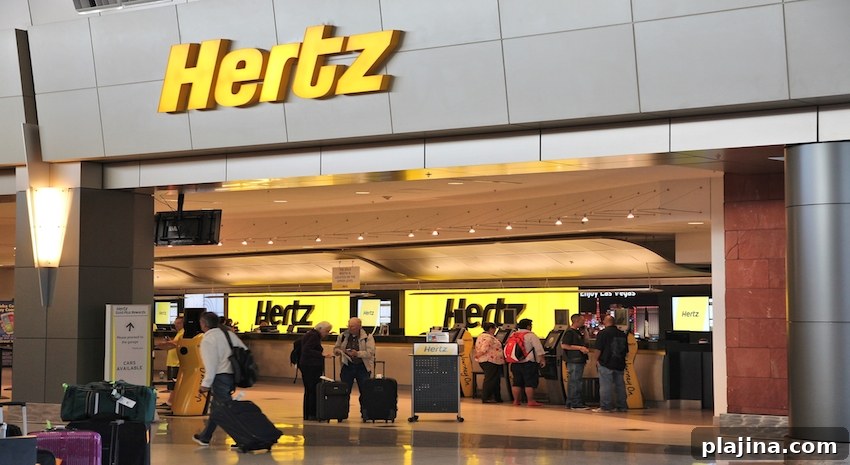
Ride-hailing services such as Uber and Lyft are eroding profits for traditional rental car companies, and industry leaders Hertz and Avis are adapting their strategies in response.
Both Hertz and Avis reported disappointing second-quarter results last month. Hertz recorded a 2 percent decline in total revenue compared with the same quarter in 2016.
“We have made significant progress in the first half of the year, executing on our operating turnaround plan. Of course, the hard work always comes before the pay off as reflected in our second quarter results, where increased spending to fix areas of weakness and invest in areas of opportunity were exacerbated by a challenging vehicle residual environment in the U.S.,” said Kathryn V. Marinello, president and CEO of Hertz. “Admittedly, we still have a lot of work to do, but these early wins are evidence that we have the right plan in place to ultimately achieve best-in-class outcomes.”
Avis reported second-quarter revenue roughly flat compared with the same period last year, and its share price fell significantly during the month following the release.
“Our second quarter results in the Americas reflected both a 4 percent reduction in pricing resulting from industry over-fleeting and higher per-unit fleet costs due to lower used-vehicle values,” said Larry De Shon, president and CEO of Avis. “Consequently, we have identified $25 million of additional savings opportunities globally, bringing our total expected savings this year to $75 million, and have lowered our full-year earnings guidance to reflect the difficult first half.”
Despite the short-term headwinds, De Shon emphasized the company’s longer-term initiatives. “Our recently announced partnerships with Waymo and RocketSpace are providing opportunities to pilot scalable new business models as we start to execute on our strategy to leverage our fleet management and logistics capabilities in the rapidly developing mobility space. I’m also excited about all of the innovative growth initiatives we’ve announced this year, including enabling Avis customers to transact with us through Amazon Alexa and Google Home.”
Their financial performance echoes broader shifts in ground transportation. Certify’s SpendSmart report, covering business travel spending from April through June, found that Uber and Lyft together captured 2 percent of ground-transportation transactions while car rentals declined by 3 percent during the same period. That trend underlines how growing ride-hailing adoption and changes in vehicle resale values are pressuring rental fleets and margins.
To respond, rental companies are moving beyond traditional car leasing and short-term rental models. Hertz and Avis are focusing on cost reductions, fleet optimization, and new revenue streams that leverage their scale and logistics expertise. Actions include identifying additional global savings, adjusting pricing and fleet sizes to match demand, and piloting partnerships with mobility and technology firms to develop alternative services.
Executives say these shifts are part of a deliberate repositioning: trimming inefficiencies in the fleet business while investing in mobility partnerships and digital services that meet evolving consumer preferences. The goal is to offset margin pressure from lower residual values and competitive pricing by expanding into mobility management, subscription services, and technology-enabled customer experiences.
As the mobility landscape evolves, rental car operators face a dual challenge: managing near-term financial performance while executing strategic pivots to remain relevant. Their success will depend on how quickly they can restructure costs, deploy new business models at scale, and capture opportunities created by partnerships with technology and autonomous-vehicle companies.