
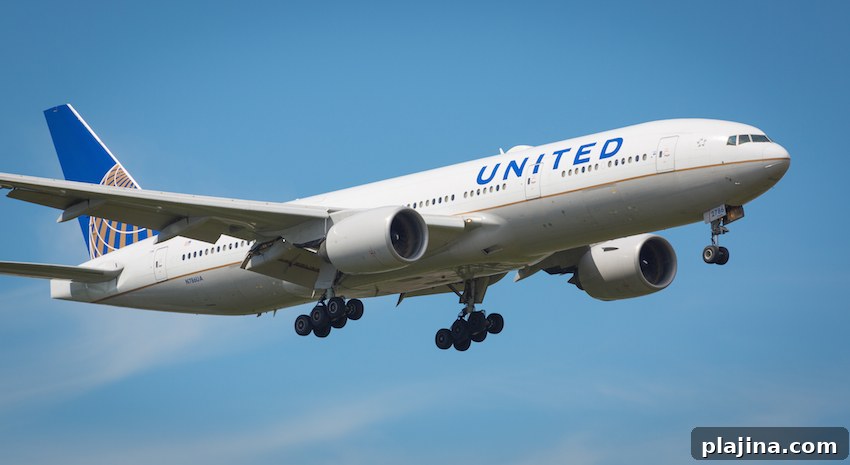
United Airlines has announced plans to expand its Raptor Relocation Network to San Francisco International Airport. In partnership with Audubon International, the airline will trap barn owls found near the airport and relocate them to safer habitats on nearby golf courses.
The Raptor Relocation Network began in 2017 at Newark Liberty International Airport, where the program has already resettled more than 80 birds. The expansion to San Francisco represents a continuation of United’s efforts to reduce wildlife hazards at airports while supporting local ecosystems.
“Being environmentally conscious means more than just reducing our footprint; it means convening different groups to develop new and innovative ways to actively protect vulnerable species,” said Janet Lamkin, president of California for United. “As we continue our commitment to protect raptors in the New York area, we are excited to expand our efforts to San Francisco and further underscore our industry-leading efforts to operate sustainably and responsibly.”
Christine Kane, CEO of Audubon International, noted the value of the partnership: “Audubon International is excited to be working with United Airlines’ Eco-Skies program to expand the Raptor Relocation Network to the West Coast. Thousands of golf courses across the world have adopted environmentally sustainable property management practices that support wildlife habitat through our Audubon Cooperative Sanctuary Program. Bringing this all together to provide safe, high-quality habitat for raptors is a great success.”
The program aims to balance aviation safety with wildlife conservation by relocating birds to managed green spaces that provide food, shelter and breeding opportunities. Golf courses enrolled in Audubon programs often implement practices such as native vegetation planting, reduced pesticide use and habitat features that make them suitable substitutes for the natural areas birds would otherwise use near busy airport environments.
Expanding the Raptor Relocation Network to the West Coast also demonstrates a growing trend among airports and airlines to adopt wildlife management strategies that are both humane and effective. By combining trapping and relocation with habitat creation on cooperating properties, the initiative seeks to reduce the number of bird-aircraft interactions while improving outcomes for the birds themselves.
United and Audubon International will work with local stakeholders to identify appropriate relocation sites and follow best-practice protocols for capture, transport and release. Monitoring and follow-up will help ensure relocated birds acclimate to their new environments and that chosen sites remain suitable over time.
This extension of the Raptor Relocation Network to San Francisco aligns with broader sustainability initiatives in aviation, where companies are increasingly focused on minimizing environmental impacts while maintaining safe operations. As the program develops, it may serve as a model for other regions seeking practical, conservation-minded solutions to wildlife management near airports.