
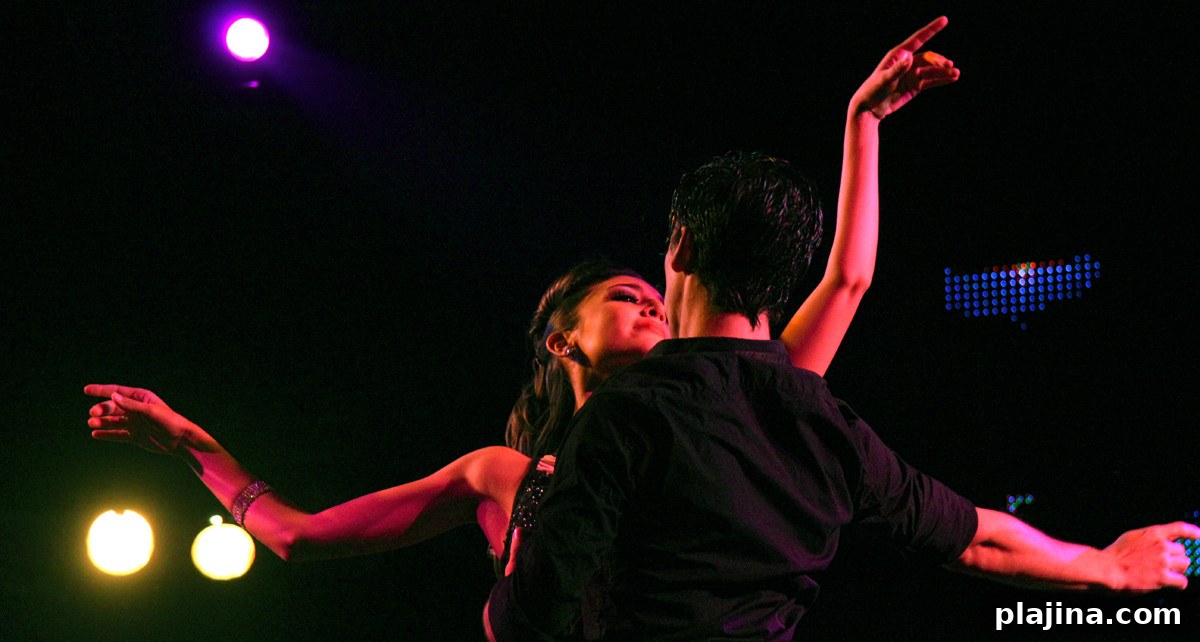
“Originating in the 1890s along the Rio de la Plata, tango is a partner dance that grew from the candombe traditions of enslaved African communities in Buenos Aires and Montevideo. As large waves of European immigrants arrived, the music and dance evolved, blending a wide range of cultural influences to create the distinctive sound and style we recognize today.”
Tango developed in working-class neighborhoods and port areas, where people from different backgrounds met and exchanged musical forms, rhythms, and dance steps. Early tango incorporated elements from African candombe drumming, European polkas and waltzes, and local folk traditions. Over time, new instruments such as the bandoneón were adopted, giving tango its characteristic timbre and emotional range.
The dance itself emphasizes a close embrace, improvisation, and a strong connection between partners. While early performances were often informal and took place in social clubs, bars, and dance halls, tango gradually entered mainstream culture and gained international recognition in the early 20th century. Notable composers and musicians helped codify tango’s musical forms, and dancers refined techniques that balanced elegance with grounded movements.
Throughout the 20th century, tango experienced cycles of popularity and reinvention. Golden Age orchestras expanded tango’s arrangements and brought it into concert halls. Later, renewed interest in traditional styles and contemporary experimentations both preserved and transformed the dance. Today, tango remains a living art form: it is taught in studios, danced socially in milongas, and performed on stages worldwide. Its rich history reflects the cultural fusion of the Rio de la Plata region and the enduring power of music and dance to express identity and emotion.”