
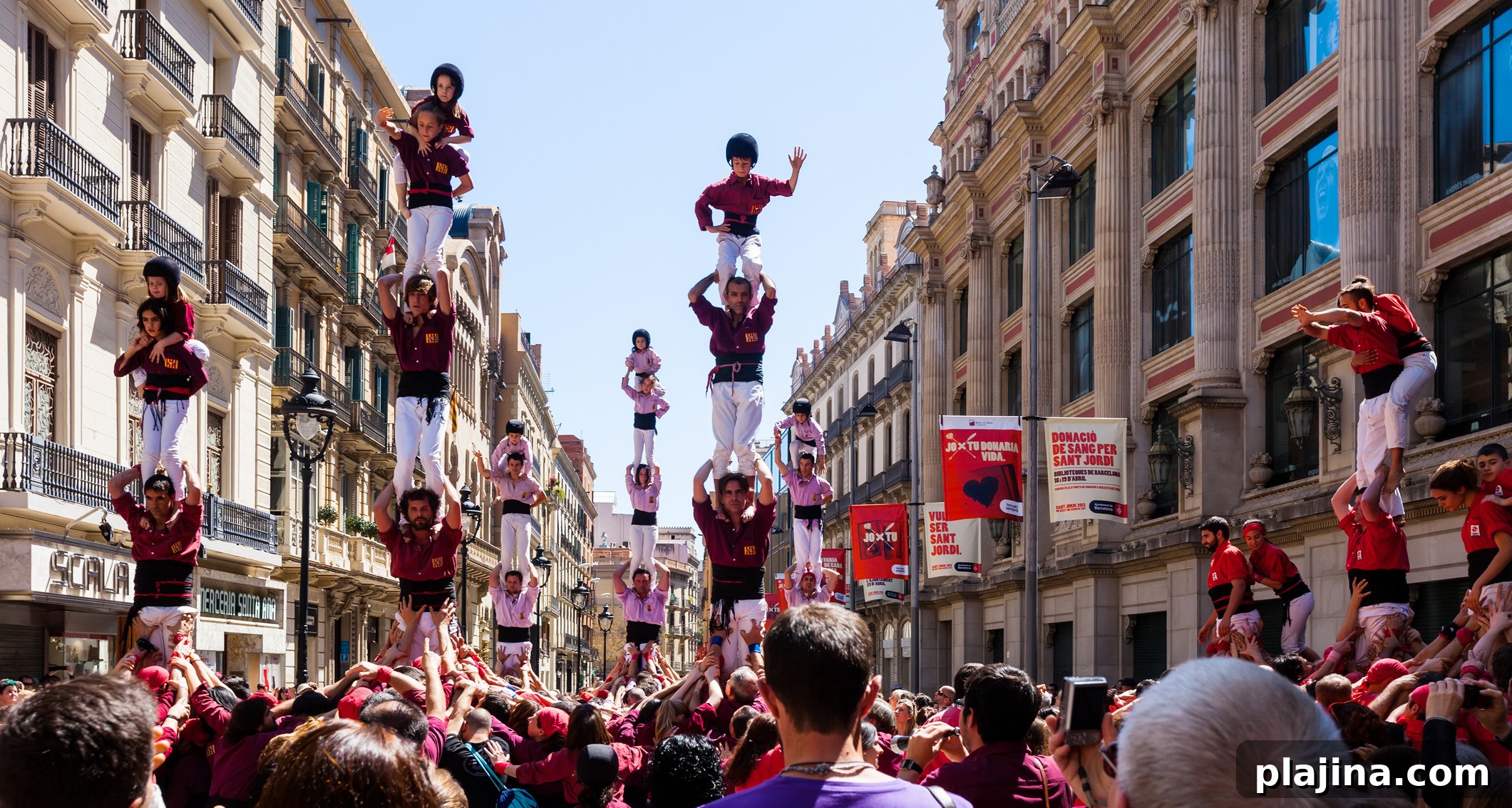
In the northeast of Spain, a little over an hour from Barcelona, lies the home of one of Europe’s most distinctive cultural traditions: the Concurs de Castells de Tarragona. Commonly referred to in English as the Tarragona Human Tower Competition, this spectacular event is a highlight of Catalan festivals and traces its roots back to the 18th century.
The competition showcases “castells,” human towers built by teams called colles. Each team trains year-round to perfect balance, strength and coordination needed to assemble towers that can reach impressive heights. The spectacle combines physical prowess with ritual: the building follows strict sequences and safety protocols, while the final moments—when a child climbs to the top and raises a hand—are greeted with thunderous applause.
Castells are more than an athletic display; they are a living expression of community identity. Members of a colla come from all walks of life and all ages. Roles are carefully assigned: the base, or pinya, provides a dense foundation; intermediate layers support the structure; and the enxaneta, usually a lightweight child, tops the tower. This intergenerational cooperation reinforces social bonds and a sense of shared purpose.
The Tarragona competition elevates the tradition to a competitive arena. Held every few years, it brings together dozens of colles from across Catalonia. Judges evaluate teams on the difficulty of the towers attempted, the technique displayed and whether the towers are completed cleanly—assembled and dismantled with control. Successful performances are celebrated, while mistakes are treated as part of learning and camaraderie rather than purely as failure.
Visitors to the event experience a unique blend of tension and joy. The square fills with spectators who watch intently as each team assembles and disassembles complex formations. Music and chants accompany the work, creating an atmosphere that is both festive and solemn. For many Catalans, castells symbolize resilience and local pride; for outsiders, they are a breathtaking example of human coordination and courage.
Beyond the competition, castells remain an active part of Catalan cultural life. Local festivals frequently feature exhibitions and demonstrations, and colles organize regular practice sessions open to newcomers. Safety has become an increasingly important focus: modern teams employ helmets for children and follow medical protocols to reduce risk, while preserving the tradition’s core values.
The legacy of castells has been recognized internationally. In recent years, human towers have been acknowledged for their cultural significance, helping to raise awareness and support for the tradition. While Tarragona hosts the most famous competition, castells can be seen throughout Catalonia during fiestas and special events, each performance offering a powerful reminder of community cooperation and heritage.
For travelers exploring Catalonia, attending a castell event is a memorable way to connect with local life. Whether you witness the drama of the Tarragona competition or a smaller, local performance, the experience offers insight into a centuries-old practice that continues to thrive through dedication, skill and collective spirit.