
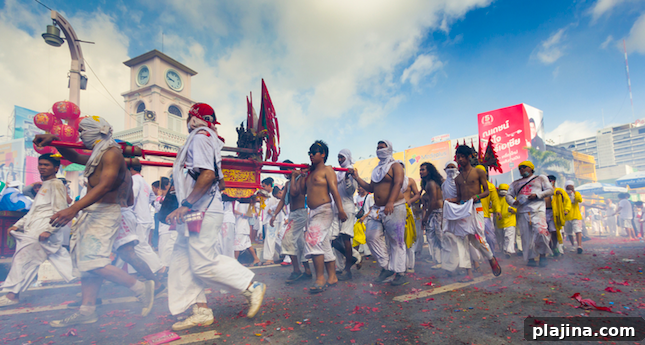
The ninth lunar month in the Chinese calendar ushers in an annual vegetarian observance for many members of Thailand’s Chinese community, a tradition that dates back to 1825. Originally intended to encourage purity of lifestyle and deepen spiritual connection, the practice has evolved into a vibrant cultural festival that attracts both Chinese and non-Chinese participants across the country.
Communities throughout Thailand mark the occasion with an array of vegetarian dishes, festive processions and religious rites. In Phuket, the entire town joins a procession to the Jui Tui shrine, one of the region’s most respected spiritual sites. The parade features traditional rituals—some dramatic and intense, such as fire-walking and climbing bladed ladders—alongside musical performances, dancing and fireworks, blending solemn devotion with communal celebration.
Because the Chinese lunar calendar occasionally produces a leap month, there are years with two ninth lunar months. In 2014 this rare occurrence meant the festival was observed twice: from September 24 to October 2, and again from October 24 to November 1. When the festival takes place, hotels, restaurants and local businesses often create special menus and packages to welcome visitors who want to experience both the food and the cultural events.
While the heart of the festival remains the switch to a strict vegetarian diet for spiritual and health reasons, modern celebrations often highlight the culinary creativity of vegetarian cooking. Street stalls and restaurants serve a wide variety of meat-free dishes made with fresh local produce, herbs and spices, giving visitors a chance to sample Thai-style vegetarian cuisine and regional specialties. Market stalls and food fairs are common during the festival, offering both traditional recipes and contemporary interpretations that appeal to locals and tourists alike.
Beyond the food, the festival fosters community participation and preserves cultural traditions. Shrines and temples host religious ceremonies and blessings, and processions bring neighborhoods together. For many participants the month is a time for reflection, purification and renewed commitment to spiritual practice, while for visitors it’s an opportunity to observe unique rituals and join in public festivities.
Accommodation providers and local businesses typically offer festival-related promotions, making it easier for travelers to plan visits around the events. Seasonal offerings can include special vegetarian menus, discounted spa treatments, and hospitality packages that coincide with procession schedules and shrine activities, encouraging cultural tourism while supporting local vendors.
Overall, the ninth lunar month vegetarian festival in Thailand combines faith, cuisine and communal celebration. Rooted in a long-standing tradition, it remains a meaningful observance for practitioners and an engaging cultural experience for visitors, showcasing the rich interplay of religious devotion and culinary tradition in Thai society.