
Delhi can feel overwhelming. For first-time visitors it often seems too big to grasp. With a metropolitan population exceeding 23 million, parts of the city teem with people, making personal space scarce and quiet moments rare.
A good starting point for families is Connaught Place (Rajiv Chowk). This circular shopping and business district sits between the frenetic lanes of Old Delhi to the north and the orderly avenues of New Delhi to the south. White colonnaded buildings surround concentric roads and house international shops, cafes and restaurants. At its heart lies a calm green park where visitors can transition from familiar comforts to the full sensory experience of India.
Begin at the Museum of Illusions, which offers a cool, playful respite. Its immersive exhibits distort perspective and invite hands-on exploration — a helpful primer before venturing into the city’s larger surprises.
Beyond the crowds, traffic and noise, Delhi is chronologically rich. The city’s attractions span millennia, and moving between eras can feel disorienting in the best way.
One ancient marvel is the Iron Pillar of Delhi in the Qutb complex, thought to date from the fourth century and notable for its resistance to corrosion. The same complex hosts the Qutb Minar, a soaring brick minaret built between 1199 and 1220 that remains an architectural wonder.
South-east of Connaught Place lies Agrasen Ki Baoli, a 14th-century stepwell with 208 stone steps descending into cool shade. In late afternoons the deep interior offers relief from summer heat; children often find its bats and ghost stories especially intriguing.
The Mughal era (16th–19th centuries) left some of Delhi’s most admired monuments. Humayun’s Tomb sits within formal gardens and presages the design of the Taj Mahal. The Red Fort, constructed of red sandstone, served for centuries as the Mughal stronghold and contains a complex of historically important structures across more than 250 acres.
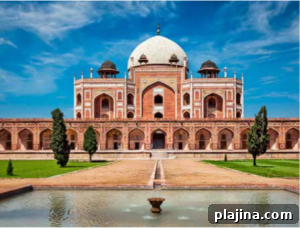
© DMITRY RUKHLENKO | DREAMSTIME .COM
Following the Mughals, British rule left an enduring imprint on New Delhi’s layout. Much of the government district reflects the vision of Sir Edwin Lutyens. Grand sightlines between India Gate and Rashtrapati Bhavan show Lutyens’ monumental planning, though seasonal smog can sometimes obscure these vistas.
Be aware that Delhi frequently ranks as one of the world’s most polluted capitals. Air quality often deteriorates from October through February during crop-burning season, reducing visibility and posing health risks. Travelers with respiratory conditions should plan visits outside these months where possible.
Food safety is another practical concern. “Delhi belly” is common, but risks decrease if you avoid tap water (including for brushing teeth), ice, and uncooked foods like salads. Peeled fruit, thoroughly cooked meals and packaged snacks are safer choices.
Traffic requires constant vigilance. Vehicles may appear unexpectedly, even in pedestrian areas, and although India drives on the left, cars sometimes move against traffic. With children, keep them close and teach careful road-crossing habits.
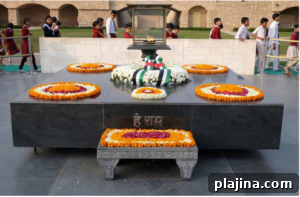
PHOTO: © ZATLETIC | DREAMSTIME.COM
Despite its challenges, Delhi rewards visitors with unforgettable experiences. A moving site to visit with children is Raj Ghat, the national memorial garden. Manicured lawns contain memorials to India’s leaders and the simple blue marble platform marking Mahatma Gandhi’s cremation site. Nearby, the Mahatma Gandhi Museum honors his life and legacy.
Railways are another legacy that continues to shape the nation. The National Rail Museum displays historic locomotives and runs a miniature train across its 11-acre site — a fun outing for families.
Delhi’s transport landscape is changing rapidly. A major new rapid transit project is underway to better link downtown with surrounding regions, complementing the Metro system that began in 2002. This combination of history and forward motion gives visiting children a sense of opportunity: here they can encounter remarkable past achievements and imagine future possibilities.
LODGING
The Imperial New Delhi
Within walking distance of Connaught Place, this historic hotel dates to 1936 and remains a prominent city landmark.
Janpath Lane, Connaught Place, New Delhi
$$$
Lutyens Bungalow
A converted colonial house offering a cozy bed-and-breakfast experience with peaceful gardens, a child-friendly pool and a playground.
39 Prithviraj Road, New Delhi
$$$
Taj Palace, New Delhi
A large five-star hotel in a convenient location that offers family activities, including pizza-making for children in its Capital Kitchen restaurant.
2 Sardar Patel Marg, Diplomatic Enclave, New Delhi
$$$
DINING
Leo’s Artisan Pizzeria
A break from strongly spiced local dishes, Leo’s serves well-made homemade pizzas that can also be delivered to your hotel.
28 Basant Lok Market, Vasant Vihar, New Delhi
$$
The Potbelly Rooftop Cafe
This charming rooftop restaurant offers regional dishes from Bihar and pleasant treetop views, making it a family-friendly choice.
116-C, 4th Floor, Shahpur Jat, New Delhi
$$
Rajinder Da Dhaba
Originating from the roadside dhaba tradition, this popular food complex features multiple stalls serving a range of North Indian specialties.
AB-14B Nauroji Nagar Marg, Dda Market, Safdarjung Enclave, New Delhi
$
INFO TO GO
Indira Gandhi International Airport handles international and domestic flights and is about 10 miles from central Delhi. A free shuttle runs between terminals every 20 minutes. By Metro, the trip to New Delhi station takes approximately 23 minutes. Taxis can be slower in heavy traffic but provide direct door-to-door service. Several airport taxi services operate with family-friendly options, including women-driven cab services for added comfort.