
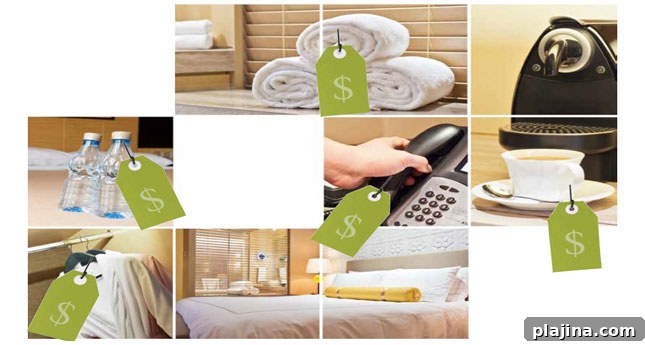
Have you ever been surprised by an early check-out charge, a gratuity added even though you carried your own bag, or a minibar restocking fee that appeared on your final bill? What about unexpected city tourism taxes or energy surcharges?
Surprise hotel fees and surcharges — extra charges added on top of the advertised room rate — can catch travelers off guard. For hoteliers, however, these charges boost revenue without appearing to raise the published room price.
These additional fees are not a new phenomenon; they began surfacing widely in the late 1990s. Still, their growth has been striking. A 2013 trend report by Bjorn Hanson, divisional dean at New York University’s Preston Robert Tisch Center for Hospitality, Tourism and Sports Management, found that U.S. hotels collected a record $2 billion in fees and surcharges in 2012 and forecasted a further increase in 2013. Hanson explained that the increase reflected slightly higher occupancy, more fees being applied, and higher amounts charged in many hotels — about a 6 percent overall rise.
One reason hotels favor these charges is that many fees are not subject to the same taxes as room rates. “From the hotel’s point of view, there are higher costs and not much increased revenue, so fees and surcharges are a way to increase revenues,” Hanson says.
Even experienced travelers can be surprised. Hanson himself recalls arriving late and leaving early only to find a housekeeping charge on his bill. He called and was told that the hotel had recently removed that fee, illustrating how quickly fees can change. When guests complain or react negatively, hotels will sometimes discontinue unpopular charges.
From a guest perspective, fees feel unfair when they aren’t obvious. Hanson notes that hotels typically list charges, but it’s up to guests to spot them. Minibar fees illustrate this well: a soda might be listed at $4.50, but drinking it could trigger an additional restocking charge.
Brand name does not guarantee consistent fees. Properties with the same brand often have different owners who set their own policies, so a Marriott on one side of a city can apply different surcharges than another Marriott across town.
Some hotels include nearly everything in the room rate. For example, Chateau Beaver Creek in Colorado advertises rates that include tipping, while the Milestone Hotel in London bundles unlimited WiFi, health club access, welcome drinks, and a newspaper with its best available rate; parking there remains an extra charge. Certain global brands have taken steps to standardize perks: InterContinental Hotels Group announced free Internet for IHG Rewards Club members across its network starting in 2014.
Mid-priced chains often offer the clearest value for avoiding add-on charges. Brands such as Residence Inn and Holiday Inn Express typically include essentials like free WiFi and breakfast in the room rate; many Holiday Inn Express properties in North America also offer free local and toll-free calls.
Resort fees are a frequent source of frustration. Whether a resort fee feels reasonable depends on what it covers and whether guests actually use the included amenities. At some mountain destinations where parking is expensive, resort fees that include valet parking, internet access, fitness center use, and local transportation can represent real value. For instance, some RockResorts properties include a comprehensive package of amenities in a nightly resort fee that would otherwise be charged separately.
The best way to avoid unwelcome surprises is to “know before you go.” If booking on a hotel website, read the fine print before confirming. After booking, review your reservation confirmation for listed extra charges. When using discount websites, check the site’s stated policies; many recommend contacting the hotel directly after booking to ask about any additional fees that may be payable at check-out.
If you prefer to reserve by phone, Hanson suggests a direct approach: after the agent quotes the room rate, ask, “Are there any automatic fees and surcharges that will be added?” If the agent names a few, follow up with, “Any others?” If the agent replies “No,” note the person’s name and the date. That information can help you negotiate if unexpected charges appear at check-out. Hanson advises being diplomatic — asking for a charge to be removed after confirming it shouldn’t apply tends to be more effective than refusing to pay outright.
UNWELCOME FEES
Bottled water: Don’t open any bottled water in your room unless it’s clearly marked as complimentary.
Early check-in: If you gain access to your room early, confirm there is no early check-in fee.
Energy surcharge: Introduced widely around 2000, energy charges are used to offset rising utility costs.
In-room safe: Some hotels, particularly overseas, charge a mandatory fee for safe use whether or not you actually use it.
Local tourism taxes: Hotels may pass along municipal tourism levies or building assessments to guests.
Parking: Daily parking rates at city and resort hotels can reach $40 or more; valet service usually requires tipping on top of the fee.
Phone reservations: Some properties encourage online booking by adding a fee for phone reservations.
Refrigerator: Small in-room mini-fridges may be unstocked and sometimes come with a rental fee.
Room service: Ask about service or delivery fees before ordering; some hotels add tray or service charges.
Spa gratuity: Check whether a spa service already includes an automatic gratuity before adding an extra tip.
Staff gratuities: Ask whether the hotel adds a service charge that is shared among porters, bell staff, and housekeeping to avoid double-tipping.
Telephone: Use your mobile phone rather than the in-room landline unless the hotel provides free local and toll-free calls.