
To understand what makes a city well-suited for business travel, it helps to begin with a clear contrast. Few places illustrate the challenges facing business travelers as starkly as Antananarivo, the capital of Madagascar.
Often shortened to “Tana,” the city presents immediate linguistic and logistical obstacles. English is not widely spoken; the official languages are French and Malagasy. Translation apps offer some help, but connectivity is inconsistent. Internet Society Pulse gives Madagascar an internet resilience score of 38/100, far below global averages. Power outages are frequent, and not all major hotels have reliable generators, making it difficult to keep devices charged and stay online. Doing business can be equally trying: Transparency International scores Madagascar 26/100 on its corruption index, ranking it near the bottom globally, and ongoing political unrest further complicates commercial activity.
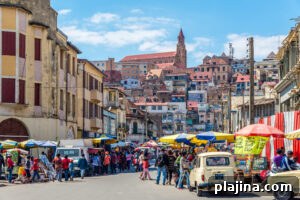
Antananarivo, Madagascar © Milosk50 | Dreamstime.com
For adventurous travelers, those hardships may be an acceptable trade-off for Madagascar’s extraordinary natural attractions — Indian Ocean beaches, unique wildlife and a rich cultural tapestry. For business travelers with tight schedules and specific objectives, however, Antananarivo often proves difficult to navigate efficiently.
At the other end of the spectrum sits Singapore, frequently cited as the world’s top business travel destination. The contrast with Antananarivo is immediate. Changi International Airport consistently ranks highly for customer experience, and getting downtown takes about 30 minutes by taxi or metro. Internet service is fast and reliable; the country does, however, restrict access to certain content, and even the use of VPNs to bypass those rules can be an offense. Internet Society Pulse gives Singapore a score of 70/100. Transparency International ranks Singapore 84/100 on its corruption index, making it one of the least corrupt countries in the world.
Tokyo is a close rival. Narita and Haneda airports are models of punctuality, and the city’s internal systems emphasize efficiency: trains run to exact schedules, taxis are immaculate, and business interactions follow well-established formalities. While English is not universally spoken, cultural awareness and patience go a long way. Japan’s connectivity score of 65/100 and corruption score of 71/100 reflect a society built on precision and trust.
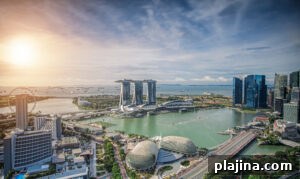
Singapore © Anekoh | Dreamstime.com
Seoul moves at a different, faster tempo. South Korea’s capital pulses with ambition and energy, from Gangnam’s neon avenues to the corporate headquarters of Samsung and LG. One of the world’s most connected cities, Seoul can feel intense, but for those energized by innovation it is exhilarating. Business dinners often extend late into the evening, where deals are frequently finalized over shared plates and rounds of soju — a cultural rite that blends negotiation with hospitality.
India presents a vast and varied business landscape. Mumbai is the financial heart, Delhi the political center and Bengaluru the technology engine. English is widely used, but infrastructure can be inconsistent: traffic congestion, intermittent power issues and bureaucratic hurdles remain common. India’s connectivity score of 54/100 is improving, and its corruption rating of 38/100 points to gradual reform. For companies willing to navigate complexity, India offers scale, a youthful workforce and a powerful entrepreneurial spirit.
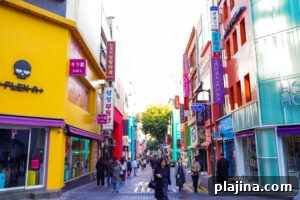
Seoul, South Korea © Kikujungboy | Dreamstime.com
Ho Chi Minh City — Saigon — is emerging as a dynamic frontier in Southeast Asia. The skyline bristles with construction cranes and the startup scene is growing rapidly. Infrastructure often lags behind ambition, but English proficiency is rising and Vietnam’s corruption score of 40/100 continues to improve, making the city increasingly attractive to regional and international investors.
Sydney serves as Oceania’s main business hub. With a spectacular harbor backdrop, a strong corporate sector and an English-speaking workforce, the city blends efficiency with a relaxed professional culture. Meetings tend to be direct and punctual, while hotels and transport systems reliably support business travelers. Sydney’s proximity to Asia and high quality of life make it a preferred destination for many executives.
Dubai has reinvented itself over a few decades, transforming from a desert outpost into a global crossroads. The city now boasts world-class infrastructure: well-maintained highways, a modern metro system and one of the busiest international airports, DXB. English is widely used in business. The UAE’s corruption rating of 68/100 reflects effective governance within a tightly regulated environment. Internet usage is monitored, but Dubai’s logistical advantages, tax incentives and extensive air links make it a magnet for international business.
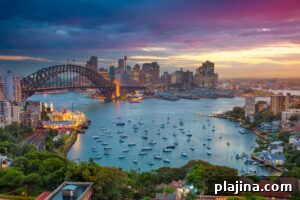
Sydney, Australia © Rudi1976 | Dreamstime.com
In Africa, Johannesburg remains the continent’s foremost business center. Despite ongoing challenges such as periodic power shortages, safety concerns and bureaucratic friction, the city’s commercial sector continues to drive regional growth. Sandton’s glass towers house the Johannesburg Stock Exchange and many major corporations. South Africa’s connectivity score of 63/100 and corruption rating of 41/100 present a complex picture, yet Johannesburg’s talent pool and economic influence are significant.
Europe continues to set high standards for stability and sophistication. London, even after Brexit, retains its role as a global financial hub, seamlessly combining historic institutions with a thriving fintech scene. Internet reliability and governance are strong, and the city’s multicultural workforce keeps it central to global commerce. Frankfurt plays a vital role as Europe’s financial hub, hosting the European Central Bank and operating with a reputation for precision and order. Zürich emphasizes discretion and institutional strength, attracting global investors with its clean urban design and stable environment.
Across the Americas, business environments vary widely. Mexico City is a major commercial and cultural center, with bilingual talent and modern business districts that bridge Latin and North American markets. São Paulo dominates Brazil’s economy, contributing a substantial share of national GDP. It is large, hectic and industrious, with deep corporate infrastructure and a broad talent base. Brazil’s corruption score of 34/100 points to ongoing reform, while improving connectivity and a growing middle class continue to draw investment.
Santiago, Chile, stands out as the region’s most predictable and orderly business environment, appealing to executives seeking stability in South America. Bogotá and Lima are developing rapidly, strengthening financial and technology sectors that reflect a maturing regional economy.
From Singapore and Tokyo to Sydney, London and São Paulo, the most effective business travel destinations share three core qualities: strong connectivity, institutional integrity and operational efficiency. They provide stable governance, dependable infrastructure and cultures that facilitate international collaboration. Even in cities where these attributes are still emerging — from Ho Chi Minh City to Johannesburg — a new generation of metropolitan centers is rising: energetic, ambitious and increasingly global. In a world where business rarely sleeps, the right city can make a decisive difference in achieving professional goals once you arrive.