
In Madrid, the Paseo del Arte — the city’s celebrated art district — refers both to the cultural neighborhood flanking the Paseo del Prado and to the grand boulevard itself, which connects three of Madrid’s most prestigious museums: the Reina Sofía, the Prado and the Museo Thyssen-Bornemisza.
The origins of this cultural corridor date back to the Age of Enlightenment, when King Charles III (1716–1788) reconfigured a north–south carriage route through the prado (meadow) near the 17th-century monastery that eventually became Retiro Park. He enhanced the avenue with monumental fountains, a shaded pedestrian promenade and important educational institutions: the Royal Observatory, the Royal Botanical Garden and plans for a natural history museum. When the grand building opened in 1810 as the Prado Museum, the area became firmly established as Madrid’s cultural heart.
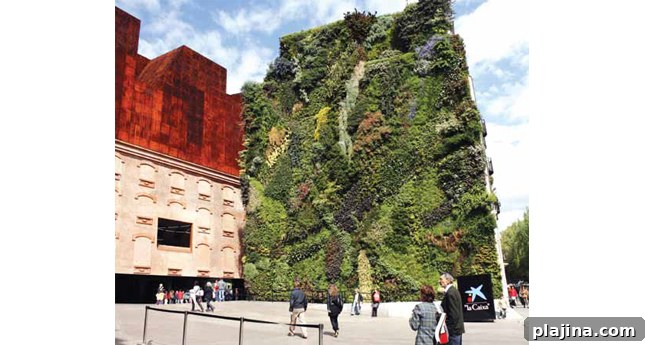
At the southern tip of this so-called “Golden Triangle,” visitors gather at the Reina Sofía to see Picasso’s Guernica — a powerful antiwar statement inspired by the 1937 bombing of the Basque town — alongside works by Dalí, Gris and Miró. Close by, the CaixaForum, notable for its striking living wall, occupies a renovated power station and offers rotating exhibitions and cultural programming.
Statue of Velázquez in front of Museo Nacional del Prado © Jozef Sedmak | Dreamstime.com
Moving north toward the Neptune Fountain, the Museo Nacional del Prado stands to the right, its Neoclassical façade articulated by columns and sculpted figures. Inside, galleries display masterpieces from the Flemish, Italian and Spanish schools, featuring iconic paintings by El Greco, Goya and Velázquez. Opposite, the Villahermosa Palace houses the Thyssen-Bornemisza Museum, a collection spanning the 13th century to modern times, including works by Gauguin, Kandinsky, Matisse and notable American artists.
The museum quarter is surrounded by historic and contemporary hotels that cater to art-minded travelers. The legendary Hotel Ritz, Madrid, opened in 1910 and retains an air of aristocratic elegance, with its Goya Terrace overlooking the Prado. Nearby, The Westin Palace Hotel, one of the city’s early modern hotels, introduced private bathrooms and telephones in its early years and today features a luminous stained-glass dome above La Rotonda restaurant. Facing Retiro Park, the AC Palacio del Retiro blends contemporary boutique style with period details such as an original curved wrought-iron staircase and tall ceilings.
The Paseo del Arte continues until it reaches the Cibeles Palace, a grand 19th-century building that originally served as the city’s post office and now hosts Madrid’s City Hall. The palace fronts the ornate Cibeles Fountain and contains a visitor information center, exhibition spaces and dining options, including the gastronomic Palacio de Cibeles Restaurant. Its rooftop observation deck provides sweeping views across Madrid’s skyline, offering a fitting panorama of the city’s artistic and architectural legacy.