
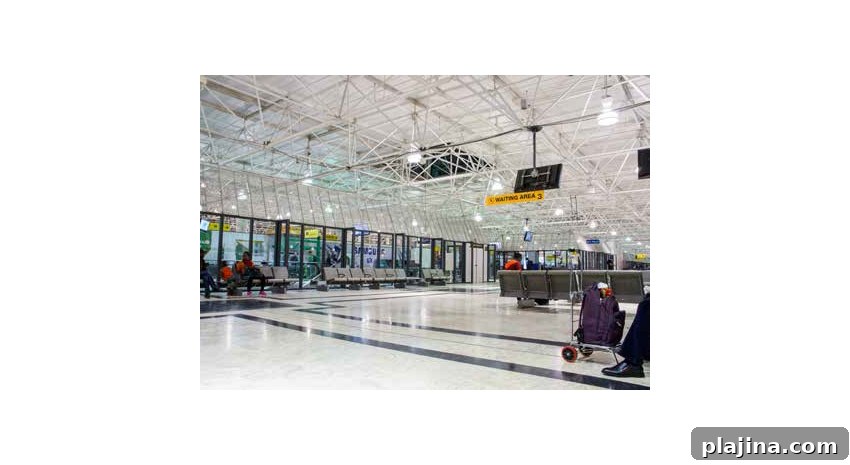
With travel to and from the African continent steadily rising, the aviation industry must constantly expand and upgrade infrastructure to accommodate growing numbers of business and leisure travelers.
As Ethiopia’s largest city and capital, Addis Ababa has seen notable increases in both population and tourism in recent years. Home to the African Union, the United Nations Economic Commission for Africa and several other major international organizations, the city has become a political hub for the continent. Its primary airport, Addis Ababa Bole International, is expanding services to meet rising national and international demand.
Serving as the main hub and headquarters for Ethiopian Airlines — which flies to more than 35 destinations across Africa as well as to Asia, Europe, North America and South America — Addis Ababa Bole International is working closely with the carrier on a number of upgrade and expansion initiatives.
The airport has two terminals and a total of 11 gates. Terminal 1 handles domestic and regional flights for airlines such as Ethiopian Airlines, EgyptAir, Sudan Airways and Yemenia Airways, while Terminal 2 serves international flights and other carriers operating at the airport.
Under Ethiopian Airlines’ Vision 2025 plan, the first phase of the Cloud Nine Business Class Lounge opened at ADD in 2012, offering premium travelers modern facilities and high-end amenities. A second phase will add a spa, private digital lockers and a traditional Ethiopian coffee corner, enhancing the passenger experience further.
In January 2015, Ethiopian Airports Enterprise launched a passenger terminal expansion to address growing congestion. The existing main terminal was originally designed for 6 million passengers per year but has been handling roughly 8.5 million, creating pressure during peak periods.
The ongoing project includes expansion of Terminals 1 and 2 and construction of a new 74,000-square-foot VIP terminal. Terminal 2 will be expanded and linked to Terminal 1. The VIP terminal, designed by Singapore-based CGP, will include a new car park, a sizable retail area, cafés and restaurants, modern business-class lounges, IT centers and office space. With the work about 40 percent complete at the time of reporting, completion was scheduled for January 2018, at which point the airport’s capacity is expected to rise to around 22 million passengers annually.
Despite these upgrades, planners expect the airport could approach capacity again within a decade. Rising air traffic, a single-runway constraint and rapid expansion of Ethiopian Airlines mean additional development will likely be required to keep pace with demand.
To address long-term needs, Ethiopian Airports Enterprise announced plans to build one of the largest airports in Africa, with an estimated annual capacity of 120 million passengers — comparable to major hubs such as Dubai (DXB) and Heathrow (LHR). Ethiopia currently operates about 20 airports and aims to increase that number to 30 within five years, with 25 upgraded to international standards.
As Ethiopia pursues expanded cross-border trade, new business partnerships and growing international tourism, Addis Ababa Bole International will remain a central gateway. The airport will support access not only to the political and economic center of Addis Ababa but also to surrounding cities and tourist destinations throughout the African continent.