
The Hidden Garden Kids Club at JW Marriott Orlando Bonnet Creek Resort & Spa creates an Alice in Wonderland–inspired hideaway for children of all ages. From soft blocks and books to a big-screen showing of Bluey, the space is designed to engage toddlers through teens with playful, family-friendly features.
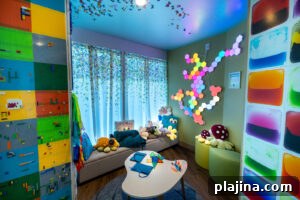
PHOTO: © MARRIOTT
Given the resort’s closeness to Walt Disney World, dedicating much of the sixth floor to families makes sense. What stands out, however, is the Sensory Calming Corner — a thoughtfully appointed area with weighted blankets, noise-cancelling headphones and a texture wall featuring colorful ribbons and velvety fabrics. While the space is especially useful for children on the autism spectrum, all kids respond with delight to interactive elements like light-up touch tiles and three-dimensional butterflies.
Hotels are increasingly designing with inclusivity in mind, moving beyond only meeting mobility requirements to accommodate a broader range of needs. Ed Warner, cofounder of the U.K.-based accessible design firm Motionspot, points out that just eight percent of people with disabilities use a wheelchair. Regulations such as the Americans with Disabilities Act focus heavily on mobility, leaving many other needs—hearing loss, food allergies, sensory or cognitive differences—open to interpretation and innovation.
Motionspot won a leading hospitality award for reimagining Hotel Brooklyn in Manchester with hidden disabilities in mind. Design improvements included quieter bathroom fans that don’t interfere with hearing aids and enhanced lighting and contrast for guests with vision limitations, moving away from the monochromatic, earth-toned palettes common in many hotels.
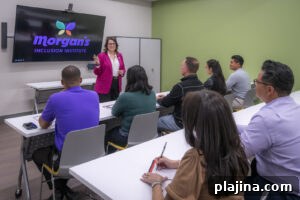
When it opens, the under-construction Morgan’s Hotel in San Antonio will incorporate sensory-sensitive colors and lighting, hearing aid loops, and straightforward access to elevators, said Sharon Newhardt, Director of Inclusion and Culture. These features aim to make the property more welcoming for guests with a variety of needs.
© MORGAN’S
The hotel sits near the inclusive theme park Morgan’s Wonderland, which provides rides accessible to guests who use mobility aids and accommodations for visitors with cognitive or sensory differences. Bright green and yellow accents and sunflower lanyards are common there; the sunflower has become a widely recognized discreet signal that someone may have an invisible disability and could appreciate extra patience or support.
Physical modifications are important, but staff training is equally essential to creating an inclusive guest experience. Newhardt emphasizes that hotel employees will undergo the same training provided to park staff, covering respectful terminology, etiquette and interpersonal skills that help teams interact confidently and sensitively with guests who have diverse needs.
Massachusetts teacher Robin Perron, who works with primarily autistic students, says that sensitivity training can matter as much as physical accommodations. “People with sensory needs may not make eye contact. Saying hello may be a struggle,” Perron explains. “When staff understand those differences and are trained to respond appropriately, it creates a much better hospitality experience.”
As more hotels adopt inclusive design and training, travelers with visible and invisible disabilities will find more welcoming spaces that address comfort, safety and dignity. Thoughtful touches—whether calming corners, subtle visual cues, improved lighting or well-informed staff—help make travel more accessible and enjoyable for everyone.