
Something is always happening in Washington, D.C., and the activity reaches well beyond Capitol Hill. A recent $9.6 billion investment across the 68-square-mile city is bringing new developments, renovating historic sites and improving neighborhoods for the benefit of roughly 4 million residents and countless visitors.
“If you haven’t been to D.C. in five or 10 years, you’re in for a surprise,” said Elliott L. Ferguson, president and CEO of Destination DC. “D.C. has emerged as a true waterfront destination, with major new development in the Capitol Riverfront in southeast and The Wharf in southwest. The National Museum of Women in the Arts reopened in October—the first museum dedicated solely to championing women in the arts.”
“And then there’s the food. We truly are a world-class dining destination,” Ferguson added. “I think we will continue to see growth in the D.C. dining scene alongside new hotel concepts that have appeared in recent years,” said Billy Martin, fourth-generation owner of Martin’s Tavern in Georgetown. “These two sectors work hand-in-hand to meet changing consumer tastes and lifestyles. From efficient concepts like Hotel Hive to traditional luxury at the Conrad and Four Seasons, there are lodging options to suit nearly every traveler.”
© Jiawangkun | Dreamstime.com
The Wharf converted a previously quiet stretch of waterfront into a vibrant, mile-long neighborhood when it opened in fall 2017. Popular with both residents and tourists, The Wharf now offers restaurants, boutiques, offices, high-demand residences and several hotels, including Pendry Washington DC – The Wharf, Canopy by Hilton Washington DC and InterContinental Washington D.C. – The Wharf. Phase Two continues that momentum with new retail and dining, including Philippe, a Beijing-style restaurant from Philippe Chow.
“We’ve seen rapid growth and development across the city in recent years, drawing more visitors to neighborhoods like NoMa, Brookland, Shaw and the Capitol Riverfront,” Ferguson said. “New attractions in these areas add to what the National Mall offers, and sustainability has been an integral part of many of the city’s newest projects.”
The Capital Jewish Museum in Judiciary Square opened this year to tell the story of Jewish life in Washington, incorporating the original brick building of one of the city’s oldest synagogues, Adas Israel. After two years of extensive renovations, the National Museum of Women in the Arts reopened in October with an inaugural exhibition, The Sky’s the Limit, featuring large-scale works by women from the past two decades through Feb. 25, 2024.
The National World War I Memorial on Pennsylvania Avenue, honoring the 4.7 million Americans who served during the war, is set to open in 2024 and will feature A Soldier’s Journey by Sabin Howard, a series of sculptures depicting 38 larger-than-life human figures. When installed, it will be the tallest freestanding bronze sculpture in the Western Hemisphere.
Several other notable debuts and renovations are planned in the coming years. The Folger Shakespeare Library on Capitol Hill will unveil a permanent exhibition that includes an extraordinary collection of First Folios—original published editions of Shakespeare’s works from 1623. The Go-Go Museum and Café in Anacostia will offer a deep dive into the music genre synonymous with Washington, D.C.; and Osteria Mozza, led by Michelin-star chef Nancy Silverton and restaurateur Stephen Starr, is slated to open in the former Georgetown Market space.
© Jon Bilous
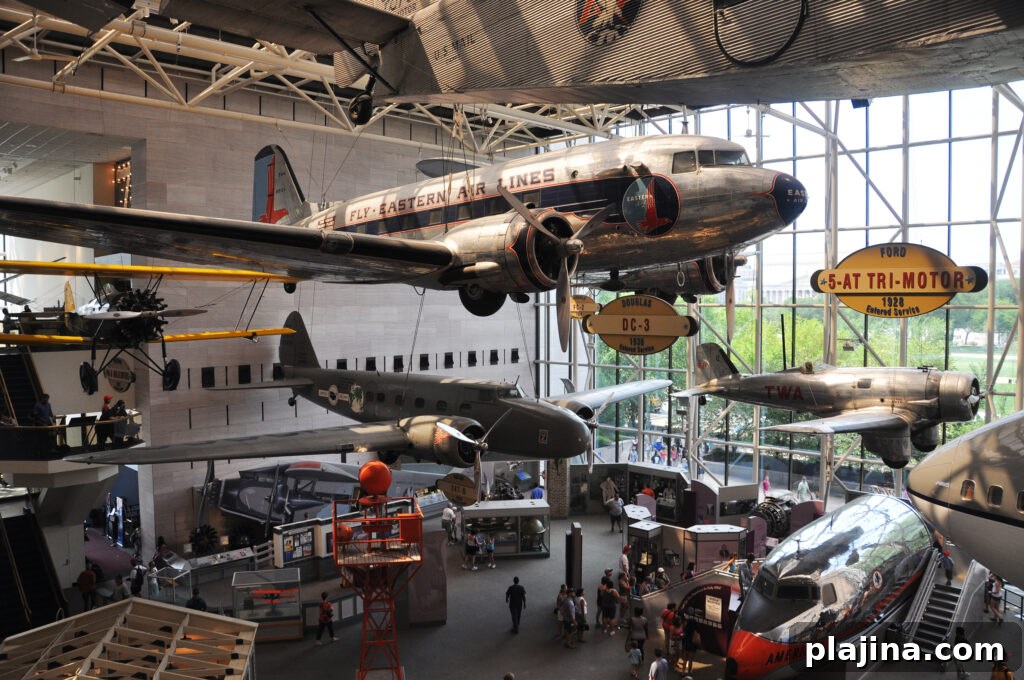
The National Air and Space Museum is expected to complete a multiyear renovation in 2025. In 2026, the 11th Street Bridge Park—Washington’s first elevated public park—will span the Anacostia River, featuring an amphitheater, picnic gardens, interactive art, waterfalls and more. Other major projects include a proposed $10 billion expansion at Union Station, Amtrak’s second-busiest hub; a new National Museum of the U.S. Navy planned to break ground in 2025; and a new concourse at Dulles International Airport designed to meet LEED Silver standards and expected to be completed by 2026. Looking further ahead, the Smithsonian Institution plans to open two new museums on the National Mall: the American Women’s History Museum and the National Museum of the American Latino.
On sustainability, Washington, D.C. was named the world’s first LEED Platinum City in 2017 and continues to pursue green building and energy goals. The city has more LEED-certified buildings than any other U.S. city, including the LEED Silver Capital Jewish Museum and the LEED Gold Walter E. Washington Convention Center. Local climate policy aims for 100 percent renewable electricity by 2032 and carbon neutrality by 2050.
Despite all the new development, the city’s historic character remains visible and cherished.
“Historic Georgetown, where Martin’s Tavern is located, still draws visitors for its 19th-century architecture and the sense of ‘old Washington’ that lingers on those cobblestone streets,” Martin said. “Even as new venues like The Wharf open, places with real historical connections continue to resonate with locals and visitors alike.”
SCENIC DRIVES
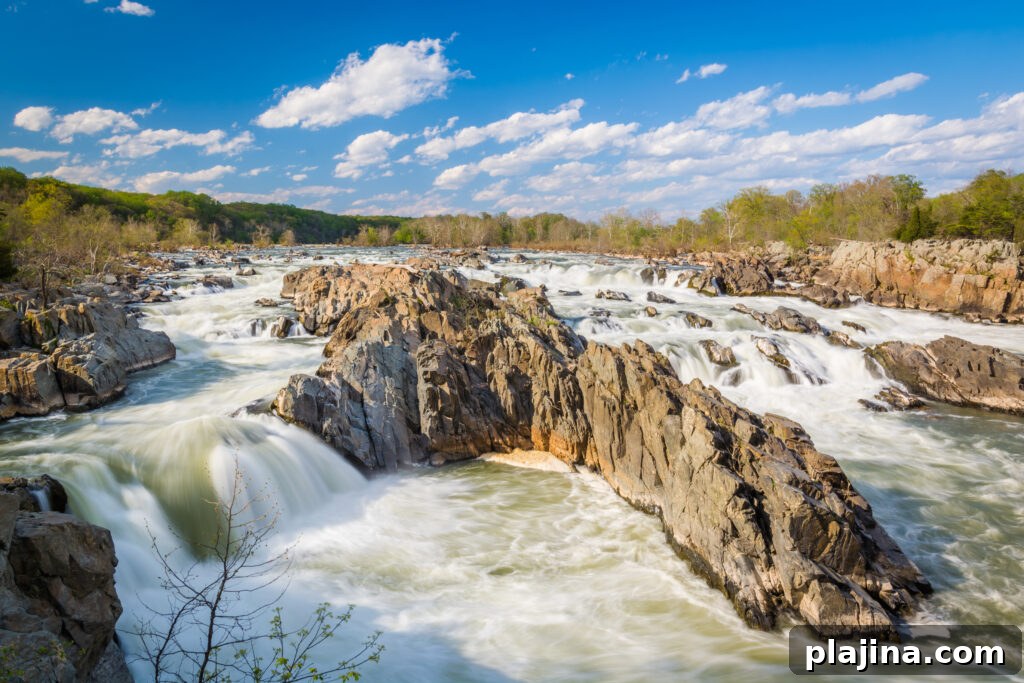
For a peaceful escape from the city, take the 25-mile George Washington Memorial Parkway. Designed for leisurely drives, the parkway traces the Potomac River and provides access to notable outdoor sites like Glen Echo Park, Great Falls Park and Theodore Roosevelt Island, each offering miles of trails. The route ends at Mount Vernon, George Washington’s plantation home where he lived for 45 years before and after his presidency.