
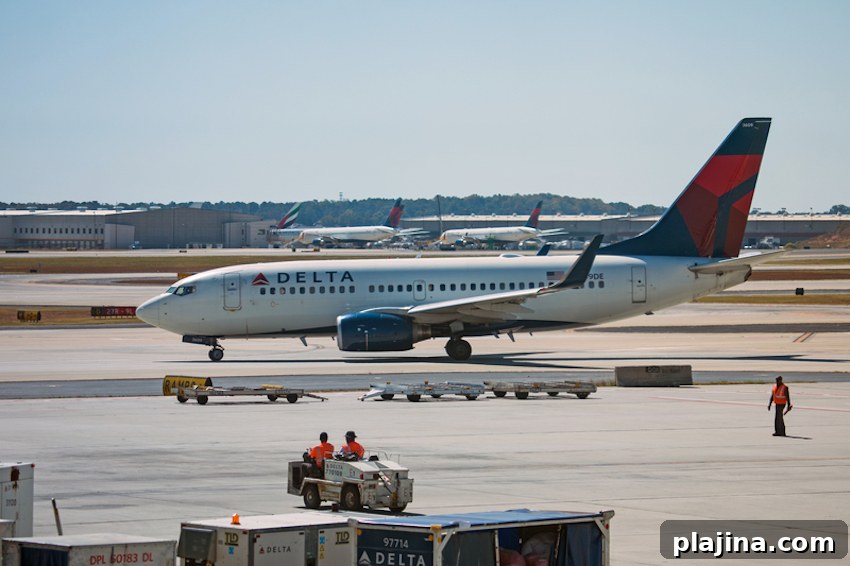
Delta Air Lines announced it will open a biometric terminal at Atlanta’s Hartsfield-Jackson International Airport later this year. The terminal uses facial recognition to confirm passenger identity at multiple points throughout the journey, from check-in to boarding.
The system will serve the roughly 2.2 million passengers who use Terminal F annually. Biometric identification will be available at check-in, baggage drop, security screening, boarding and during U.S. re-entry and customs processing. By allowing identity verification through facial recognition, the terminal is designed to reduce the need to present a physical ID and to speed up common airport procedures.
Passengers flying other carriers that operate in Terminal F—such as Aeromexico, Air France-KLM and Virgin Atlantic—will also be able to opt into the biometric process instead of showing a passport or driver’s license. This cross-carrier use aims to create a consistent, faster experience for travelers moving through the same facility.
“Launching the first biometric terminal in the US at the world’s busiest airport means we’re bringing the future of flying to customers travelling around the globe,” said Gil West, Delta’s chief operating officer. He added that customers expect easier, more seamless experiences throughout their journey, and that expanding biometric touchpoints supports that goal.
Delta and its partners say the technology is intended to streamline airport flow and reduce friction at common checkpoints. The company has emphasized that passengers who prefer not to use facial recognition can continue to present traditional identification documents, and that enrollment in biometric programs is typically optional. Airport authorities and airlines generally follow privacy and data-protection policies around biometric information, though implementation details and opt-in procedures can vary by carrier and jurisdiction.
As airports adopt more biometric capabilities, the potential benefits include shorter lines at check-in and security, faster boarding, and more consistent identity verification across international travel processes. Delta’s Terminal F deployment will be closely watched as a model for how facial-recognition systems can be integrated across an entire terminal serving multiple airlines.
Further operational specifics—such as exact rollout dates, enrollment procedures, and how long biometric data will be retained—were not detailed in the announcement. Travelers interested in using the new service should check Delta’s official communications or airport notices for instructions once the terminal is operational.