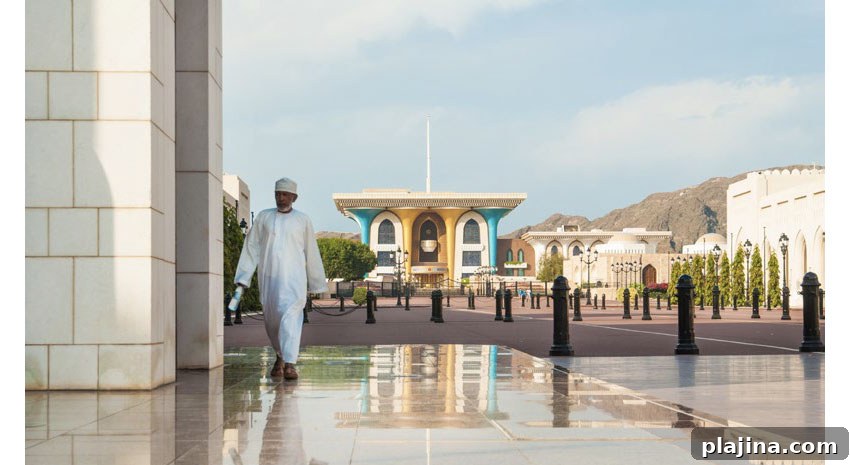
AMID THE CHAOS AND CONFLICT of the Middle East, Muscat, Oman, stands out as a stable and welcoming oasis. Nestled between mountains and desert and projecting into the Gulf of Oman near the Strait of Hormuz, Muscat’s strategic coastal position and long maritime tradition have made it a significant trading port since ancient times. Historically noted for copper, gold and prized frankincense, the city was once described in an 18th-century British East India Company report as “one of the most important cities in Asia.” After a period of decline in the early 20th century, Muscat is now experiencing a noticeable revival.
As the capital and administrative center of Oman’s eleven governorates, Muscat is the country’s political, economic and cultural hub. Approximately one-third of Oman’s 4.5 million residents live within Muscat’s six provinces, or wilayats. The metropolitan area spans about 1,400 square miles and comprises three main urban zones. Muscat proper preserves restored historic homes and civic buildings; the original harbor, Muttrah, has been reinvented as a bustling waterfront destination; and the commercial district around Ruwi has modernized to host regional offices and the headquarters of national and international companies. International brands and regional conglomerates operate locally through trading groups and business partnerships, contributing to an expanding commercial profile.
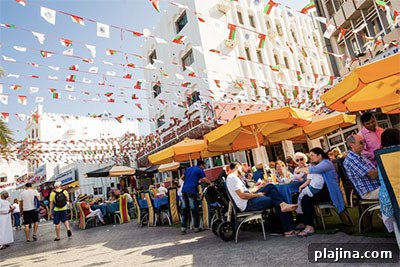
The Muttrah Souk Al Dhalam © ALEXEY BAGMANYAN | DREAMSTIME.COM
Muscat remains the official seat of the leader credited with the country’s modern transformation, Sultan Qaboos bin Said. Under his predecessor, Oman lagged behind regionally with limited infrastructure and a subsistence economy. After education abroad, Qaboos returned and assumed leadership following a bloodless coup in 1970, an event commemorated annually as Renaissance Day. His reign initiated widespread modernization efforts, setting Oman on a path of social and economic development.
Following consolidation of Muscat and surrounding regions into the Sultanate of Oman, authorities introduced long-term development plans aimed at modernizing the economy, raising living standards and positioning Oman internationally. Investments in education broadened academic and technical training for both girls and boys, while healthcare expansions improved access and outcomes. Infrastructure and public services were upgraded systematically as part of multi-year strategies that emphasized productivity, skills development and social progress.
Since the late 1980s, a major policy priority has been “Omanization,” a national program to recruit and train Omani citizens for roles across public and private sectors. Incentives encourage companies to increase local hiring, progressing toward government targets intended to reduce reliance on expatriate labor and foster a skilled domestic workforce.
Oil and natural gas revenues financed much of the country’s development, though Oman’s hydrocarbon reserves are modest compared with some neighbors. The national budget still relies heavily on energy income, but recent five-year development plans emphasize economic diversification. Priority sectors include manufacturing, transport and logistics, tourism, fisheries and mining. Diversification efforts aim to create sustainable sources of growth and employment beyond hydrocarbons.
To support non-oil sectors, authorities encourage technological improvements in agriculture and fisheries, and explore mineral resources such as marble, limestone and gypsum. Increased production in cement and refining equipment is seen as another potential export avenue. Economists project steady but modest growth in the near term, contingent on continued investment and private-sector participation. Oman has taken steps to attract foreign investment by improving the business environment and aligning regulations with international standards.
Muscat has invested in cultural and tourism assets to boost the visitor economy. Restored Portuguese forts and a revitalized Muttrah waterfront showcase the city’s maritime heritage while urban resort hotels line beaches north and south of the center. Training programs for tourism professionals emphasize history, languages and service standards to raise local capacity and support a growing industry.
Oman operates as an absolute monarchy. The 1996 Basic Law established formal government structures and advisory legislative bodies, but political parties remain prohibited and major laws typically issue by royal decree. Sultan Qaboos held consolidated roles across the state, including senior portfolios and command of the armed forces, giving the monarch central authority in governance.
During the Arab Spring, Oman experienced demonstrations focused on wages and political reform; responses included targeted measures and public investment to address grievances. Some social tensions persist, and questions about succession remain a long-term concern. As the Sultan ages without a publicly designated successor, the prospect of a transition is a potential source of uncertainty for Oman’s future political and economic stability. Ensuring continued progress on diversification, job creation and regional diplomacy will be key challenges for any successor.
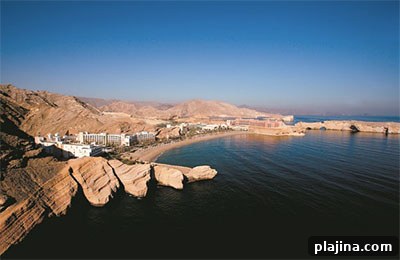
Aerial view of Shangri-La Barr Al Jissah Resort and Spa © SHANGRI-LA BARR AL JISSAH RESORT & SPA
CHECKING IN WITH JUREGEN DOERR
General Manager, Shangri-La Barr Al Jissah Resort and Spa
How does Muscat compare to other overseas locations?
Unlike international hubs such as Dubai, Singapore or Hong Kong, Muscat retains a strong sense of place and tradition. Visitors and residents quickly notice Oman’s formal but warm social culture. Omanis are open to Westerners and, once trust is established, typically welcoming and hospitable.
What is the business climate?
Muscat’s economy is developing at a measured pace. Compared with faster-growing Gulf cities, business expansion here is steadier and often involves more careful consideration of social and cultural dynamics. Patience and cultural sensitivity are valuable in decision-making and relationship-building.
How do you handle the government quota of Omanization?
Recruitment efforts search across Oman to attract local talent from smaller towns as well as cities. While hiring is straightforward, retention and workplace discipline can require additional training and mentorship. The strategy focuses on recruiting people with the right attitude and investing in skills development. Several senior department heads at the resort are Omani.
What is the attitude toward women?
Women in Oman are respected and play visible roles in the workforce. In hospitality, local women staff recreation, health and children’s services and serve in guest relations positions, reflecting broader social support for women’s participation.
How would you characterize day-to-day life, and is it safe?
Muscat is a developed city that avoids overcrowding. Thoughtful zoning limits high-rises, infrastructure quality is good, and the city remains safe with minimal traffic problems. Daily life is comfortable, and residents enjoy a relaxed pace.
Why is it pleasant to live in Muscat?
Residents often cite the friendly people and dramatic landscape—mountains, coastline and beaches—as major attractions. Outdoor activities are plentiful, from cycling and swimming to hiking and horseback riding, offering a high quality of life for families and active residents.
Things to Do in Muscat
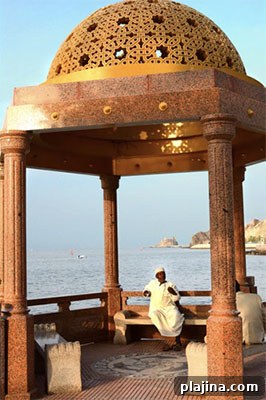
Local people in traditional dress along the Muttrah Corniche © LUCA ROGGERO | DREAMSTIME.COM
Muscat’s coastal setting offers luxury resorts and a wide range of water activities, including swimming, diving, fishing and boating. The historic harbor has been transformed into a lively waterfront area for private yachts, cruise calls and fishing excursions. Early mornings are especially atmospheric when local fishermen bring in catches of yellowfin tuna, grouper and kingfish. Muttrah Souk, one of the region’s oldest markets, remains the best place to shop for textiles, jewelry, spices, traditional daggers, hookahs and frankincense.
The paved Corniche traces the shoreline for several miles, passing monuments, a Portuguese watchtower and scenic parks such as Al-Riyam and Kalbuh Bay. Beyond the old city gates lies Old Muscat, home to the royal palace area and several museums that highlight Oman’s history and culture.
Among Muscat’s modern landmarks are projects initiated by Sultan Qaboos. The sandstone Sultan Qaboos Grand Mosque, opened in 2001, accommodates thousands of worshippers and draws visitors for its architecture and artistry. The Royal Opera House complex reflects the sultan’s passion for classical music and serves as a cultural hub with landscaped gardens and galleries. Along the coast, the illustrious Al Bustan Palace hotel is widely regarded as a premier luxury destination.
Muscat Info to Go
Muscat International Airport, formerly Seeb, is undergoing phased expansion to boost capacity and improve passenger services. Located within the metropolitan area, roughly 20 miles from the old city, it serves as the hub for Oman Air. Ground transportation options include hotel shuttles and metered airport taxis; public buses also operate to the city.
COMING AND GOING
U.S. citizens require passports valid for at least six months and a visa. Single-entry visas are available online or on arrival for a fee and are typically valid for 30 days with the option to extend for a fee.
OFFICIAL LANGUAGE
Arabic is the official language. Hindi and Urdu are commonly spoken within the large expatriate Indian community, and English is widely understood.
Muscat: Just the Facts
Time zone: GMT +4
Phone code: +968
Currency: Omani rial
Key industries: Oil, manufacturing, transportation, tourism, fisheries
Where to Stay in Muscat
AL BUSTAN PALACE HOTEL A signature project long associated with the nation’s leadership, this marble-clad resort on Qurum Beach is known for luxury accommodations and high standards. Al Bustan Street, Qurum Beach $$$$
INTERCONTINENTAL MUSCAT A five-star, beachfront property favored by expatriates and visitors, conveniently located near cultural attractions and within a short drive of the airport. Al Kharjiya Street, Al Shati Area, Muttrah $$$
MARINA HOTEL A comfortable, modern three-star option near the fish market and souk, offering terrace views ideal for evening drinks. Jibroo, Muttrah $$
Restaurants in Muscat
CARAMEL MUSCAT Located in the Opera Galleria, this contemporary restaurant and lounge offers a refined setting for business lunches and pre- or post-event dining. Opera Galleria, The Royal Opera House $$$
TOKYO TARO A leading Japanese restaurant in Muscat, known for authentic cuisine served at a teppanyaki counter and in private dining rooms with city views. Al Falaj Hotel, Ruwi $$$
TUSCANY The Grand Hyatt’s Italian restaurant is prized for wood-fired pizzas and a quiet atmosphere suitable for meetings and intimate dinners. Grand Hyatt Muscat, Shatti Al Qurum $$$