
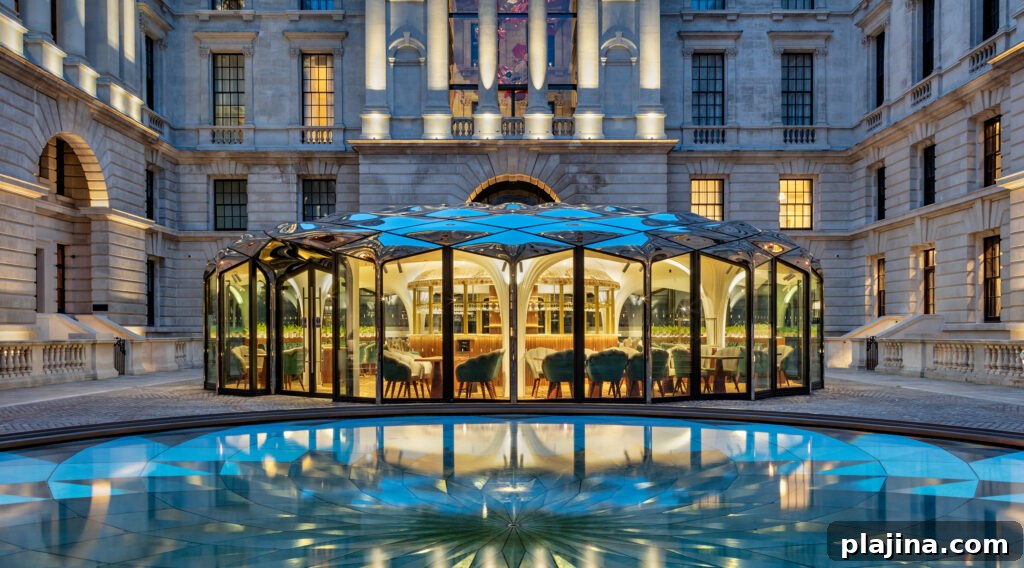
DaeWha Kang Design Studio has completed a refined new courtyard and pavilion for London’s former Old War Office. Originally built in 1906 in Whitehall’s historic district, the original courtyard has been transformed into the Grand Courtyard, creating a welcoming arrival sequence for guests of Raffles London at The OWO and residents of OWO Residences by Raffles across the square.
© DaeWha Kang
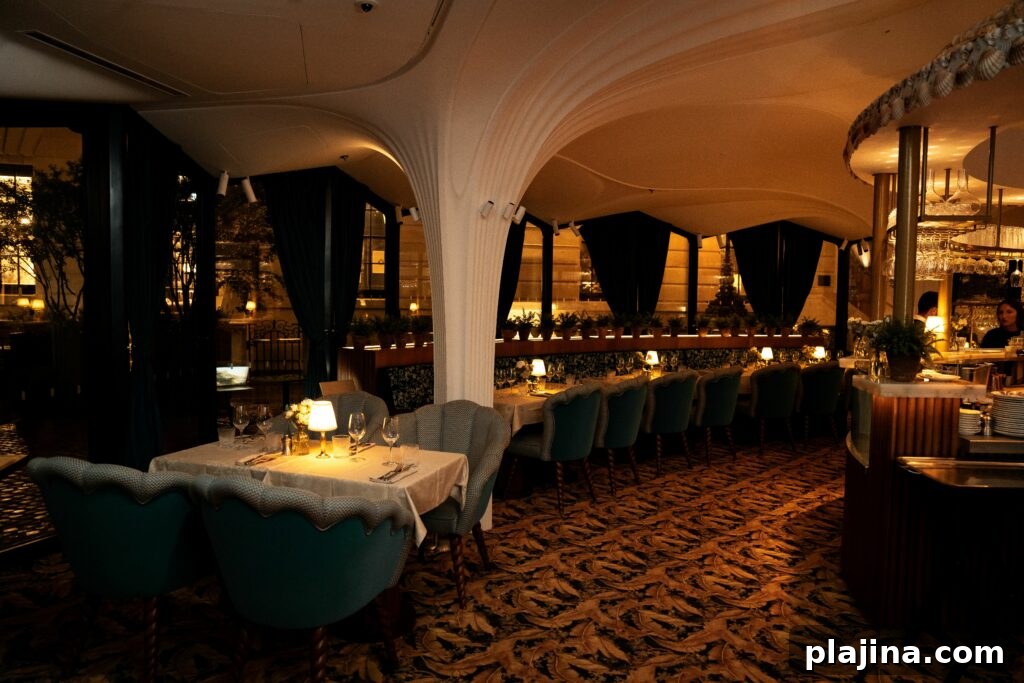
The pavilion within the courtyard serves as a bar and dining venue for Moma Group’s Parisian restaurant in London, Café Lapérouse, which opened in late 2023. Respectful of William Young’s early 20th-century architecture and the site’s distinguished setting, the pavilion was conceived as both a sculptural object and a functional building, carefully integrated into its historic context.
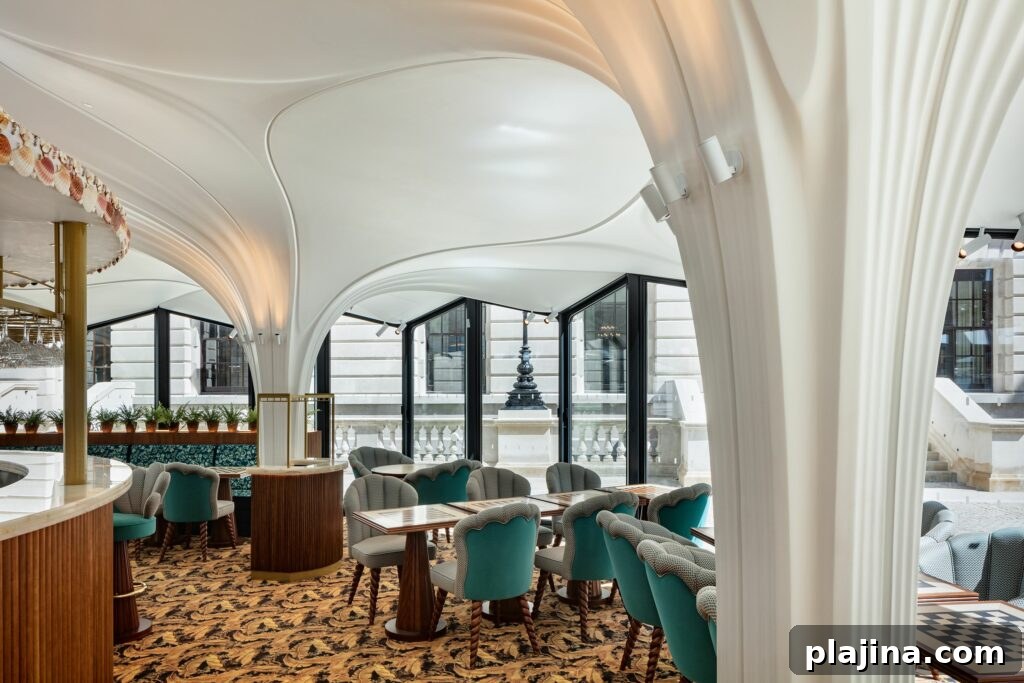
Clad in mirror-polished stainless-steel roof panels with finely crafted glass facades, the pavilion’s reflective surfaces create a mirage-like quality that reduces its visual intrusion against the surrounding OWO building. A sculptural skylight defines the roof’s center, bringing abundant natural light into the café and bar spaces below.
© Celia Sesma
The interior concept drew inspiration from the organic forms of a Georgia O’Keeffe painting: gently ribbed white columns unfurl into petal-like elements that radiate across the ceiling. This sculptural ceiling provides a poetic backdrop for Cordelia de Castellane’s interior design for Café Lapérouse and is complemented by new landscaping that frames outdoor dining areas.
As part of the courtyard redesign, the team introduced a striking 16-foot sculptural fountain described by the designers as “the yin to the yang of the pavilion.” The interplay between flowing water and the pavilion’s reflected metal surfaces produces a dynamic sensory experience for visitors. The metalwork carries a distinctive finish applied with Aston Martin paint, a subtle nod to the building’s cultural associations with Ian Fleming and James Bond films.
© DaeWha Kang
Historic cobblestones were carefully preserved and re-laid as part of the scheme. These same stones were once walked on by figures such as Winston Churchill and T. E. Lawrence. After documentation and conservation, the cobbles were integrated into a contemporary paving pattern, maintaining a tangible link to the courtyard’s past while serving the new design.
“A sustainable future for our planet will depend on radical new approaches to architecture and construction,” said DaeWha Kang, founder of DaeWha Kang Design. “Projects like the Grand Courtyard and Pavilion at The OWO demonstrate how quality, luxury, and inspiration can arise from a thoughtful dialogue between historic fabric and contemporary design.”